Tesla and LG Energy Solution Supercharge US Grid with $4.3 Billion LFP Battery Gigafactory
In a seismic shift for the domestic energy storage landscape, the U.S. government has announced a monumental $4.3 billion supply agreement between ele...
Editorial Team
World Of EV
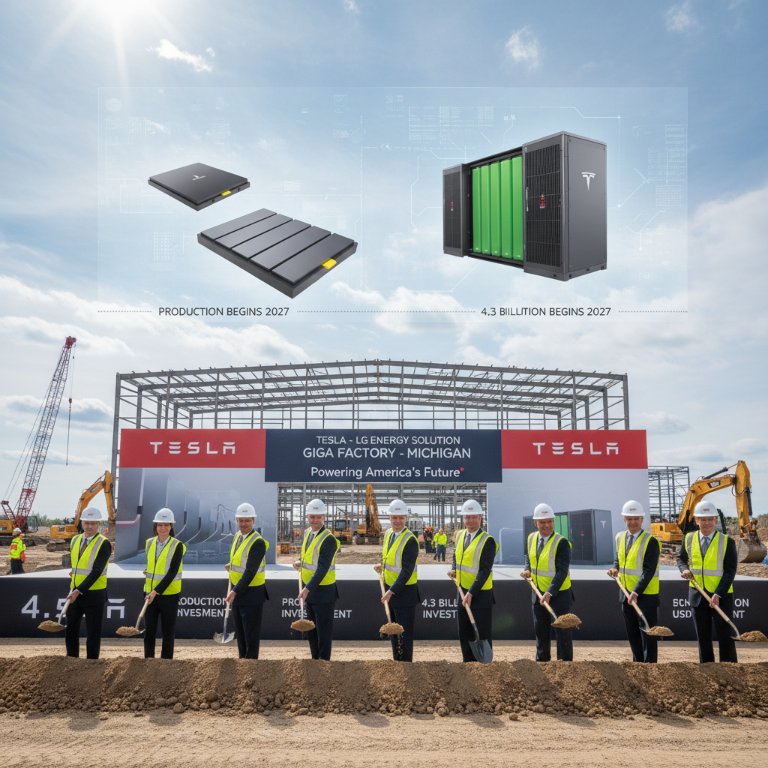
In a seismic shift for the domestic energy storage landscape, the U.S. government has announced a monumental $4.3 billion supply agreement between electric vehicle titan Tesla and South Korea's battery manufacturing powerhouse, LG Energy Solution. This colossal deal greenlights the construction of a cutting-edge lithium iron phosphate (LFP) prismatic battery cell manufacturing facility in Lansing, Michigan, with production slated to commence in 2027. This strategic alliance is not merely about manufacturing; it's a profound declaration of intent to forge a robust, American-made battery supply chain specifically designed to fuel Tesla's rapidly expanding Megapack 3 energy storage systems, produced in Houston.
A New Era for Megapack Production
This $4.3 billion commitment represents a critical juncture for Tesla's energy division. For years, the company has navigated the complexities of global battery sourcing, often relying heavily on Asian suppliers. While efficient, this model introduced vulnerabilities in supply chain resilience and logistics. The new Michigan facility, purpose-built for LFP prismatic cells, directly addresses these challenges, ensuring a dedicated and geographically proximate supply for the Megapack 3. This move is particularly significant given the surging demand for large-scale battery storage solutions, essential for grid stabilization and the integration of renewable energy sources.
LFP: The Unsung Hero of Energy Storage
While high-nickel chemistries like NMC (nickel-manganese-cobalt) dominate the headlines for their energy density in passenger EVs, LFP technology is the undisputed workhorse for stationary energy storage. The selection of LFP prismatic cells for this venture is a testament to its inherent advantages for grid applications:
- Superior Safety Profile: LFP batteries are less prone to thermal runaway, offering enhanced safety for large-scale installations.
- Extended Cycle Life: They boast a significantly longer lifespan compared to other chemistries, making them ideal for constant charge and discharge cycles in grid applications.
- Cost-Effectiveness: LFP is generally more affordable to produce, crucial for the economic viability of utility-scale projects.
- Resource Abundance: Avoiding scarce and ethically complex materials like cobalt simplifies the supply chain and reduces geopolitical risk.
This dedicated Michigan factory will allow Tesla to leverage these LFP benefits at an unprecedented scale, solidifying its position as a leader in grid solutions.
Fortifying America's Energy Independence
The establishment of this Michigan gigafactory aligns perfectly with the U.S. government's broader initiative to onshore critical manufacturing and de-risk supply chains, particularly in strategic sectors like clean energy. By producing these cells domestically, the partnership significantly reduces reliance on foreign imports, bolstering national energy security and fostering job creation within the American manufacturing sector. The synergy with Tesla's existing Megapack 3 assembly plant in Houston creates a powerful domestic pipeline, from raw materials to finished grid-scale storage units, streamlining production and delivery timelines.
Why This Matters:
This colossal $4.3 billion deal is far more than a simple supply agreement; it's a strategic gambit with wide-ranging implications for the energy sector and beyond. It unequivocally signals a pivotal acceleration in the localization of battery manufacturing within the United States, especially for the burgeoning energy storage market.
- Tesla Wins Big: The company secures a massive, stable, and localized supply of LFP cells, essential for meeting the escalating demand for its Megapack systems. This move drastically reduces supply chain risk, potentially lowers costs through shorter logistics, and bolsters its energy division's profitability and scalability. It also garners significant political goodwill, aligning with national industrial policy goals.
- LG Energy Solution's Strategic Expansion: For LGES, this represents a monumental contract, solidifying its position as a dominant global battery supplier and massively expanding its manufacturing footprint in North America. It diversifies its portfolio beyond automotive batteries into the critical stationary storage market with a guaranteed buyer.
- The US Grid Benefits: This deal directly translates to a faster, more resilient deployment of large-scale battery storage, critical for integrating renewable energy sources, preventing blackouts, and modernizing the national grid. It's a significant step towards greater energy independence and decarbonization.
- Market Signal for Localization: The sheer scale of this investment sends an unmistakable message to the entire battery and clean energy industry: domestic manufacturing for critical components is not just a preference but a strategic imperative. This could spur further onshoring efforts from competitors and accelerate technological advancements in US-based production.
This initiative marks a crucial turning point, moving beyond mere aspirations to concrete, multi-billion-dollar investments that will reshape the future of energy storage and manufacturing in the United States. It underscores a confident step towards a more resilient, localized, and sustainable energy future.