Tesla Activates Megacharger Network on Map, Paving the Way for Imminent Semi Mass Production
Tesla has quietly yet decisively updated its Navigation and Supercharger Map, a move that speaks volumes about the long-anticipated Tesla Semi. The co...
Editorial Team
World Of EV
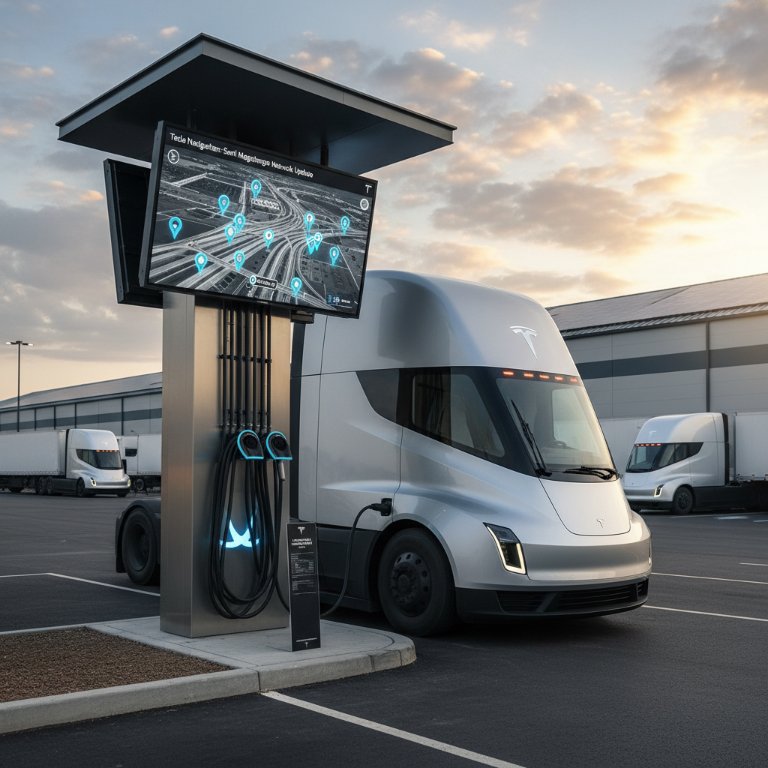
Tesla has quietly yet decisively updated its Navigation and Supercharger Map, a move that speaks volumes about the long-anticipated Tesla Semi. The company has integrated the locations of its nascent Megacharger network, a critical piece of infrastructure signaling that the electric heavy-duty truck is not just around the corner, but actively preparing for mass production later this year. This isn't just a minor software update; it's a clear strategic declaration that the Semi project, after years of development and limited deployments, is finally on the verge of widespread commercial reality.
For many in the industry, the Tesla Semi has been a phantom, a promised revolution in freight that seemed perpetually out of reach. Announced initially with much fanfare, its path to production has seen numerous delays and hurdles, leading some to question its ultimate viability. This latest development, however, provides concrete evidence that Tesla is not only committed to the Semi but is now actively building out the essential supporting ecosystem for its commercial success. It's a testament to Tesla's integrated approach, where vehicle and infrastructure development proceed hand-in-hand.
Megachargers Emerge: Powering the Future of Freight
The inclusion of Megacharger locations on Tesla’s primary navigation platform is more than just a map pin; it’s the unveiling of a crucial charging standard for heavy-duty electric transport. Unlike the familiar Superchargers designed for passenger vehicles, Megachargers are engineered to deliver immense power output necessary to rapidly replenish the massive battery packs of vehicles like the Tesla Semi. This capability is paramount for the logistics industry, where downtime equates to lost revenue and rapid turnaround is essential for operational efficiency. The strategic placement of these chargers along key freight corridors will be vital for widespread adoption and seamless long-haul operations. Tesla's decision to display these locations proactively allows future Semi operators to begin visualizing their routes and logistical planning, significantly de-risking the transition to electric.
Tesla Semi: From Concept to Commercial Reality
The journey of the Tesla Semi has been a protracted one, dating back to its dramatic reveal. While early units have been deployed for internal use and select customer trials, the promise of mass production has remained a distant goal. The integration of Megacharger locations now definitively signifies a pivot from R&D and pilot programs to a tangible market launch. This infrastructure build-out is a direct response to the fundamental challenge of electrifying heavy trucking: providing sufficient, high-speed charging. By making this infrastructure visible and accessible on their mapping tools, Tesla addresses one of the biggest anxieties for prospective buyers – range anxiety and charging availability – head-on, even before the vehicles roll off the assembly line in significant numbers.
Why This Matters:
- Validation of Tesla's Vision: This update emphatically signals that Tesla's ambitions in the heavy-duty trucking sector are serious and well-funded. It moves the Semi from a concept to a tangible near-term reality.
- De-risking for Fleet Operators: The visible Megacharger network significantly reduces the perceived risk for fleet owners and logistics companies considering an investment in electric trucks. Charging infrastructure has been a major bottleneck, and Tesla is proactively demonstrating its solution.
- Pressure on Competitors: Established players and startups in the electric truck space (e.g., Volvo, Daimler, Nikola, Freightliner) will undoubtedly feel increased pressure. Tesla's integrated approach – developing both the vehicle and its bespoke charging infrastructure – provides a significant competitive advantage that others must now scramble to match or counter.
- Acceleration of EV Logistics: The availability of high-power charging for heavy trucks is a cornerstone for the broader electrification of commercial logistics. This move by Tesla will accelerate the industry's shift away from fossil fuels, impacting everything from supply chain efficiency to national emissions targets.
- Who Wins? Tesla, and early-adopting logistics companies who gain access to a potentially more cost-effective and environmentally friendly fleet. The environment wins through reduced emissions.
- Who Loses? Manufacturers focused solely on internal combustion engine trucks, and potentially other EV truck manufacturers who lack the integrated charging ecosystem Tesla is building.
Tesla's decision to activate its Megacharger map is a strategic masterstroke, effectively laying the groundwork for the Tesla Semi's mass market entry. It’s a powerful statement of intent that not only signals significant progress in the Semi project but also serves notice to the entire logistics and automotive industries that the future of heavy-duty transport is indeed electric, and Tesla is ready to lead the charge. The coming months will be crucial as we watch the Tesla Semi transition from anticipated release to a regular fixture on highways worldwide.