Software Promises Fall Flat as Vehicle Dependability Plummets to Record Lows
The automotive industry is facing a critical juncture, as J.D. Power’s 2026 U.S. Vehicle Dependability Study (VDS) reveals a startling decline in vehi...
Editorial Team
World Of EV
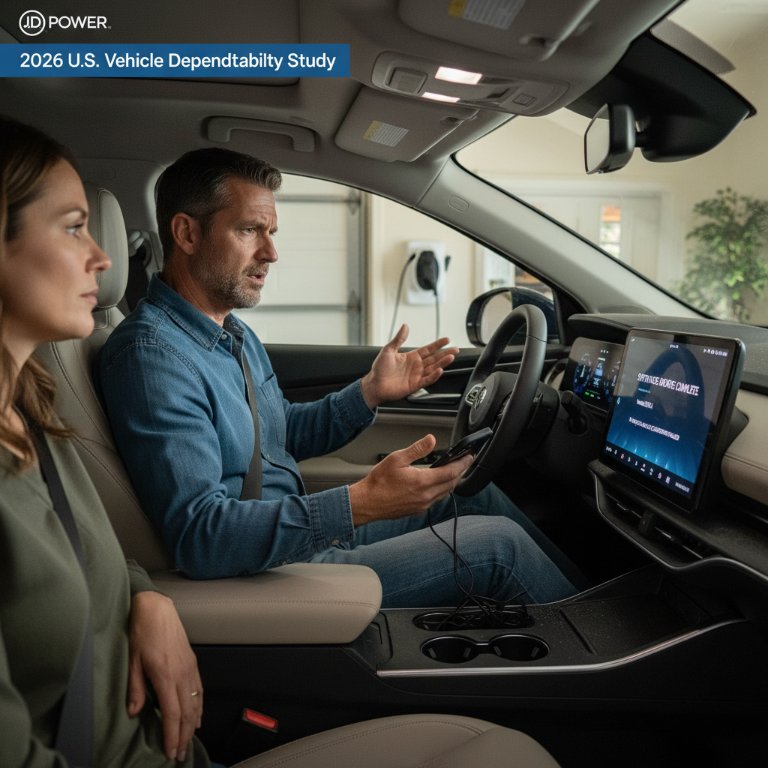
The automotive industry is facing a critical juncture, as J.D. Power’s 2026 U.S. Vehicle Dependability Study (VDS) reveals a startling decline in vehicle quality and a concerning disconnect between software update promises and owner satisfaction. This year's study delivers a stark message: overall vehicle problems after three years of ownership have surged, reaching an industry average of 204 problems per 100 vehicles (PP100). This figure represents an increase of two PP100 over 2025 and marks the highest problem rate since the VDS underwent a significant redesign in 2022, signaling a worrying trend for both consumers and manufacturers.
The Software Update Illusion
For years, automakers have touted over-the-air (OTA) software updates as a panacea, promising continuous improvement and added features for the life of a vehicle. However, the 2026 VDS paints a different picture, indicating that the reality is falling far short of consumer expectations. A significant 58% of owners reported no noticeable difference after receiving a vehicle software update. This widespread lack of perceived benefit directly impacts the vehicle's perceived dependability, undermining a key selling point for modern, tech-laden cars. The implicit contract with the consumer – that software updates enhance their experience – appears to be broken for a majority, leading to frustration rather than delight.
Persistent Tech Troubles and Premium Pitfalls
Infotainment systems continue their reign as the most problematic category for owners, a consistent headache that carmakers have struggled to resolve. Close behind are exterior issues, highlighting that even fundamental elements of vehicle design and manufacturing are not immune to quality concerns. More specifically, mobile phone integration, encompassing critical features like Android Auto and Apple CarPlay connectivity, remains the top individual issue for the third consecutive year. This persistent flaw is particularly impactful as these systems are integral to daily driving, making connectivity woes a constant source of user dissatisfaction. Furthermore, the study notes a concerning jump in problems for premium vehicles. Historically, premium brands have often enjoyed a reputation for superior quality, but this year's findings suggest they are not immune to the broader industry challenges, perhaps due to the increased complexity and advanced technology often packed into these higher-priced models.
The PHEV Predicament
In the ongoing transition to electrification, plug-in hybrid electric vehicles (PHEVs) continue to struggle with dependability. The 2026 VDS identifies PHEVs as the most problematic powertrain type. This isn't an entirely new revelation; PHEVs, by their very nature, combine the complexities of both internal combustion engines and electric powertrains, often leading to a greater number of potential failure points and intricate software management challenges. This finding suggests that while PHEVs offer a bridge to full electrification, their inherent complexity is proving to be a significant hurdle for long-term reliability and owner satisfaction.
Why This Matters:
This latest VDS report is a powerful wake-up call, reverberating across the entire automotive ecosystem. For consumers, these declining dependability scores translate directly into increased headaches, potential repair costs, and a diminishing return on investment for increasingly expensive vehicles. The promise of an 'ever-improving' vehicle through software updates is clearly not being met, fostering skepticism and potentially influencing future purchase decisions. Why invest in cutting-edge tech if it doesn't demonstrably improve the ownership experience or, worse, introduces new problems?
For automakers, the implications are profound. This isn't merely a statistical anomaly; it's a direct challenge to their brand reputation and long-term viability. Brands that fail to address the core issues of software integration, infotainment reliability, and overall build quality risk losing consumer trust and market share. The study signals that simply pushing out software updates isn't a substitute for robust, well-engineered hardware and thoroughly tested software from the outset. Companies that can deliver genuinely seamless mobile phone integration and intuitive, reliable infotainment systems will gain a significant competitive advantage. Conversely, those that continue to launch overly complex and buggy systems, particularly in their premium offerings and PHEVs, will find themselves losing ground. This data reinforces the idea that foundational quality and user experience must take precedence over rushed feature implementation.
In essence, this study is a litmus test for the industry's ability to balance technological advancement with fundamental reliability. The winners will be the brands that refocus on engineering excellence and a 'quality-first' approach, ensuring that technology enhances, rather than detracts from, the ownership experience. The losers will be those who continue to rely on software updates as a fix for underlying design and integration flaws.
The Road Ahead: A Call for Reliability
The 2026 J.D. Power VDS unequivocally demonstrates that the automotive industry faces a severe challenge in delivering consistent dependability amid rapid technological evolution. As vehicles become more connected and software-defined, manufacturers must prioritize flawless execution over feature bloat. The future success of the industry, particularly in the burgeoning EV and premium segments, hinges on building trust through unparalleled reliability and ensuring that technological advancements truly enhance, rather than hinder, the owner's experience.