Service Trumps Spectacle: Ampere Dethrones Ola as India's Leading Electric Scooter Brand
The landscape of India's electric two-wheeler market has undergone a seismic shift by mid-February 2026, witnessing a significant changing of the guar...
Editorial Team
World Of EV
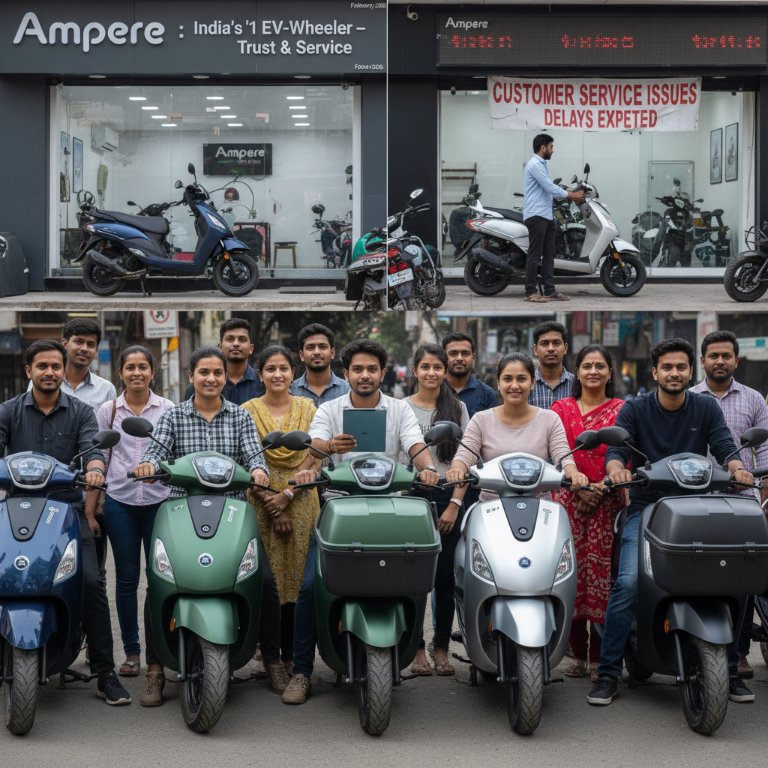
The landscape of India's electric two-wheeler market has undergone a seismic shift by mid-February 2026, witnessing a significant changing of the guard. In a move that underscores the growing maturity of the segment, Ampere Electric scooters have surged ahead, outselling the once-dominant Ola Electric. This reversal is far more than a simple sales figure; it’s a powerful testament to the market's evolving demands, prioritizing reliability and customer support over aggressive marketing and initial hype.
Ola Electric burst onto the scene with a splash, promising a revolution in electric mobility backed by flashy product launches, aggressive pricing strategies, and a direct-to-consumer model that initially captured immense attention and market share. Their initial success was predicated on a vision of disruption, but as this latest market data reveals, the foundation of that disruption proved to be less stable than advertised.
Ampere's Ascendance: The Power of Pragmatism
Ampere Electric’s rise to the top is a narrative rooted in practicality and consistent customer satisfaction. The brand has cultivated a 'no-nonsense' approach to electric mobility, focusing on delivering reliable vehicles without the associated 'service headaches' that have plagued some competitors. This strategy has resonated deeply with a crucial segment of buyers: those seeking dependable, everyday transportation solutions rather than just cutting-edge technology. Their success highlights:
- Focus on Core Utility: Ampere’s models emphasize reliability, efficiency, and ease of maintenance.
- Robust Service Network: A commitment to post-sales support that minimizes downtime and user frustration.
- Practical Buyer Appeal: Attracting a broad base of consumers who value trouble-free ownership above all else.
Ola's Oversight: The Service Shortfall
Conversely, Ola Electric’s decline is directly attributable to a widely reported and persistent issue: poor customer service. Despite their innovative product designs and competitive pricing, a mounting wave of brand distrust has eroded consumer confidence. The market has delivered a clear verdict: a dazzling product launch and an attractive price tag are no longer sufficient to sustain leadership in a discerning market. Critical issues impacting Ola’s brand perception include:
- Widespread Customer Service Complaints: Persistent issues with responsiveness and resolution.
- Prolonged Repair Turnaround Times: Leaving customers without their vehicles for extended periods.
- Inadequate Service Infrastructure: A network that has struggled to keep pace with sales volume, leading to frustration.
Why This Matters:
This shift in market leadership is a watershed moment for the Indian electric two-wheeler industry and a crucial lesson for all EV manufacturers globally. It signals a maturation of the market where foundational aspects like service infrastructure and customer support are no longer ancillary considerations but defining competitive advantages. For Ampere, this validates their steady, customer-centric approach, positioning them as a benchmark for sustainable growth in the EV space. Ola, on the other hand, faces a do-or-die moment. Their previous dominance, built on aggressive expansion and technological ambition, is now threatened by a fundamental failure in execution – customer care. This signals to the entire market that long-term success in the EV segment, especially in volume markets like India, hinges on building trust through reliable service and support, not just through innovative products or aggressive pricing. Companies that fail to adapt their after-sales strategies risk not just losing market share, but potentially losing the confidence of an entire generation of EV buyers.
In conclusion, the Indian electric two-wheeler market has spoken: the future of EV adoption is not just about the vehicle itself, but the entire ownership experience. Ampere's ascent serves as a powerful reminder that in the race for electric dominance, reliability and robust customer service are ultimately the most powerful accelerators. Ola Electric now faces the arduous task of rebuilding trust and fundamentally overhauling its service ecosystem if it hopes to reclaim its once-prominent position.