Rivian Supercharges Grid Integration with EnergyHub Partnership, Paving Way for Smarter EV Charging
Rivian Automotive, a trailblazer in the electric adventure vehicle segment, is significantly expanding its commitment to intelligent energy management...
Editorial Team
World Of EV
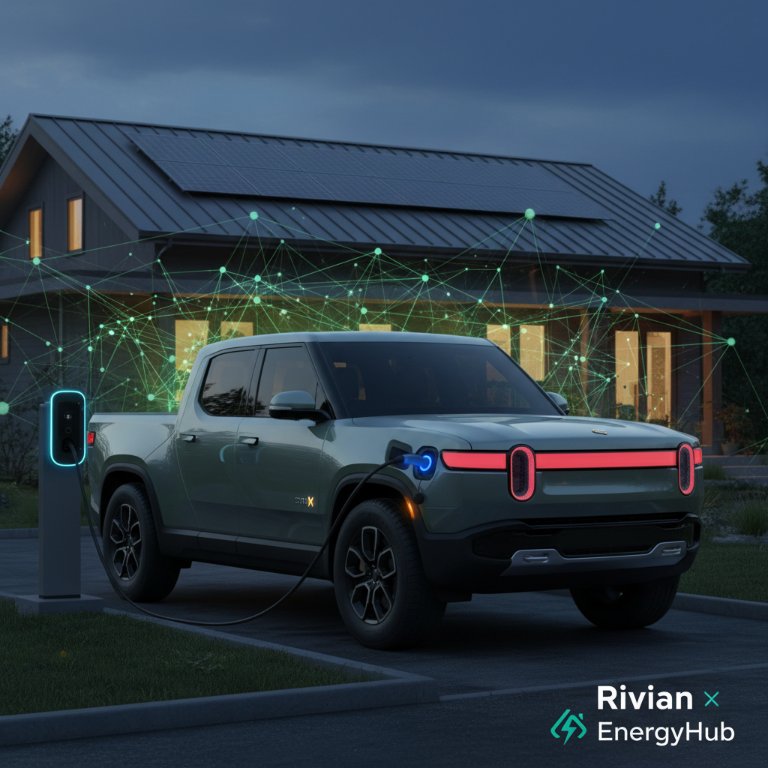
Rivian Automotive, a trailblazer in the electric adventure vehicle segment, is significantly expanding its commitment to intelligent energy management by forging a strategic partnership with EnergyHub. This critical collaboration aims to embed utility-managed charging directly into Rivian vehicles across North America, seamlessly connecting these sophisticated EVs to participating utilities and their smart grid solutions. The initiative marks a pivotal moment, positioning Rivian within the broader energy management ecosystem and linking its vehicles directly to grid-friendly charging incentives and tools, offering substantial benefits to both drivers and the power grid.
After initially focusing on developing its compelling R1T pickup and R1S SUV, Rivian has consistently shown a forward-thinking approach, not just in vehicle design but also in integrating its products into a sustainable future. Unlike some manufacturers who have struggled with niche markets or delayed software integration, Rivian has leaned into its software-defined vehicle architecture. This partnership with EnergyHub builds upon Rivian's earlier foray into smart charging, including a similar collaboration with WeaveGrid, announced last summer. These moves underscore a strategic vision that understands the future of EVs extends far beyond the garage, demanding deep integration with the energy infrastructure that powers them.
The Partnership Unveiled: Rivian and EnergyHub Forge a Smarter Path
The core of this new alliance sees Rivian vehicles becoming controllable resources for over 150 utilities leveraging EnergyHub's distributed energy resource management (DERM) platform. This isn't merely a technical integration; it's a fundamental shift in how EVs interact with the grid, moving from passive consumers to active participants in energy management. Andrew Peterman, Rivian's Director of Advanced Energy Solutions, highlighted the dual benefit: "By integrating managed charging programs, we're lowering costs for our drivers, and also ensuring that every Rivian on the road contributes to a more resilient and secure grid."
Key features and benefits of this partnership include:
- Expanded Access: Rivian drivers will gain broader access to utility-managed charging programs across North America.
- Grid Integration: Rivian vehicles will directly support smart grid solutions, transforming EVs into valuable assets for grid stability.
- Dynamic Load Shaping: EnergyHub's technology will coordinate EV charging to deliver necessary energy while conforming to capacity constraints across the distribution network, easing pressure on local grids.
- Cost Savings for Drivers: Participating drivers can benefit from financial incentives and optimized charging schedules that align with off-peak hours, leading to lower electricity bills.
- Enhanced Grid Resilience: By shifting EV loads dynamically, utilities can defer significant capital expenditures on infrastructure upgrades, increasing system hosting capacity by as much as three times.
Why This Matters: A Strategic Power Play for the EV Ecosystem
This partnership represents more than just a collaboration; it's a strategic declaration by Rivian that the future of electric mobility is inextricably linked to intelligent energy management. For too long, the narrative around EV adoption has focused solely on vehicle production and charging infrastructure, often overlooking the critical role of grid stability. Rivian, through this and similar initiatives, is positioning itself as a leader in bridging this gap.
Who Wins?
- Rivian Drivers: They gain tangible financial benefits through reduced charging costs and a simplified, optimized charging experience. Their vehicles become smarter, more integrated, and more cost-effective to operate.
- Rivian Automotive: The company enhances its brand as a forward-thinking, sustainable mobility provider. This integration can boost customer loyalty, differentiate Rivian in a competitive market, and potentially open new revenue streams through grid services. It signals a shift beyond just vehicle hardware to energy management services.
- Utilities and the Grid: Utilities benefit immensely by gaining flexible capacity and better management of rising electricity demand, particularly during peak hours. This partnership helps defer costly infrastructure upgrades and supports the integration of more renewable energy sources by smoothing out load curves.
- The Wider EV Industry: This move sets a precedent, encouraging other OEMs to prioritize grid integration, accelerating the maturation of the entire EV ecosystem.
Who Loses?
- Less Integrated Competitors: Automakers that neglect comprehensive grid integration risk falling behind, potentially offering a less optimized and more expensive ownership experience for their customers. The focus is no longer just on range and charging speed, but also on smart, cost-efficient energy use.
This partnership signals that the EV market is evolving rapidly from a mere vehicle transaction to a holistic energy solution. For Rivian, it’s not a 'do-or-die' moment in terms of survival, but rather a crucial step in solidifying its long-term relevance and competitive edge as a truly sustainable and technologically advanced automotive brand. It underscores a commitment to not only build exceptional EVs but also to ensure their seamless, beneficial integration into the broader energy landscape.
In conclusion, Rivian's partnership with EnergyHub is a clear indicator of the automotive industry's future trajectory: one where electric vehicles are not just transportation devices but integral components of a resilient, intelligent energy grid. This move promises a future of lower costs for drivers, greater stability for utilities, and a significant leap towards a truly decarbonized transportation sector. The convergence of automotive innovation and advanced energy management is here, and Rivian is clearly driving towards its forefront.