Rivian R2 Roars to Production: A Scalable Challenger Set to Redefine the Mid-Market EV Segment
After years of cultivating a niche in the premium adventure EV segment with its R1T pickup and R1S SUV, Rivian is poised for a pivotal moment with the...
Editorial Team
World Of EV
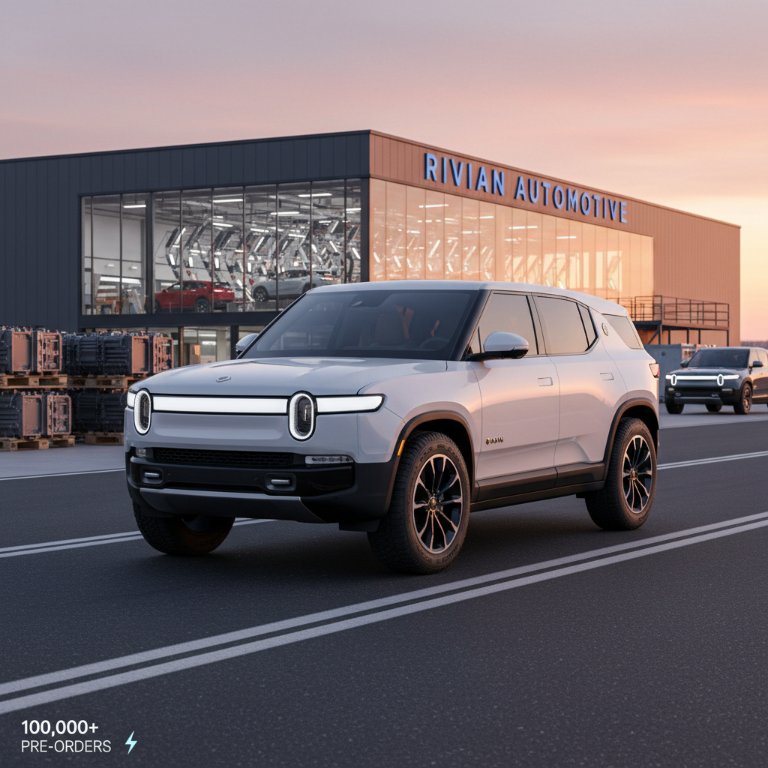
After years of cultivating a niche in the premium adventure EV segment with its R1T pickup and R1S SUV, Rivian is poised for a pivotal moment with the market launch of its compact electric crossover, the R2. Production lines are now operational in Illinois, signaling a strategic shift for the automaker aimed at broader market accessibility and volume scalability.
The R2 represents a crucial evolution in Rivian's strategy, moving beyond its high-end offerings to tap into a significantly larger customer base. This shift is not merely about size; it embodies a fundamental re-engineering of Rivian's manufacturing and cost structure, critical for long-term viability in the intensely competitive EV landscape.
Architectural Innovations and Production Readiness
The R2's design philosophy centers on simplicity and affordability, a stark contrast to the R1 family's bespoke complexity. Rivian is leaning heavily into advanced manufacturing techniques to achieve this, including:
- Structural Battery Design: The R2 incorporates a structural battery, where the battery pack forms an integral part of the vehicle's chassis. This approach, pioneered by Tesla with its 4680 cells and further refined by companies like BYD with its Blade battery, reduces complexity, weight, and manufacturing costs while enhancing structural rigidity. The R2 will utilize LG Energy Solution's 4695 cylindrical cells, larger than Tesla's 4680s, offering improved energy density and simplified pack assembly with significantly fewer cells than the R1 models.
- Large-Cast Front and Rear Elements: Employing large-scale casting for the front and rear sections streamlines the assembly process, reducing the number of parts and welds. This 'gigacasting' method, also popularized by Tesla, is a testament to Rivian's commitment to manufacturing efficiency and scalability.
These innovations are directly linked to Rivian's goal of high-volume production. The Normal, Illinois, factory is ramping up for R2 production, with an anticipated capacity of around 155,000 R2 units annually, contributing to a total plant capacity of 215,000 vehicles by 2026.
Market Response and Competitive Positioning
The market has already responded enthusiastically to the R2, with over 100,000 pre-orders secured within just two weeks of its announcement. This overwhelming interest underscores a strong demand for a more accessible, yet still capable, electric adventure vehicle. Priced to start around $45,000, the R2 directly challenges established players in the compact EV crossover segment.
Rivian positions the R2 as technologically advanced compared to rivals such as the Tesla Model Y and Ford Mustang Mach-E. While the Model Y offers efficiency and a robust charging network, and the Mach-E provides a sporty driving experience, the R2 aims to differentiate itself through its blend of rugged capability and refined technology. The R2's higher ground clearance and design optimized for outdoor adventures offer a distinct proposition that the Model Y and Mach-E, with their more car-like or raked SUV profiles, do not fully address. Furthermore, the R2 will support the North American Charging Standard (NACS), ensuring seamless access to Tesla's Supercharger network, a significant advantage for prospective buyers.
Why This Matters:
The R2 is nothing short of a make-or-break vehicle for Rivian. Its success is paramount to the company's transition from a niche luxury EV producer to a mainstream automotive force capable of achieving profitability and sustainable growth. The significant pre-order numbers demonstrate clear market appetite for Rivian's distinct brand of adventure-oriented EVs at a more palatable price point. This signals a potential shift in the mid-market EV segment, where consumers are increasingly looking for differentiated offerings beyond pure performance or efficiency.
- Who Wins? Rivian, if they can successfully execute the production ramp and maintain quality. Consumers seeking a capable, stylish, and technologically advanced electric SUV that bridges the gap between urban utility and outdoor adventure will find a compelling option in the R2. The broader EV market also wins through increased competition and innovation.
- Who Loses? Established players like Tesla, Ford, Hyundai, and Kia will face intensified competition. The Model Y, in particular, may see its dominance challenged in certain segments, especially among buyers prioritizing off-road capability and unique design. Legacy automakers that have been slower to innovate their EV platforms could also lose market share.
- What This Signals: This launch signals a maturation of the EV market. It's no longer enough to simply offer an electric powertrain; companies must now deliver compelling products that meet diverse consumer needs at competitive price points. Rivian's focus on scalability and cost reduction through advanced manufacturing is a blueprint for survival and growth in the coming years.
Conclusion:
The Rivian R2's journey from concept to operational production lines marks a critical juncture for the company. With its innovative architecture, compelling market reception, and strategic positioning, the R2 has the potential to become a cornerstone of Rivian's future and a formidable contender in the evolving electric vehicle landscape. The coming quarters will be crucial as Rivian navigates the complexities of mass production and delivery, aiming to convert those enthusiastic pre-orders into satisfied customers and, ultimately, sustained profitability.