Rivian R1S Owner Demolishes EV Road Trip Myths with $133, 1,909-Mile Journey
The narrative around electric vehicles, particularly concerning their practicality for long-distance travel, has long been plagued by concerns over ra...
Editorial Team
World Of EV
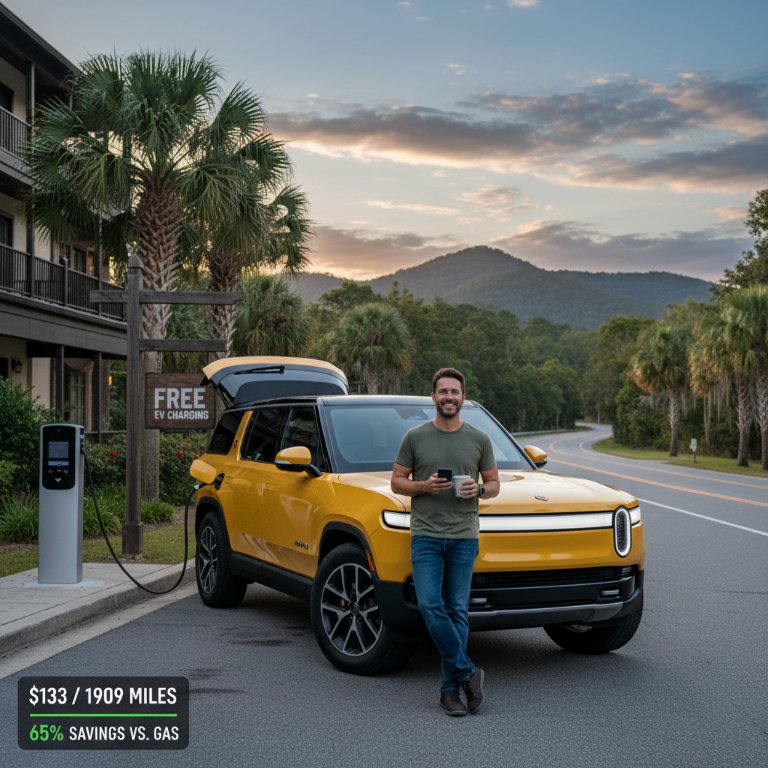
The narrative around electric vehicles, particularly concerning their practicality for long-distance travel, has long been plagued by concerns over range anxiety, charging availability, and perceived high costs. These anxieties often present significant hurdles for prospective buyers, particularly those eyeing premium adventure EVs like the Rivian R1S, a vehicle positioned for exploration and capability. However, a recent feat by an R1S owner from the Southeast is set to redefine these perceptions, proving that strategic planning and opportunistic charging can make EV road trips not only feasible but remarkably economical.
The Numbers Speak Volumes
A Rivian R1S owner recently completed an impressive 1,909-mile odyssey across the Southeast, fundamentally challenging established notions of EV travel economics. The total charging expenditure for this extensive journey? A mere $133. To put this into sharp perspective, this represents a staggering 65% cost reduction when compared to fueling a comparable gasoline-powered SUV over the same distance. Such a substantial saving underscores a compelling argument for the long-term economic advantages of electric vehicles, extending far beyond initial purchase price considerations.
Mastering the Charge Network: The Power of Opportunistic Charging
The secret to this extraordinary cost efficiency wasn't found in a hidden network of ultra-cheap DC fast chargers, but rather in a judicious and often overlooked strategy: free overnight charging. The R1S owner meticulously planned their stops to include hotels and Airbnb locations equipped with Level 2 chargers, effectively transforming overnight stays into cost-free refueling opportunities. This approach, often termed 'opportunistic charging,' highlights a critical shift in how EV owners can approach travel. Instead of solely seeking out dedicated charging stations, drivers can leverage existing infrastructure at their destinations. The owner's casual observation that the R1S's range frequently outlasted their 'bladder' perfectly encapsulates the practical advantages of this integrated charging philosophy – charge where you naturally stop, eliminating dedicated charging stops that often feel like an inconvenience. This strategy directly addresses one of the most persistent concerns about EVs: the time spent charging versus fueling a gasoline car.
Why This Matters:
This single road trip, meticulously executed and documented, is far more than an anecdote; it's a powerful data point with profound implications for the entire EV ecosystem. It directly confronts the lingering myth that EVs are impractical for extended journeys, a perception that has historically deterred many potential buyers. For a company like Rivian, whose R1S and R1T models are designed for adventure and utility, this real-world validation is invaluable, showcasing that their vehicles live up to their promise even under challenging use cases.
-
For Consumers: This demonstrates that significant cost savings are achievable on long-distance EV travel, especially for those willing to plan and utilize destination charging. It empowers prospective buyers to look beyond upfront costs and appreciate the lower total cost of ownership.
-
For the Automotive Industry: It signals a growing maturity in the EV charging landscape beyond just public fast chargers. The increasing availability of Level 2 charging at hospitality venues is a crucial, often underestimated, component of the future charging network. This success story could spur further investment in such amenities by hotels and resorts aiming to attract the growing demographic of EV travelers.
-
For Policy Makers: The incident highlights the effectiveness of decentralized charging solutions. Encouraging the proliferation of destination charging could significantly alleviate pressure on public fast-charging infrastructure and contribute to a more robust and resilient EV charging ecosystem.
This journey underscores a fundamental truth: the greatest innovation in EV travel might not always be faster charging speeds, but smarter charging habits. The strategic integration of charging into daily travel routines, rather than viewing it as a separate chore, unlocks a new level of convenience and cost efficiency that makes long-haul EV travel not just viable, but preferable.
The remarkable journey of this Rivian R1S owner is a beacon of practicality and cost-effectiveness for the EV community. It solidifies the argument that with thoughtful planning and a willingness to embrace opportunistic charging, the electric vehicle is not just ready for the long haul, but poised to dominate it, offering an unparalleled blend of adventure and affordability. The era of the truly practical EV road trip has undeniably arrived.