Rivian Gears Up for Mass-Market Assault: 20,000 R2 SUVs Slated for 2026 Deliveries, Signaling Crucial Growth Phase
Rivian, the tenacious American EV startup, is poised to dramatically expand its market footprint, announcing ambitious plans to produce 20,000 R2 SUVs...
Editorial Team
World Of EV
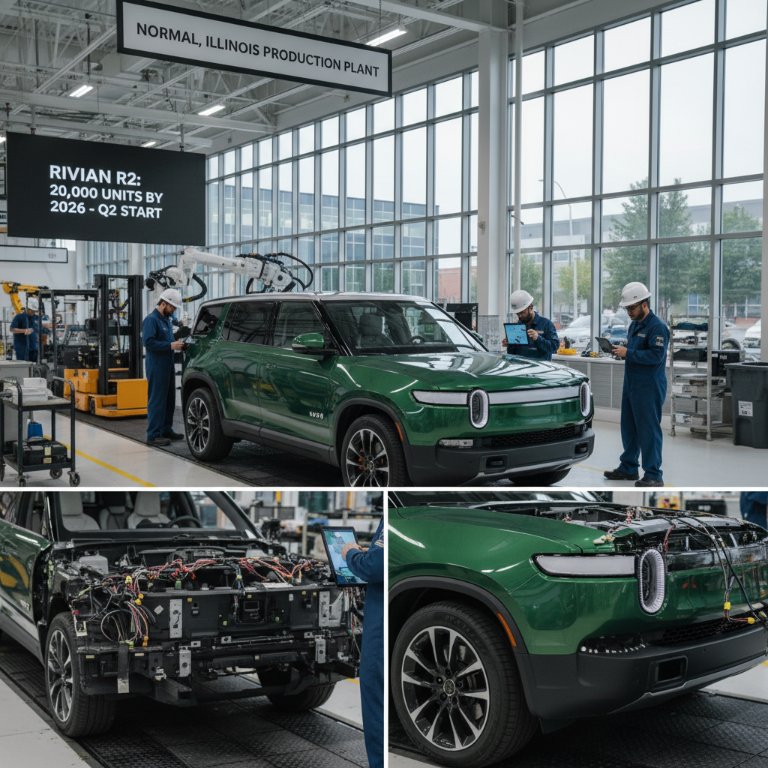
Rivian, the tenacious American EV startup, is poised to dramatically expand its market footprint, announcing ambitious plans to produce 20,000 R2 SUVs in 2026, with the first customer deliveries anticipated in the second quarter of the year. This aggressive target marks a pivotal shift for the automaker, which has, until now, focused on the premium, adventure-focused R1T and R1S platforms. The R2 represents Rivian's strategic move into the higher-volume mid-size SUV segment, a crucial step for achieving sustained profitability and challenging established players.
This isn't just about a new model; it's about Rivian's maturation from a niche luxury brand to a serious contender in the broader EV market. The company has meticulously prepared for this next phase, with production preparations already well underway at its expansive manufacturing facility in Normal, Illinois, leveraging the expertise gained from scaling R1 production.
Aggressive Production Targets and Swift Deliveries
The commitment to 20,000 R2 units within its first year of production, coupled with Q2 2026 deliveries, underscores Rivian's confidence in its manufacturing capabilities and supply chain resilience. This timeline is particularly noteworthy given the complexities of launching an entirely new vehicle platform. For context, while Rivian has successfully ramped up R1 production, reaching annual volumes in the tens of thousands, the R2 demands a significantly higher production velocity to justify its strategic importance and compete effectively in its segment. The Normal, Illinois plant, a facility that has seen substantial investment and optimization, will be central to achieving these numbers, becoming the bedrock of Rivian's volume ambitions.
A Leap in Driver Assistance with RAP1
Beyond just production scale, the R2 is set to introduce Rivian's next-generation driver assistance hardware. This includes a comprehensively updated sensor setup, designed to provide enhanced environmental perception and data fidelity. Crucially, the R2 will also debut Rivian's new in-house computer chip, dubbed RAP1. This move towards vertical integration, developing proprietary silicon, is a significant technical and strategic play. It signals Rivian's intent to tightly control its software and hardware stack, a strategy successfully employed by industry leaders like Tesla with its FSD chip. By bringing chip development in-house, Rivian aims to optimize performance, enhance security, and enable more sophisticated and robust autonomous driving features down the line, giving them a competitive edge in a rapidly evolving ADAS landscape.
Why This Matters:
This R2 announcement is nothing short of a make-or-break moment for Rivian. The R1 platform, while lauded, operates in a higher-priced, lower-volume segment. The R2's anticipated lower price point positions it directly against formidable rivals like the Tesla Model Y and upcoming electric offerings from traditional automakers such as Ford and Chevrolet. Successfully hitting the 20,000-unit target is critical for several reasons:
- Profitability and Scale: Moving into a higher-volume segment is essential for Rivian to achieve economies of scale and finally turn a consistent profit, moving beyond its reliance on early-stage investment and Amazon delivery van contracts.
- Market Share Expansion: The R2 offers Rivian a crucial pathway to expand its customer base beyond early adopters and affluent buyers, attracting a broader demographic seeking a capable, stylish, and sustainable mid-size SUV.
- Technological Independence: The introduction of the in-house RAP1 chip signifies Rivian's commitment to vertical integration and technological self-reliance. This is a clear signal to the market that Rivian intends to be a long-term innovator, not just an assembler of third-party components. It provides greater control over future feature development and potentially reduces costs in the long run.
- Investor Confidence: Meeting these production and delivery targets will be a vital indicator for investors, proving Rivian's ability to execute on its growth strategy and solidify its position as a viable long-term player in the EV space.
Who wins? Consumers seeking a compelling, rugged alternative to the current crop of mid-size electric SUVs stand to gain significantly. Rivian, if it executes flawlessly, wins substantial market share and investor confidence. Who loses? Competitors in the premium mid-size EV SUV segment will face a newly invigorated and highly competitive Rivian. This announcement signals Rivian's coming of age and its intent to move from a niche player to a mainstream EV powerhouse.
The R2 represents Rivian's most significant gamble yet – a bet on volume, accessibility, and integrated technology to secure its future. The coming year will be a critical test of its manufacturing prowess and market appeal. Success here will not only validate Rivian's vision but fundamentally reshape the competitive landscape of the electric SUV market.