Rivian Fuels Washington Direct Sales Battle, Threatening Tesla's Exclusive Hold
Rivian, the ambitious electric truck manufacturer, has injected a substantial $4.6 million into a Washington state ballot measure, signaling a powerfu...
Editorial Team
World Of EV
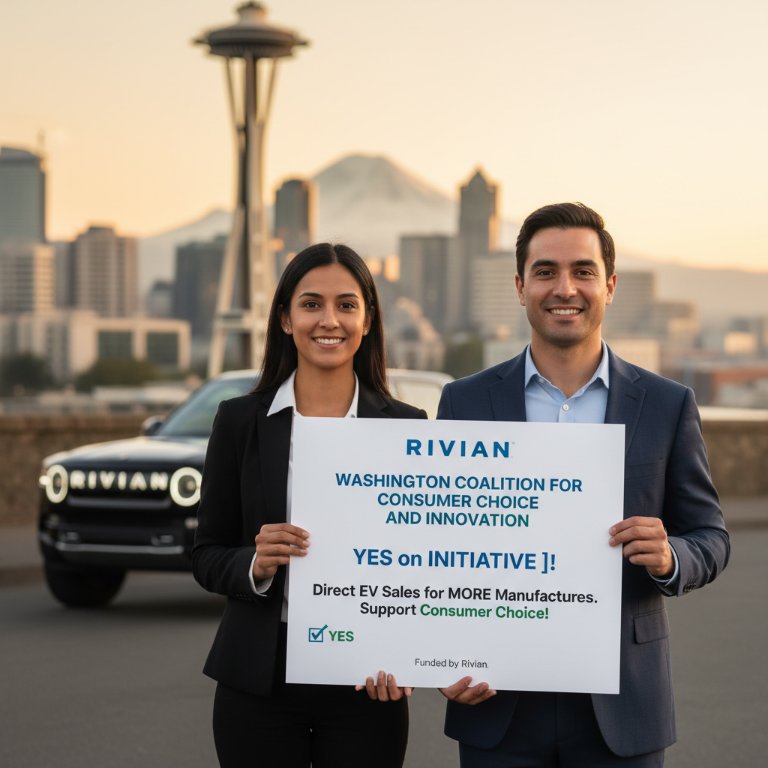
Rivian, the ambitious electric truck manufacturer, has injected a substantial $4.6 million into a Washington state ballot measure, signaling a powerful new front in the ongoing battle for direct-to-consumer EV sales. This significant investment, championed by the 'Washington Coalition for Consumer Choice and Innovation,' aims to dismantle the archaic dealership franchise laws that currently grant Tesla an exclusive right to sell directly to consumers in the state, while blocking other innovative EV makers like Rivian.
For years, the automotive retail landscape in the United States has been dominated by the traditional franchised dealership model, a system fiercely protected by powerful dealer associations. This model typically prohibits manufacturers from selling vehicles directly to the public, forcing them to operate through independent dealerships. However, Tesla masterfully circumvented these laws in many states, including Washington, by establishing its sales model before many of these regulations were updated to specifically address direct sales. This left a peculiar loophole, granting Tesla a unique competitive advantage and effectively stifling other EV innovators from replicating a crucial aspect of their customer-centric business model.
Rivian's Bold Investment and What It Means
Rivian's multi-million-dollar commitment is a clear declaration of intent. It's not just about opening up a new market; it's about leveling the playing field and asserting control over the entire customer experience – from configuration and purchase to service. For a company building a premium, technologically advanced product, maintaining a direct relationship with the buyer is paramount, ensuring brand consistency and direct feedback loops that are often diluted in a traditional dealership structure. This move is a direct challenge to the status quo and a testament to Rivian's long-term vision for market penetration.
- Increased Consumer Choice: A successful ballot measure would unlock direct sales for a broader range of EV manufacturers, including Rivian, Lucid, and Polestar, offering Washingtonians more options beyond Tesla and traditional dealership models.
- Streamlined Buying Experience: Direct sales often lead to a more transparent, less confrontational buying process, free from the traditional haggling and add-ons associated with dealerships.
- Enhanced Service Model: Manufacturers can integrate sales and service more seamlessly, potentially improving the post-purchase experience and customer satisfaction.
- Competitive Pressure: The introduction of more direct-to-consumer options could push traditional dealerships and legacy automakers to innovate their own sales and service approaches.
Why This Matters:
This isn't merely a localized legislative skirmish; it's a critical moment in the evolution of automotive retail. For consumers in Washington, this ballot measure promises unprecedented choice and a potentially superior buying experience for cutting-edge EVs. Imagine being able to configure your Rivian R1T or R1S online, knowing you're dealing directly with the manufacturer from start to finish. This empowers the buyer and aligns with the digital-first expectations of modern consumers.
For Rivian and other emerging EV manufacturers, this is nothing short of a strategic imperative. The ability to control their brand narrative, manage inventory efficiently, and build direct customer relationships without the overhead and complexities of establishing a vast dealership network is crucial for their financial health and market growth. Without direct sales, these companies face significant hurdles that their established, gas-powered counterparts do not, creating an uneven playing field.
On the other side, Tesla stands to lose its unique advantage in Washington. While it won't prevent them from selling vehicles, it will remove a critical barrier to entry for their direct competitors, intensifying the competition in a state that is increasingly embracing electric mobility. Traditional dealerships, too, face an existential threat as the direct sales model gains traction, forcing them to adapt or risk obsolescence. This ballot measure signals a broader shift in the industry, pushing towards a future where the customer relationship takes center stage, and legacy sales models are under increasing pressure to evolve.
Rivian's substantial investment in Washington's ballot measure represents a pivotal moment for EV market access. Its success would not only reshape the automotive retail landscape in the Pacific Northwest but also send a powerful message across the nation: the future of car buying, particularly for electric vehicles, is increasingly direct-to-consumer, challenging entrenched interests and ultimately benefiting the savvy EV enthusiast and prospective buyer.