Rivian Breaks Ground on Georgia Plant: A $5 Billion Bet on Mass Market Dominance
Rivian, the Irvine-based electric vehicle innovator, officially commenced construction of its colossal $5 billion manufacturing facility in Stanton Sp...
Editorial Team
World Of EV
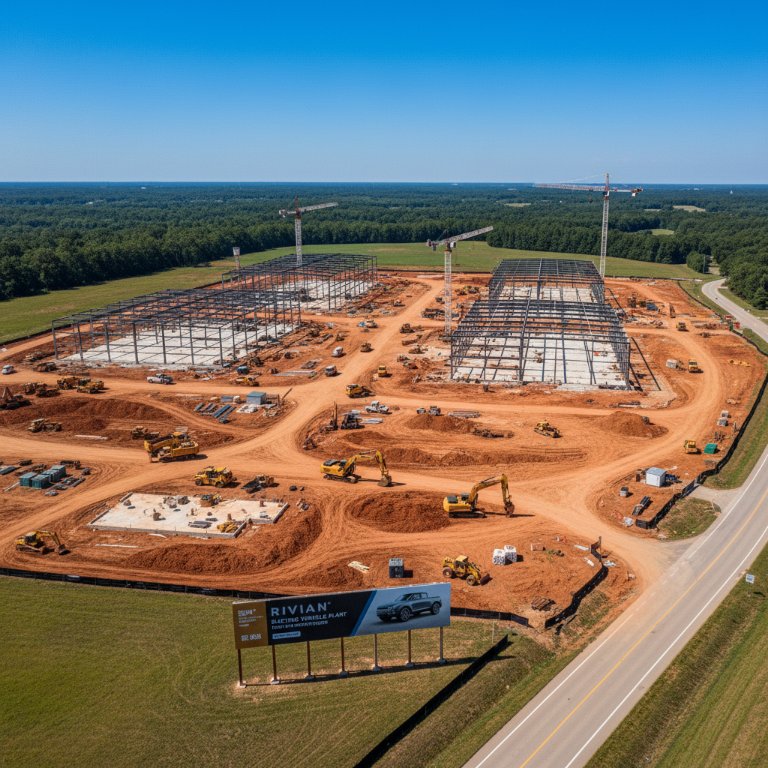
Rivian, the Irvine-based electric vehicle innovator, officially commenced construction of its colossal $5 billion manufacturing facility in Stanton Springs, Georgia. This ambitious undertaking is more than just a new factory; it represents a critical inflection point for the company, signaling a decisive move toward high-volume production and broader market penetration in the fiercely competitive EV landscape.
For years, Rivian has captivated enthusiasts with its adventure-focused R1T pickup and R1S SUV, alongside its critical Electric Delivery Van (EDV) fleet for Amazon. However, the automaker has simultaneously grappled with the inherent challenges of scaling production and achieving consistent profitability. Despite its Normal, Illinois plant boasting an annual capacity of up to 215,000 units, the company has faced significant operational losses and persistent cash burn, with recent delivery numbers indicating the immense climb still ahead.
The Georgia Investment: A Foundation for Future Growth
This new Georgia facility is a monumental investment, designed to be a cornerstone of Rivian's long-term strategy. Key details underscore its significance:
- Massive Investment: A staggering $5 billion capital expenditure.
- Job Creation: Expected to generate 7,500 long-term jobs by 2030, with potential growth to 10,000.
- Ambitious Capacity: Boasting an annual production capacity of 400,000 units, nearly doubling Rivian's total potential output once fully operational.
- Production Timeline: Customer vehicle production is anticipated to begin in 2028.
This new plant is not merely about increasing output for current models. It is strategically vital for the production of Rivian's upcoming, more accessible R2 and R3 platforms. These new vehicles, including the R2 SUV (expected to start around $45,000 and enter production in H1 2026 at the Normal, IL plant) and the even smaller, more affordable R3 and R3X crossovers, are designed to broaden Rivian's appeal beyond its premium R1 series and commercial EDVs.
Why This Matters: A Pivotal Moment for Rivian and the EV Market
This $5 billion investment in Georgia is arguably Rivian's most critical strategic play to date. It signals the company's unwavering commitment to transitioning from a niche player to a high-volume manufacturer, a shift imperative for its long-term viability.
- Addressing the Profitability Imperative: Rivian has consistently faced investor scrutiny over its substantial cash burn and negative operating margins. A 400,000-unit plant, combined with the lower cost basis of the R2/R3 platform, is essential for achieving the economies of scale necessary for sustained profitability. This move directly confronts concerns about the company's financial health, which has seen some analysts maintain cautious outlooks despite strategic partnerships.
- Market Diversification and Competition: The Georgia plant will be crucial for the successful rollout of the R2 and R3 lines, which are positioned to compete in more mainstream segments. This expansion will directly challenge established EV players like Tesla and legacy automakers ramping up their own affordable EV offerings. For consumers, this translates to more diverse, potentially more affordable, and distinctively Rivian options entering the market, intensifying competition and driving innovation.
- Geographic and Supply Chain Resilience: A second major manufacturing hub in the U.S. diversifies Rivian's production footprint, enhancing supply chain resilience and potentially reducing logistics costs. It also solidifies Rivian's commitment to domestic manufacturing, a key factor in government incentives and consumer perception.
- Execution is Key: While the vision is compelling, the execution of such a massive undertaking is fraught with challenges. Ramping up to 400,000 units by 2028, while simultaneously launching new models, demands flawless operational efficiency, robust supply chain management, and effective workforce development. Delays or cost overruns could exacerbate existing financial pressures.
Rivian's Georgia gigafactory represents a massive vote of confidence in its own future and a clear statement of intent to become a dominant force in the global EV market. This plant isn't just about building cars; it's about building a sustainable, scalable business that can truly keep the world adventurous forever.
Conclusion:
The groundbreaking of Rivian's Georgia facility is far more than a ceremonial event; it's a foundational step towards realizing the company's full potential. This $5 billion investment is critical for Rivian to achieve the scale, efficiency, and market reach required to thrive in the evolving EV landscape, offering a compelling promise of more accessible Rivian vehicles in the years to come. The industry will be watching closely to see if Rivian can successfully navigate the complexities of this expansion and deliver on its ambitious vision.