Regulatory Reckoning: Tesla's Robotaxi Future Hinges on Critical NHTSA Data Submission
Tesla's ambitious robotaxi vision, a cornerstone of its valuation and long-term strategy, is facing a pivotal moment. The company is scrambling to mee...
Editorial Team
World Of EV
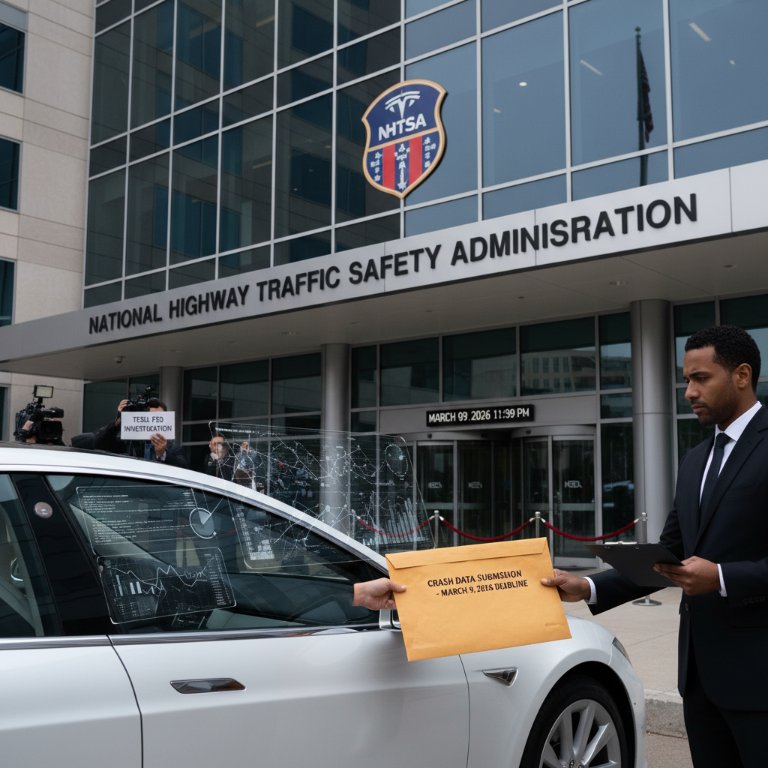
Tesla's ambitious robotaxi vision, a cornerstone of its valuation and long-term strategy, is facing a pivotal moment. The company is scrambling to meet a critical March 9, 2026, deadline set by the National Highway Traffic Safety Administration (NHTSA) to deliver comprehensive crash-related materials. This submission isn't merely procedural; it marks a high-stakes test of Tesla's Full Self-Driving (FSD) system amidst escalating regulatory scrutiny.
This looming deadline is the result of NHTSA's ongoing and intensive investigation into traffic violations allegedly committed by vehicles operating with Tesla's FSD. It also represents a second extension granted to the automaker, underscoring the depth and seriousness of the agency's probe and the significant challenges Tesla faces in adequately addressing these concerns.
The Data Deluge: Unpacking the NHTSA Mandate
NHTSA's demand for data is anything but superficial. Tesla must provide a treasure trove of detailed information, including video footage, event data recorder (EDR) files, and CAN bus data. Each of these components offers a critical lens into the moments leading up to and during alleged incidents:
- Video Footage: Provides visual context, showing driver behavior, road conditions, and the actions of other vehicles.
- Event Data Recorder (EDR) Files: Often referred to as a "black box," EDRs capture crucial vehicle parameters like speed, acceleration, braking, steering input, and seatbelt usage in the seconds before and after a crash event.
- CAN Bus Data: This deep dive into the vehicle's internal communication network reveals precise data streams from various sensors and control units, offering an unparalleled look at how the FSD system was perceiving and responding to its environment.
The sheer volume and granular nature of this requested data highlight NHTSA's determination to move beyond anecdotal reports and establish a definitive, data-driven understanding of FSD's performance and potential limitations on public roads.
FSD Under the Microscope: A History of Scrutiny
This latest deadline is not an isolated incident but rather the culmination of a prolonged period of regulatory examination for Tesla's FSD system. For years, the system, despite its "Full Self-Driving" moniker, has operated as an advanced Level 2 driver-assistance system requiring active driver supervision. However, its name and Tesla's aggressive marketing have often created a perception of full autonomy, leading to confusion and, in some cases, concerning driver behavior.
NHTSA has been actively investigating incidents involving Tesla's Autopilot and FSD systems, particularly those leading to crashes with emergency vehicles or other stationary objects. This current probe specifically targets "traffic violations allegedly committed by vehicles operating with Tesla's Full Self-Driving system," shifting the focus from mere crashes to the system's adherence to traffic laws. This marks a significant escalation in regulatory oversight, demanding not just safety during emergencies, but compliance in everyday driving scenarios.
Why This Matters: A Do-or-Die Moment for Tesla's Robotaxi Dreams
This March 9th deadline transcends a mere administrative hurdle; it represents a profound inflection point for Tesla and its ambitious future, particularly its highly anticipated robotaxi business. The outcome of this submission will resonate deeply across several critical fronts:
- Robotaxi Viability: Tesla's long-term valuation, often justified by analysts citing its potential to revolutionize urban mobility with a vast fleet of autonomous robotaxis, directly hinges on FSD's safety and regulatory approval. If NHTSA's analysis of the data reveals systemic issues or a concerning pattern of traffic violations, it could severely cripple the timeline and feasibility of widespread robotaxi deployment, shattering a key investor narrative.
- Investor Confidence and Market Perception: The market has largely given Tesla the benefit of the doubt on FSD's eventual success. A negative finding or an insufficient submission could lead to a significant re-evaluation of Tesla's risk profile and future growth projections. Who wins? Competitors like Waymo and Cruise, who operate with stricter regulatory oversight and often clearer distinctions between their truly autonomous systems and ADAS, stand to gain if Tesla falters. Tesla, on the other hand, faces a loss of its perceived lead.
- Regulatory Precedent: The thoroughness of NHTSA's investigation and the eventual findings will undoubtedly establish a significant precedent for how other advanced driver-assistance systems and nascent autonomous driving technologies are regulated. This could impact the entire industry, forcing greater transparency and more stringent testing protocols for all developers.
- Consumer Trust and Brand Reputation: Public perception of "self-driving" technology is fragile. Any indication that FSD is contributing to traffic violations, rather than preventing them, could severely erode consumer trust not just in Tesla, but in the entire concept of autonomous vehicles. This is a do-or-die moment for Tesla to demonstrate, unequivocally, that its technology is not only innovative but also demonstrably safe and compliant.
As the clock ticks towards March 9th, all eyes are on Tesla. The meticulous data demanded by NHTSA will either solidify the path forward for its Full Self-Driving system and the coveted robotaxi fleet, or it could force a significant recalibration of Tesla's autonomous ambitions. This is more than just data compliance; it's a defining moment that will profoundly shape the narrative, regulatory landscape, and competitive dynamics of the burgeoning autonomous vehicle industry.