Regulatory Reality Check: Tesla Ditches 'Autopilot' in California, Clarifies FSD to Avoid License Suspension
In a significant move that underscores the growing regulatory scrutiny on advanced driver-assistance systems (ADAS), Tesla has successfully averted a ...
Editorial Team
World Of EV
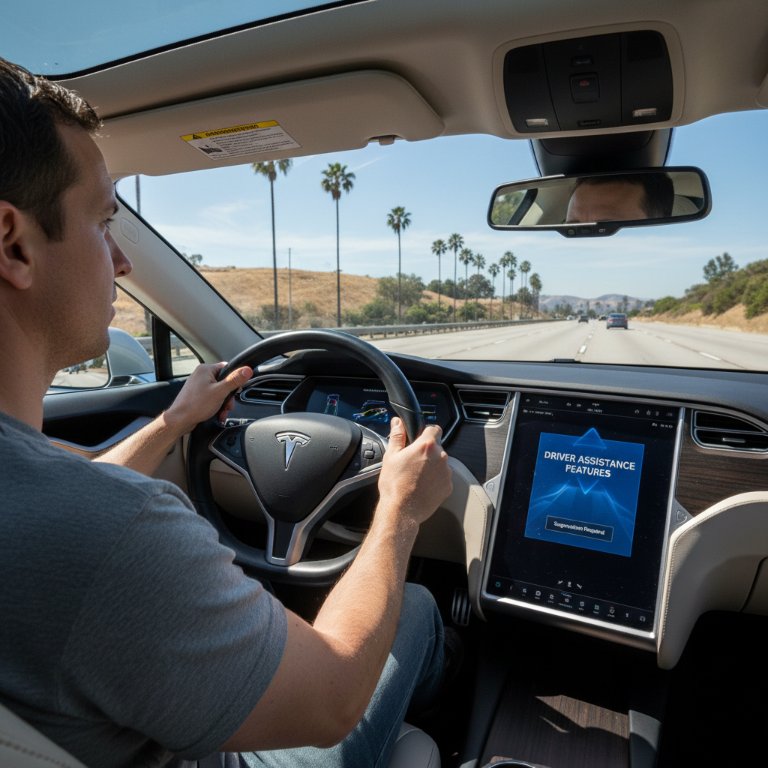
In a significant move that underscores the growing regulatory scrutiny on advanced driver-assistance systems (ADAS), Tesla has successfully averted a 30-day suspension of its dealer and manufacturer licenses in California. This critical outcome was achieved by the electric vehicle giant ceasing the use of the term 'Autopilot' in its marketing within the state and providing clear clarification that its 'Full Self-Driving' (FSD) system still necessitates active driver supervision. This action directly addresses a December 2025 administrative decision by the California Department of Motor Vehicles (DMV) that found Tesla's previous marketing claims misleading.
For years, Tesla's nomenclature for its ADAS features has been a lightning rod for criticism and regulatory concern. While competitors like General Motors with Super Cruise or Ford with BlueCruise have opted for more descriptive, safety-focused branding, Tesla has consistently used terms like 'Autopilot' and 'Full Self-Driving Capability' that critics argued implied a level of autonomy far beyond the systems' actual capabilities. This latest development marks a pivotal moment, forcing Tesla to align its marketing rhetoric with the technological reality and regulatory expectations in its largest U.S. market.
The DMV's Stance and Tesla's Course Correction
The December 2025 California DMV decision, which adopted an administrative law judge's findings, explicitly concluded that Tesla's use of 'Autopilot' to describe its ADAS features was misleading and violated state law. The initial ruling recommended a 30-day suspension of both Tesla's manufacturing and dealer licenses. However, the DMV's final decision offered an avenue for compliance, giving Tesla a deadline to take corrective action.
Tesla's corrective measures include:
- Elimination of 'Autopilot' Terminology: Tesla has stopped using the term 'Autopilot' in its marketing materials within California. This effectively retires a term that has been part of Tesla's branding since 2015 and has been widely criticized for potentially misleading drivers into a false sense of security. Some reports indicate 'Autopilot' has been replaced with more accurate descriptors like 'Traffic Aware Cruise Control' for the base functionality.
- Clarification of 'Full Self-Driving': The company has reinforced its messaging to clearly state that 'Full Self-Driving' (now often referred to as 'Full Self-Driving (Supervised)') requires active driver supervision at all times. This crucial clarification directly addresses the DMV's findings that previous marketing implied autonomous operation that the vehicles could not, and still cannot, achieve.
This outcome follows years of investigation by the California DMV, which first opened a formal inquiry into Tesla's marketing practices in 2021. The DMV filed formal accusations against Tesla's licenses in November 2023, alleging misleading statements about its vehicles' autonomous capabilities.
Why This Matters:
This ruling and Tesla's subsequent compliance represent a significant win for consumer protection and regulatory oversight in the rapidly evolving ADAS and autonomous driving landscape. It sets a clear precedent, not just for Tesla, but for every automaker developing and marketing advanced driver-assistance systems.
- Consumer Clarity and Safety: The primary beneficiaries are prospective EV buyers and current Tesla owners. Clearer marketing reduces the risk of misunderstanding about a system's capabilities, potentially preventing misuse and enhancing road safety. The shift away from ambiguous terms like 'Autopilot' means drivers should have a more realistic expectation of what their vehicle can and cannot do autonomously.
- Leveling the Playing Field for ADAS Marketing: This decision will likely influence how other manufacturers brand their ADAS features. Companies will need to be increasingly transparent and precise, avoiding terms that suggest full autonomy when it's not present. This could lead to a more standardized and less confusing lexicon across the industry, benefiting the entire EV ecosystem.
- Regulatory Authority Reinforced: The California DMV's firm stance demonstrates that regulators are actively monitoring and will enforce truth in advertising for critical safety technologies. This sends a strong signal that making exaggerated claims about nascent autonomous capabilities carries tangible business risks, including the threat of license suspensions in key markets.
- Tesla's Evolving Strategy: For Tesla, this moment could be seen as a necessary recalibration. While some might view it as a forced concession, it could ultimately lead to greater trust and credibility in its FSD system as it progresses. However, it also highlights the persistent gap between CEO Elon Musk's ambitious proclamations about full autonomy and the current reality of the technology. The company must now navigate its messaging more carefully, balancing innovation claims with regulatory requirements.
This decision marks a critical juncture for Tesla and the broader automotive industry. It solidifies the expectation that marketing for advanced driver-assistance systems must be unequivocally clear, emphasizing driver responsibility until true, verifiable autonomy is achieved. As the technology continues to advance, transparent communication will be paramount for building public trust and ensuring safe deployment.