Raptee.HV Unleashes T30, Redefining EV Two-Wheeler Ownership with Car-Grade Charging and Unprecedented CX Strategy
Chennai, India – In a bold move poised to reshape India's burgeoning electric two-wheeler market, Raptee.HV has commenced large-scale deliveries of it...
Editorial Team
World Of EV
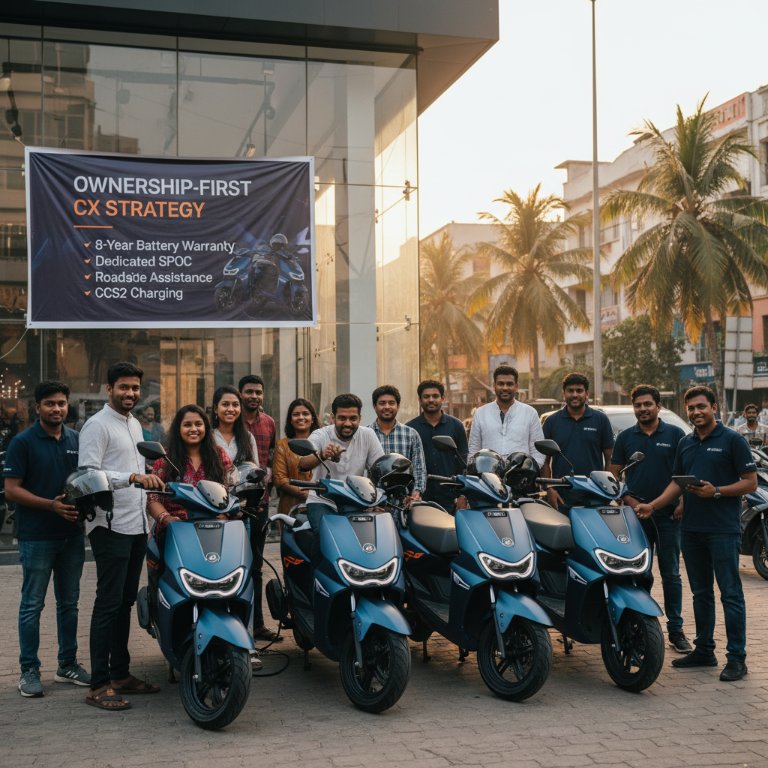
Chennai, India – In a bold move poised to reshape India's burgeoning electric two-wheeler market, Raptee.HV has commenced large-scale deliveries of its T30 electric two-wheeler. The company is not merely introducing another EV; it's launching an 'ownership-first' customer experience (CX) strategy designed to directly confront the pervasive anxieties that have historically plagued EV adoption in the country. This comprehensive approach, spearheaded by an industry-leading warranty and car-grade charging compatibility, positions Raptee.HV as a formidable player committed to long-term customer satisfaction.
For years, prospective EV two-wheeler buyers in India have grappled with significant concerns, including battery degradation, limited charging infrastructure, range anxiety, and inconsistent service support. A recent study even highlighted that electric scooters report nearly twice as many problems as their petrol counterparts, particularly concerning brakes, lights, and electrical components. Raptee.HV’s calculated entry seeks to alleviate these pain points, establishing a new benchmark for reliability and peace of mind in a segment hungry for maturity.
Eradicating Range and Longevity Worries
The most significant hurdle for many EV adopters remains the lifespan and cost of the battery. While standard electric scooter battery warranties typically range from 2 to 5 years, Raptee.HV is setting a new standard to instill confidence:
- 8-year battery warranty: This is a top-tier offering, directly competing with the most generous warranties from established players like Ola Electric and Ather Energy's Rizta, which also provide 8-year coverage on their battery packs. Such extensive coverage significantly mitigates fears of costly battery replacement, which can account for 40-50% of an e-scooter's total cost.
- 3-year vehicle warranty: Complementing the battery coverage, a substantial 3-year warranty on the entire vehicle ensures comprehensive protection against manufacturing defects and component failures.
Beyond the Sale: Unparalleled Customer Support
The ownership experience extends far beyond the product itself. In a market where service uncertainty can deter potential buyers, Raptee.HV is introducing a dedicated support framework:
- Dedicated Service Point of Contact (SPOC): Each customer will benefit from a personal SPOC, streamlining communication and ensuring a consistent, reliable channel for all service-related inquiries. This bespoke attention is a stark contrast to the often fragmented or impersonal service experiences reported by some EV owners.
- Structured Roadside Assistance: Addressing anxieties about breakdowns or running out of charge mid-journey, a robust roadside assistance program offers critical on-demand support, a vital feature for promoting confidence in long-distance travel on electric two-wheelers.
Unlocking Universal Charging with CCS2
Perhaps the most groundbreaking aspect of Raptee.HV's strategy is the integration of car-grade CCS2 charging compatibility. India's EV charging landscape for two-wheelers has historically been fragmented, relying on slower AC plugs or Bharat EV standards like Bharat AC-001 and Bharat DC-001, which are designed for lower power charging. This fragmentation contributes heavily to range anxiety.
- Car-grade CCS2 charging compatibility: By adopting CCS2, a globally established standard widely used for fast DC charging in larger EVs like cars and commercial vehicles, Raptee.HV is doing more than just offering a charging port. It's opening up its two-wheelers to a far more extensive and powerful public charging network that is rapidly expanding across India. This move is a significant leap towards standardization and future-proofing, allowing T30 owners to leverage high-speed charging infrastructure, typically delivering 50 kW to 350 kW, previously inaccessible to most electric two-wheelers.
Why This Matters:
Raptee.HV's 'ownership-first' strategy with the T30 is far more than a product launch; it's a direct challenge to the status quo of the Indian EV two-wheeler market. By front-loading customer confidence through unparalleled warranties and universal charging, Raptee.HV is setting a new industry benchmark. This aggressive stance will undoubtedly place immense pressure on existing competitors to elevate their own customer experience offerings, particularly those facing scrutiny over product quality and after-sales support. For the savvy EV enthusiast and prospective buyer, this signals a maturation of the market where the total cost of ownership and a seamless experience are becoming paramount. Moreover, the adoption of CCS2 could be a pivotal moment for charging infrastructure, potentially accelerating the universalization of public charging points for both two and four-wheelers, thereby dissolving one of the primary barriers to mass EV adoption: range anxiety and charging uncertainty. Who wins? Early adopters get peace of mind, Raptee.HV builds strong brand loyalty, and ultimately, the entire Indian EV sector benefits from a more robust, consumer-centric ecosystem. Who loses? Manufacturers resistant to investing in long-term customer value and modern charging solutions will find themselves increasingly outmaneuvered.
Raptee.HV's journey begins in Chennai, with a strategic expansion to Bengaluru in April 2026. The success of this 'ownership-first' model will be closely watched, as it holds the potential to not only redefine what consumers expect from an electric two-wheeler but also to accelerate the broader adoption of electric mobility across India.