Polestar Charts Ambitious Course with Four New EVs by 2028: A Strategic Play for Market Dominance
Swedish electric vehicle manufacturer Polestar has ignited the premium EV market with an ambitious roadmap, announcing plans to introduce four new ele...
Editorial Team
World Of EV
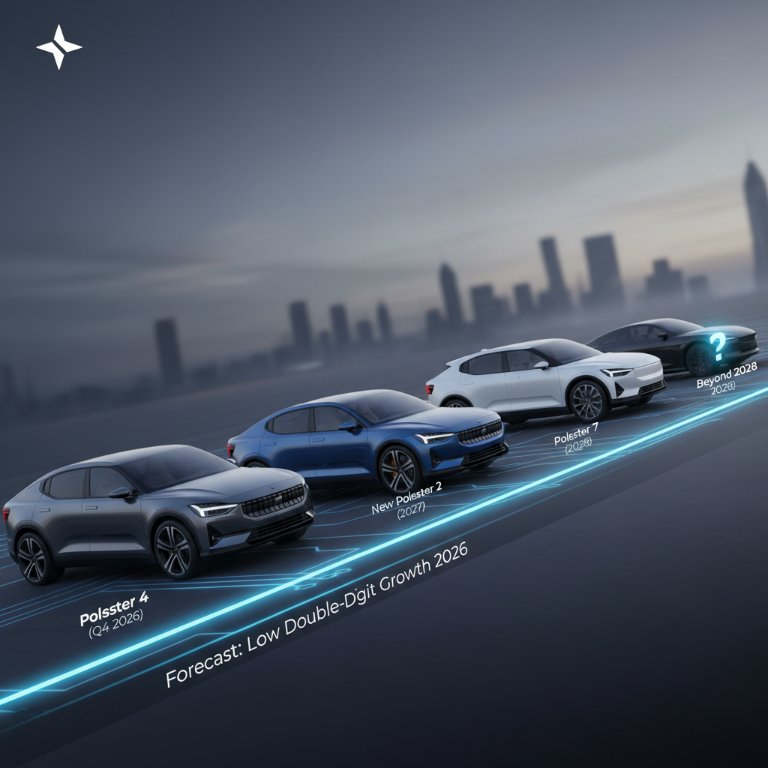
Swedish electric vehicle manufacturer Polestar has ignited the premium EV market with an ambitious roadmap, announcing plans to introduce four new electric models by 2028. This aggressive expansion signals a decisive move to penetrate high-demand segments and solidify its position as a serious contender in the luxury electric arena. For a brand that has been steadily building its portfolio since spinning off from Volvo, this strategy represents a significant acceleration, pushing Polestar into a direct confrontation with established luxury players in critical, high-volume segments.
A Strategic Onslaught: Four New Models by 2028
Polestar's forthcoming lineup isn't merely an incremental update; it's a comprehensive assault on key market segments, designed to broaden its appeal and capture significant market share. The planned introductions include:
- Polestar 4 Variant (Expected Q4 2026): A new body style for the distinctive Polestar 4, combining estate-car space with SUV versatility. This innovative approach addresses a growing consumer demand for practical yet stylish crossovers, offering enhanced utility without compromising design.
- Polestar 2 Successor (Early 2027): A completely redesigned, fully new iteration of its volume-selling sedan. This next-generation model is expected to bring significant advancements in technology, performance, and efficiency, crucial for maintaining its competitive edge in a fiercely contested segment.
- Polestar 7 (2028): A crucial entry into the compact premium BEV SUV segment. This model is poised to be a significant volume driver, targeting an area ripe for growth and currently dominated by few truly premium electric options.
This robust product pipeline is critical as Polestar aims to leverage its strong design language and performance credentials across a wider spectrum of vehicle types, moving beyond the initial offerings that, in some cases, shared architectural foundations with Volvo platforms.
Riding the Momentum: Sales Growth Fuels Expansion
This aggressive product roadmap isn't merely a speculative venture; it's underpinned by tangible sales success. Polestar achieved its best retail sales year in 2025, laying a strong foundation for future growth. The company anticipates carrying this momentum forward, forecasting low double-digit retail volume growth for 2026. This financial buoyancy is crucial for funding such an ambitious development and production schedule, demonstrating the brand's growing traction in the global EV market.
Why This Matters:
This latest announcement is Polestar's definitive play for mainstream premium EV relevance. For too long, the brand has been perceived by some as a niche player, occasionally overshadowed by its parent company, Volvo, or the sheer market dominance of Tesla. This aggressive expansion signals a clear intent to step out of that shadow and into the ring with formidable rivals such as BMW i, Mercedes-EQ, and Audi's e-tron lineup.
The strategic focus on high-demand segments – particularly the compact premium BEV SUV with the Polestar 7 and the versatile Polestar 4 variant – is remarkably shrewd. These are the battlegrounds where volume is won, and profitability is secured. Neglecting these rapidly growing segments would be a fatal error for any aspiring premium brand.
The successor to the Polestar 2 is equally vital. While critically acclaimed, the original Polestar 2 is maturing in a rapidly evolving market. A “fully new” successor implies a dedicated EV platform and significant technological leaps, essential for maintaining customer interest and fending off newer, more advanced rivals.
This ambitious strategy isn't without risk. Delivering four new models, particularly two completely new platforms (implicitly for the Polestar 2 successor and Polestar 7) within such a tight timeframe, demands immense R&D, manufacturing prowess, and significant capital investment. However, for Polestar, this isn't merely an expansion; it’s a critical moment to define its future as a standalone global premium EV brand, moving beyond its initial growth phase. Success here will cement its position; a failure to execute effectively could relegate it to the fringes of an increasingly competitive market.
Polestar's unveiling of four new electric models by 2028 is more than just a product announcement; it's a declaration of intent. Backed by solid sales growth, the Swedish marque is poised to significantly broaden its appeal, offering a compelling array of premium EVs designed to meet diverse consumer needs. The coming years will be pivotal, determining whether Polestar can successfully transition from an intriguing challenger to a formidable force in the global electric vehicle landscape.