Polestar 2's Remarkable Evolution: A Rear-Drive Rebirth Delivering Class-Leading Efficiency and Refinement
Polestar, the Swedish electric performance car brand, has quietly orchestrated a significant transformation of its flagship Polestar 2, moving it from...
Editorial Team
World Of EV
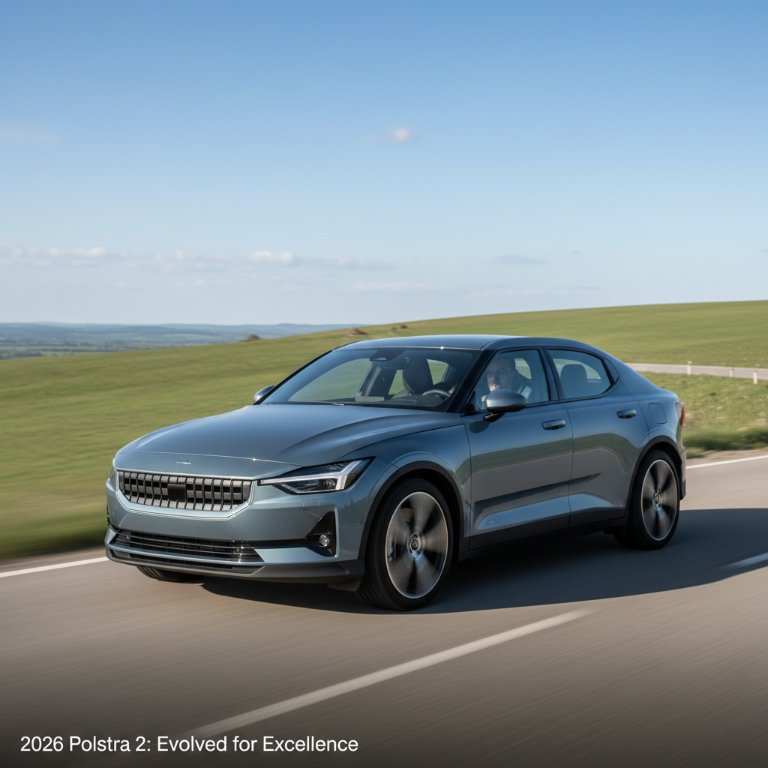
Polestar, the Swedish electric performance car brand, has quietly orchestrated a significant transformation of its flagship Polestar 2, moving it from a promising contender to a truly proficient and highly desirable electric vehicle. Our recent review of the 2026 Polestar 2 Long Range Single Motor reveals that continuous evolution has made this iteration a dramatically better car than its 2022 launch model, addressing critical areas that impact the everyday owner experience.
For those unfamiliar with Polestar's journey, the brand emerged from Volvo's performance arm, launching its first pure EV, the Polestar 2, on Volvo's Compact Modular Architecture (CMA) platform – a platform originally designed to accommodate internal combustion engines. While innovative at its launch, this heritage presented certain compromises, particularly in areas like efficiency and driving dynamics. However, Polestar's commitment to iterative improvement, rather than waiting for a full platform overhaul, has paid dividends, showcasing how deep engineering refinements can redefine an existing product.
A New Benchmark in Efficiency and Range
Perhaps the most impactful improvement for prospective EV buyers is the monumental leap in efficiency and real-world range. The 2026 Polestar 2 Long Range Single Motor now approaches an impressive 500km between recharges in real-world driving scenarios. This isn't just a marginal gain; it's a critical shift that significantly reduces range anxiety and broadens the car's appeal for longer journeys and daily commutes alike.
Key efficiency improvements include:
- Efficiency Boost: The energy consumption has dramatically improved from 17.4 kWh/100km in the MY22 model to a far more competitive 15 kWh/100km for the MY26, as observed over the same 50km test loop.
- Practical Range: This enhanced efficiency directly translates into a real-world driving range now nearing 500km, making the Polestar 2 a genuine long-distance companion.
Refined Dynamics: The Power of Rear-Wheel Drive
The 2026 model's transition to a rear-drive layout for its single-motor variant is a masterstroke, fundamentally altering the vehicle's character. This shift has not only unlocked greater efficiency but also delivered a more sophisticated and engaging driving experience.
Drivers will immediately appreciate:
- Balanced Steering: The steering dynamics are now more balanced and natural, shedding the front-heavy feel of earlier iterations and providing better feedback.
- Enhanced Ride Comfort: The suspension tuning has been refined, offering a noticeably better ride comfort that absorbs road imperfections with greater poise.
- Quieter Cabin: Cabin noise levels have been significantly reduced, contributing to a more premium and serene interior ambiance.
While the rear seat space remains a persistent design constraint, the overall refinement in these critical areas makes the 2026 Polestar 2 a far more enjoyable and livable EV to own.
Why This Matters:
This continuous evolution of the Polestar 2 is more than just a spec bump; it's a powerful statement from Polestar. For the brand, it underscores a commitment to refinement and a willingness to invest in existing platforms to extract their maximum potential. This isn't a company resting on its laurels or simply waiting for bespoke EV platforms (like the one underpinning the upcoming Polestar 3) to solve all problems. Instead, it demonstrates an agile engineering approach that addresses customer feedback and market demands head-on.
Who Wins? Consumers, first and foremost. Prospective buyers gain access to a significantly more compelling and mature EV package, offering competitive range, refined driving dynamics, and a premium experience. Existing Polestar 2 owners also win, as the brand's commitment to improvement enhances the long-term perception and potential resale value of their vehicles. Polestar itself strengthens its position against premium rivals like the Tesla Model 3 Long Range and BMW i4, proving that thoughtful engineering can elevate a product initially constrained by its platform.
What's Next? This success story sets a high bar for Polestar's upcoming, purpose-built EVs (Polestar 3, 4, 5). It suggests that the brand understands the nuances of a premium EV experience and is capable of delivering sophisticated, user-centric improvements. The market will now expect nothing less than this level of refinement and efficiency from all future Polestar offerings.
The 2026 Polestar 2 Long Range Single Motor stands as a testament to the power of relentless iteration. What began as a promising but somewhat compromised entry into the EV market has matured into a genuinely class-competitive vehicle, proving that evolution, when executed with precision, can be just as revolutionary as a ground-up redesign.