Oregon First: Lemonade Unlocks Massive Insurance Savings for Tesla FSD Drivers
A significant shift in automotive insurance has arrived, with insurtech innovator Lemonade launching an 'Autonomous Car' insurance product for Tesla o...
Editorial Team
World Of EV
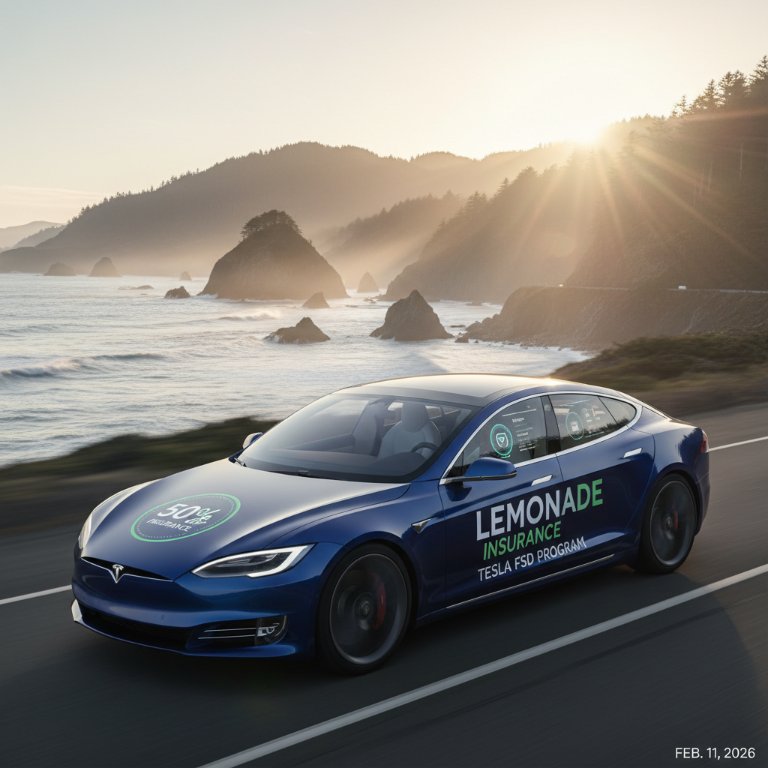
A significant shift in automotive insurance has arrived, with insurtech innovator Lemonade launching an 'Autonomous Car' insurance product for Tesla owners in Oregon. Announced on February 10, 2026, and reported on February 11, 2026, this pioneering program offers eligible Tesla owners a remarkable approximately 50% discount on insurance costs for miles driven using Tesla's Full Self-Driving (FSD) system.
This move by Lemonade is a direct response to Tesla's long-standing claims about the enhanced safety of its FSD technology, a system that has been continuously evolving and, at times, navigating a complex regulatory landscape. For years, the industry has grappled with how to accurately price insurance for advanced driver-assistance systems, and particularly for FSD, which Tesla maintains significantly reduces accident rates. Traditional insurers have often remained cautious, citing a lack of long-term safety data and the complexities of liability in partially autonomous vehicles.
A New Era for Autonomous Insurance
Lemonade's 'Autonomous Car' insurance product in Oregon is a groundbreaking step in integrating advanced driver-assistance systems directly into insurance pricing models. The program offers tangible benefits to Tesla owners, directly translating FSD usage into substantial cost savings.
Key features of this new offering include:
- Significant Discount: Eligible Tesla owners receive approximately 50% off insurance costs for miles driven while FSD is engaged.
- Data-Driven Pricing: Lemonade explicitly states the discount is based on Tesla's safety data, which indicates FSD-driven miles are approximately twice as safe as manually driven miles.
- Oregon Pilot Program: The product is currently exclusive to Oregon, with plans for expansion to other regions.
- No Minimum Usage Requirement: Even occasional FSD users can benefit from discounted rates on those specific miles.
- Seamless Integration: The system works through a direct integration with Tesla vehicles, requiring explicit driver permission to distinguish between manual and FSD-driven miles.
- Hardware and Firmware Requirements: The program is currently limited to Tesla vehicles equipped with Hardware 4 or newer, running firmware version 2025.44.25.5 or later.
This 50% discount significantly surpasses Tesla's own insurance program, which typically offers a maximum of 10% off for FSD usage on certain coverages.
Why This Matters:
This development is more than just an insurance discount; it's a profound market signal that validates Tesla's Full Self-Driving technology and marks a pivotal moment for the wider autonomous vehicle industry. Lemonade, an insurtech company built on AI and a data-first approach, is making a bold bet on the safety claims of FSD.
Who Wins?
- Tesla Owners: Immediately benefit from significantly reduced insurance premiums, making the FSD package a more attractive proposition.
- Tesla: This third-party validation of FSD's safety performance could boost consumer confidence, accelerate FSD adoption, and potentially increase vehicle sales. It strengthens Tesla's narrative around FSD's safety and value.
- Lemonade: Gains a significant first-mover advantage in the autonomous vehicle insurance space, leveraging advanced data analytics to offer a highly competitive product. This positions them as an innovative leader in a rapidly evolving market.
Who Loses?
- Traditional Insurers: Companies relying on conventional underwriting models face increased pressure to adapt. Their hesitation to embrace telematics and data from autonomous systems could leave them behind in a market poised for disruption.
- Other Autonomous Tech Developers (Potentially): If FSD gains a significant insurance advantage, it could indirectly pressure other manufacturers to prove the safety of their own autonomous systems to unlock similar benefits.
This initiative by Lemonade signals a fundamental shift in how liability and risk are assessed in the age of autonomy. It moves towards a future where insurance premiums are dynamically calculated based on actual driving behavior and the safety performance of advanced vehicle systems, rather than solely on human driver profiles. This is a 'do-or-die' moment for traditional insurance models, forcing them to either innovate or risk obsolescence as vehicles become increasingly intelligent and accident rates potentially decline due to autonomous technology.
Looking Ahead
The launch of Lemonade's Autonomous Car insurance in Oregon is a powerful indicator of the evolving relationship between automotive technology and the insurance industry. As FSD continues to mature and expand its capabilities, expect to see other states and insurance providers follow suit. This program could accelerate the mainstream adoption of FSD by significantly lowering the total cost of ownership for Tesla vehicles, further cementing autonomous driving as a financially prudent choice for consumers. The future of automotive insurance is clearly data-driven, and Oregon has just become the proving ground for a potentially massive industry transformation.