North America's EV Charging Network Leaps Forward, NACS Adoption Accelerates Mainstream Transition
The landscape of electric vehicle ownership in North America is undergoing a profound transformation, with 2025 marking a pivotal year for charging in...
Editorial Team
World Of EV
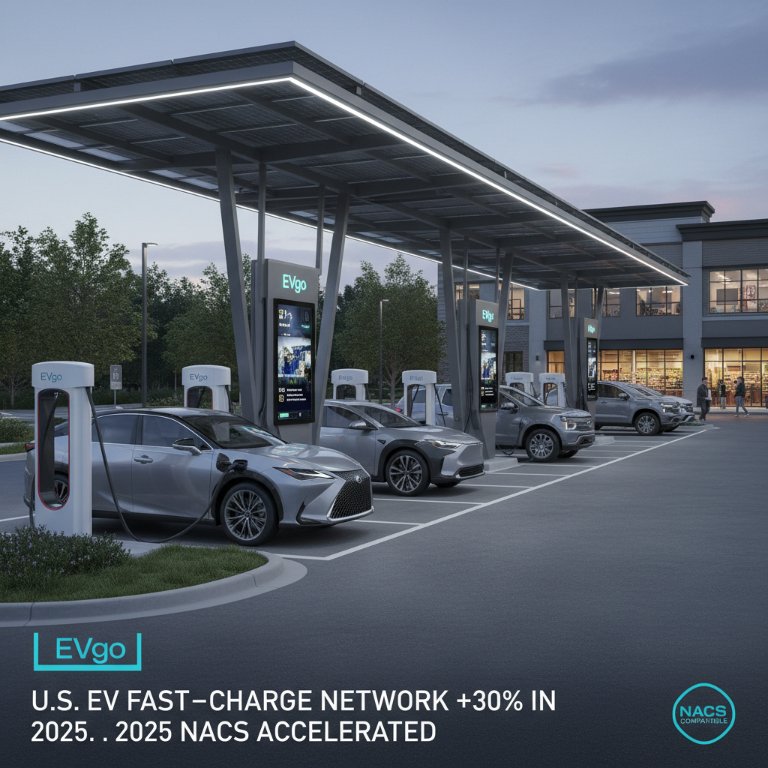
The landscape of electric vehicle ownership in North America is undergoing a profound transformation, with 2025 marking a pivotal year for charging infrastructure. After years of consumer frustration over unreliable chargers and a fragmented user experience, the U.S. fast-charging network witnessed an unprecedented surge, growing by over 30 percent. This dramatic expansion, coupled with the rapid adoption of the North American Charging Standard (NACS), signals a maturing market finally addressing its most significant hurdle: range and charging anxiety.
The Charging Revolution of 2025: Reliability and Reach
Last year saw the installation of more than 18,000 new fast-charging ports across the United States, bringing the total to over 13,200 public fast-charging stations. This isn't merely a numbers game; it represents a qualitative leap forward. The expansion directly addresses long-standing complaints about broken chargers and the necessity of juggling multiple apps and payment systems. For EV drivers, this means a significantly improved customer experience, fostering greater confidence in long-distance travel and daily charging needs. The days of 'charger anxiety' are rapidly receding into the rearview mirror, replaced by a growing sense of reliability and accessibility.
NACS: The Unifying Standard Takes Hold
Fueling this transformation is the accelerated rollout of NACS connectors. Industry leader EVgo has committed to an aggressive timeline, planning for over 500 NACS connectors to be live by the end of 2026, with nearly 100 already operational across its network. This rapid conversion underscores the industry's widespread acceptance of NACS as the dominant fast-charging standard, effectively simplifying the charging ecosystem for consumers.
Automakers, recognizing the imperative of seamless charging, are swiftly integrating NACS directly into their vehicles. Toyota, a brand that has historically approached the full-electric transition with caution, has now confirmed its 2026 Lexus RZ will come standard with a NACS inlet. This is a monumental step, as it immediately doubles the public DC fast-charging locations accessible to Toyota and Lexus BEV drivers by providing direct access to the expansive and highly reliable Tesla Supercharger network. Furthermore, Toyota plans to offer adapters for older models, ensuring existing owners benefit from this expanded access. This strategic pivot from Toyota, often perceived as a latecomer to the BEV race, highlights the undeniable momentum behind NACS and the pressure on all manufacturers to deliver a superior charging experience.
Why This Matters:
This confluence of significant network growth and accelerating NACS adoption marks a critical inflection point for the EV industry. For EV drivers, this is an unequivocal win. They gain access to a larger, more reliable, and increasingly standardized charging network, directly mitigating past concerns that hindered broader adoption. The days of proprietary charging silos are ending, paving the way for a more unified and user-friendly experience.
Tesla solidifies its strategic advantage. While opening its Supercharger network to other automakers, it effectively positions its charging technology as the industry standard, extending its influence and monetizing its infrastructure investment. For EVgo, being an early mover in NACS integration strengthens its competitive position, appealing to a wider range of EV owners and future buyers. Toyota and Lexus, by fully embracing NACS, address a major perceived weakness in their nascent BEV strategy, dramatically enhancing the appeal and practicality of their electric offerings and potentially accelerating their market share growth in the coming years. This signals a serious commitment to the electric future after a period of mixed signals.
Conversely, legacy charging providers slow to adapt to NACS face significant risks of obsolescence. Any automaker still debating its NACS strategy will find itself at a distinct disadvantage as consumer expectations for universal, reliable charging rapidly solidify. This is not merely an upgrade; it’s a market realignment.
The Road Ahead: Confidence and Consolidation
The advancements witnessed in 2025 fundamentally alter the EV narrative. A robust, reliable, and increasingly standardized charging infrastructure removes one of the last major barriers to mainstream EV adoption. We are entering an era of greater driver confidence, fueled by a network that is not just growing in size, but in quality and accessibility. The convergence around NACS will undoubtedly spur further innovation and competition within the charging sector, ultimately benefiting every current and prospective EV owner and cementing the electric vehicle's place as the dominant form of personal transportation.