NHTSA Extends Tesla FSD Deadline: A Crucible Moment for Autonomy's Credibility
The U.S. National Highway Traffic Safety Administration (NHTSA) has granted Tesla a crucial reprieve, extending the deadline for the automaker to resp...
Editorial Team
World Of EV
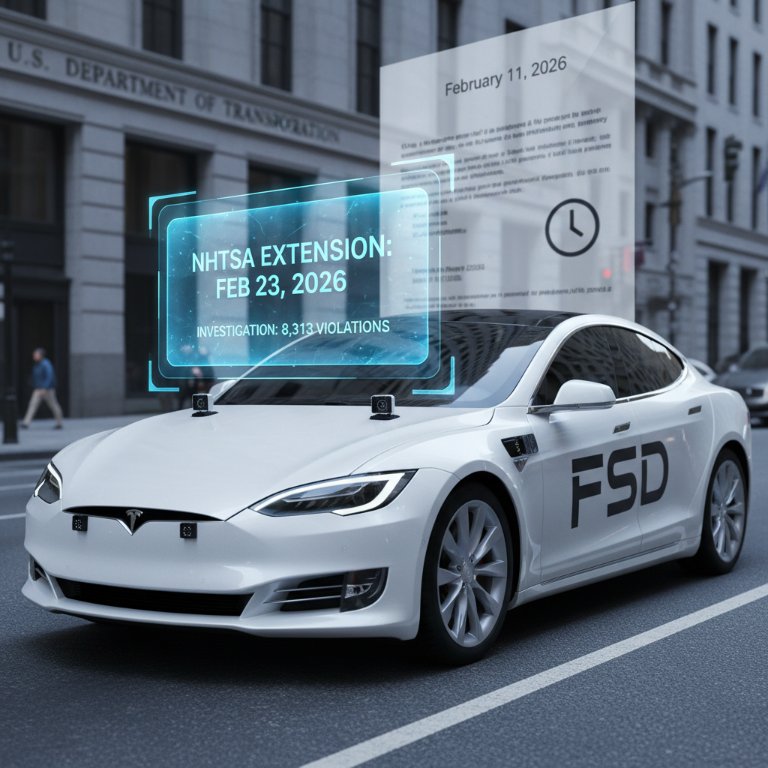
The U.S. National Highway Traffic Safety Administration (NHTSA) has granted Tesla a crucial reprieve, extending the deadline for the automaker to respond to an escalating defect investigation into its Full Self-Driving (FSD) system until February 23, 2026. This development, reported on February 11, 2026, isn't just a procedural update; it's a stark reminder of the intense regulatory scrutiny shadowing Tesla's ambitious pursuit of autonomous driving, placing both the company and the broader industry at a critical crossroads.
NHTSA's investigation, initially launched in October of the previous year, targets a staggering 8,313 potential traffic violations involving FSD-equipped Teslas. This isn't a new phenomenon for Tesla; the company has faced consistent pressure from regulators over its Autopilot and FSD systems, including previous probes into phantom braking incidents and collisions with emergency vehicles. Unlike some manufacturers that proceed with caution in developing advanced driver-assistance systems (ADAS), Tesla has been a frontrunner in pushing its FSD technology directly to consumers, often with beta versions that require active driver supervision. This approach has consistently drawn the eye of federal safety watchdogs concerned about the real-world implications of software still under development.
The Heart of the Investigation: Alleged Traffic Violations
At the core of this particular probe are widespread reports of FSD-equipped vehicles allegedly failing to adhere to fundamental traffic laws. These aren't minor glitches; they encompass critical safety infractions that pose direct risks to occupants and other road users. While NHTSA has not detailed specific incidents in its public announcement regarding the extension, the implication of “traffic violations” suggests issues that could range from:
- Improper lane changes or weaving.
- Failure to stop at stop signs or red lights.
- Driving in incorrect lanes or aggressive maneuvers.
Tesla’s FSD, while marketed as a step toward full autonomy, operates as a Level 2 ADAS, demanding constant driver engagement and readiness to intervene. The agency’s focus on these alleged violations underscores a growing concern that the system, even with a human in the loop, may not be performing safely or predictably in complex real-world scenarios. This investigation is less about minor software bugs and more about the fundamental operational safety and reliability of a system marketed as ‘Full Self-Driving.’
Why This Matters:
This extended deadline is more than a mere administrative formality; it represents a high-stakes moment for Tesla and the entire autonomous vehicle ecosystem.
- For Tesla's FSD Credibility: A failure to adequately address NHTSA's concerns could severely damage FSD's reputation, potentially leading to mandated recalls, significant software redesigns, or even restrictions on its public deployment. Given the system's importance to Tesla's valuation and future vision, this is a do-or-die moment for its credibility and widespread acceptance.
- Impact on Consumer Trust: Every headline regarding FSD safety issues erodes public trust in autonomous driving technology. For savvy EV enthusiasts and prospective buyers, consistent regulatory scrutiny and alleged safety lapses create hesitation, delaying the broader adoption of advanced ADAS and truly autonomous vehicles.
- Regulatory Precedent: NHTSA's persistent and rigorous investigation sets a powerful precedent for how regulatory bodies will oversee the development and deployment of autonomous driving systems worldwide. It signals that regulators are prepared to take a firm stance on safety, moving beyond passive observation to proactive enforcement, especially as these systems become more capable and complex.
- Industry-Wide Implications: Competitors like Waymo, Cruise, and even traditional automakers developing their own Level 3 and Level 4 systems are watching closely. The outcome of this investigation could influence future certification processes, testing methodologies, and public perception of all advanced autonomous solutions.
The February 23 deadline looms large for Tesla, forcing the company to present a compelling and comprehensive response to NHTSA's serious allegations. How Tesla addresses these potential violations, and NHTSA's subsequent assessment, will not only shape the future of FSD but will also significantly influence the public's perception and regulatory framework for autonomous vehicles for years to come.