New Mexico Plugs In New EV Road Fee: A Blueprint for Sustainable Infrastructure Funding?
New Mexico Governor Michelle Lujan Grisham has signed Senate Bill 2 (SB 2) into law, marking a significant shift in how the state plans to fund its vi...
Editorial Team
World Of EV
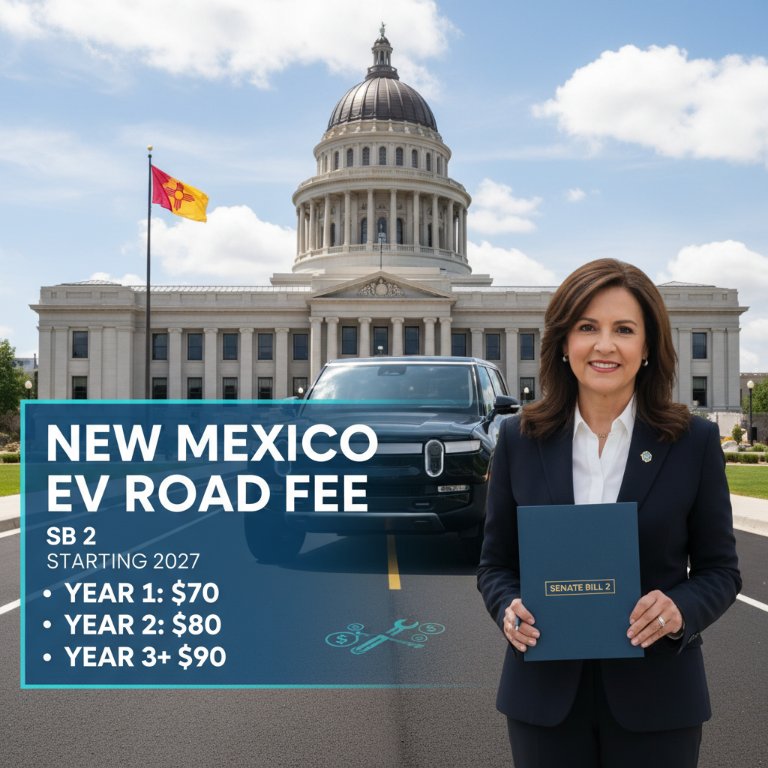
New Mexico Governor Michelle Lujan Grisham has signed Senate Bill 2 (SB 2) into law, marking a significant shift in how the state plans to fund its vital road infrastructure. Starting in 2027, electric vehicle (EV) owners will face a new annual flat fee, a direct response to the dwindling revenue traditionally collected through gasoline taxes. This move positions New Mexico among a growing number of states grappling with the financial implications of the EV transition, ensuring all road users contribute to maintenance costs, regardless of their propulsion choice.
New Mexico's New Road Funding Mandate
Under the newly enacted SB 2, EV owners in New Mexico will contribute an initial $70 per year, starting in 2027. This fee is not static, however. It will incrementally rise to $80 in 2028 and then stabilize at $90 annually from 2029 onwards. This phased approach allows for a gradual integration of the charge, giving residents time to adjust to the new financial reality of EV ownership in the state. The legislation explicitly aims to bridge the funding gap created as more drivers opt for electric vehicles, which bypass traditional fuel excise taxes.
Addressing the Road Funding Dilemma
For decades, state and federal governments have relied heavily on fuel taxes to maintain and upgrade road networks. However, the accelerating adoption of electric vehicles, while crucial for environmental sustainability, poses an undeniable challenge to this long-standing funding model. As EVs become more prevalent, the traditional tax base erodes, leaving a significant shortfall in funds designated for road repairs, bridge maintenance, and new infrastructure projects. New Mexico's decision to implement a flat EV fee is a pragmatic attempt to future-proof its infrastructure budget, ensuring that the burden of road upkeep is more equitably distributed across all vehicle types on its highways.
Why This Matters:
- Fairness and Equity: Proponents argue that the flat fee ensures all road users, including EV drivers, contribute their fair share to infrastructure. Previously, EV owners effectively drove on roads funded largely by gasoline vehicle owners. This move levels the playing field, addressing a long-standing point of contention for internal combustion engine (ICE) vehicle drivers.
- Impact on EV Adoption: While a relatively modest fee, any additional cost can influence consumer decisions. For prospective EV buyers, especially those considering lower-cost models, this added annual expense becomes part of the total cost of ownership. The state must balance the need for infrastructure funding with continued incentives for EV adoption.
- Budgetary Stability: For New Mexico, this legislation provides a more stable and predictable revenue stream for its Department of Transportation. As EV sales continue to climb, this dedicated fund will become increasingly crucial for planning and executing necessary infrastructure projects.
- A National Trend in the Making: New Mexico is not alone. States like Oregon, Utah, and Virginia have already implemented various forms of EV road usage charges, from flat fees to mileage-based taxes. This move signals a growing consensus among state legislatures that a new funding paradigm for roads is inevitable in the age of electrification. Expect more states to follow suit, adapting similar models as their EV populations grow.
- Who Wins, Who Loses?: State infrastructure budgets clearly win, securing a necessary revenue stream. ICE vehicle owners might feel a sense of renewed equity. However, low-mileage EV drivers could perceive this as a loss, as a flat fee disproportionately impacts those who drive less and thus consume less 'road wear' compared to a usage-based fuel tax. High-mileage EV drivers, on the other hand, might find the flat fee preferable to a potentially higher mileage-based tax.
New Mexico's adoption of an EV road fee is more than just a fiscal adjustment; it's a clear indicator of the challenges and necessary adaptations facing governments in the transition to an electrified future. This proactive measure aims to secure essential road funding, potentially influencing similar legislative efforts across the nation as states navigate the complex intersection of environmental policy, technological advancement, and fiscal responsibility.