Mining's Electric Revolution: GM Tractors Data Confirms Game-Changing Efficiency and 30% Maintenance Cost Reduction for EVs
The electrification trend continues its relentless march, now making profound inroads into one of the most demanding industrial sectors: mining. A rec...
Editorial Team
World Of EV
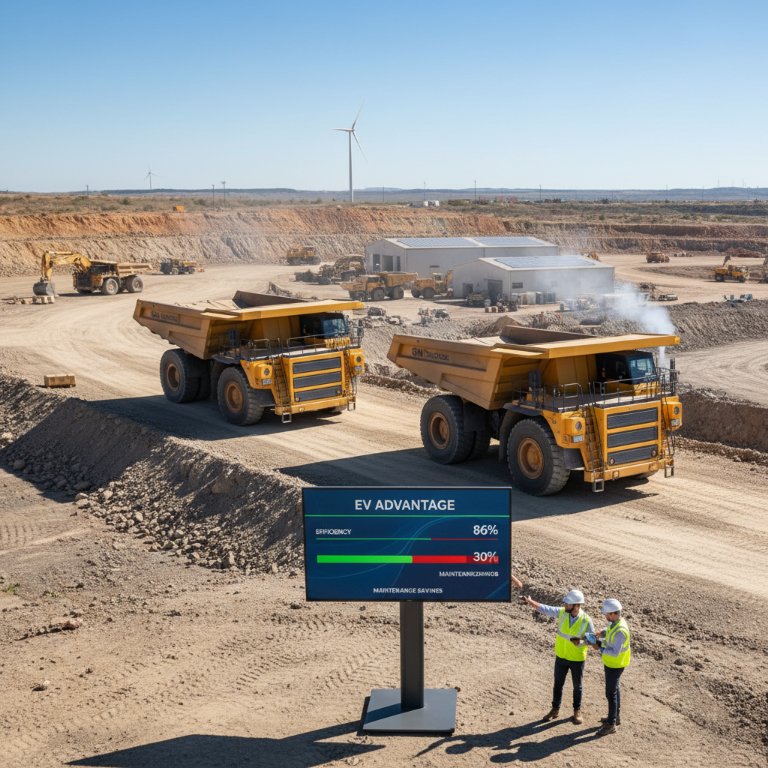
The electrification trend continues its relentless march, now making profound inroads into one of the most demanding industrial sectors: mining. A recent assessment from Surateman, Director of Product Support at GM Tractors, reveals compelling field implementation results that position electric vehicles (EVs) as a superior alternative to their fossil-fueled counterparts in mining operations. This isn't just an incremental improvement; it's a fundamental shift promising drastically higher efficiency and significantly lower operational overhead.
For years, heavy industries like mining have grappled with the twin challenges of high operational costs driven by fuel and maintenance, alongside increasing pressure to reduce their environmental footprint. While passenger EVs have rapidly gained traction, the integration of heavy-duty electric machinery into extreme environments has been slower, often viewed with skepticism regarding power, range, and reliability. GM Tractors' data, however, provides concrete evidence that the time for hesitation is over, signaling a robust and viable future for EVs in this critical sector.
Unprecedented Efficiency and Cost Reductions
According to Surateman's findings, electric vehicle usage in the mining sector is demonstrating an average efficiency level of 85-87%. This figure starkly contrasts with traditional internal combustion engine (ICE) vehicles, where significant energy loss occurs through heat and friction. More critically, the report highlights approximately 30% lower maintenance costs for EVs compared to fossil-fueled vehicles.
The Engineering Behind the Savings
The dramatic reduction in maintenance expenditure is a direct consequence of the inherent simplicity of EV powertrains. Unlike conventional diesel or gasoline engines, electric motors feature far fewer moving parts. This eliminates a host of routine and costly maintenance requirements:
- No more regular oil changes, a significant recurring expense.
- Elimination of complex exhaust systems and emission control devices.
- Fewer spare part replacements for components prone to wear and tear in ICEs (e.g., spark plugs, fuel filters, timing belts).
- Regenerative braking further reduces wear on conventional brake systems, extending their lifespan.
Beyond the Bottom Line: Environmental and Performance Upsides
The benefits of EV adoption in mining extend beyond pure financial metrics. The shift to electric propulsion inherently leads to a substantial reduction in carbon emissions, addressing a critical environmental concern for the industry and aligning with global sustainability goals. Furthermore, EVs offer increased operational efficiency and improved vehicle performance, characterized by instant torque delivery, smoother operation, and often quieter environments—a welcome change for both operators and nearby communities.
Why This Matters:
This data from GM Tractors marks a pivotal moment for the mining industry and the broader heavy-duty EV market. For years, the narrative around industrial EVs has been cautiously optimistic, but tangible, field-proven results like these from a credible source such as GM Tractors (via Surateman) provide the empirical backing needed to accelerate adoption. This isn't just about 'going green'; it's about fundamentally optimizing operational expenditure and gaining a significant competitive edge.
Who Wins? Mining companies that embrace this transition stand to gain immensely. They will see reduced TCO (Total Cost of Ownership), improved uptime due to less maintenance, and enhanced corporate social responsibility (CSR) profiles. OEMs specializing in heavy-duty EV machinery are also clear winners, as this data will fuel demand for their innovative solutions. The environment, of course, is a major beneficiary.
Who Loses? Manufacturers and suppliers of traditional ICE components and maintenance services for the mining sector will face increasing pressure to adapt or diversify. Companies that are slow to transition risk being left behind, saddled with higher operational costs and a less sustainable public image.
What This Signals: This is a clear signal to the market that electric powertrains are not just suitable but superior for some of the toughest industrial applications. It pushes past the perception of EVs being limited to urban delivery or passenger transport, proving their robustness and economic viability in high-demand, high-utilization environments. This could ignite a 'do-or-die' moment for many mining operations, where adopting electrification becomes less of a choice and more of a strategic imperative for long-term survival and profitability.
The findings from GM Tractors offer a compelling case for the rapid acceleration of EV integration within the mining sector. The confluence of lower maintenance costs, higher efficiency, reduced emissions, and improved performance paints a clear picture: the future of mining is electric. Companies that act decisively on this information will undoubtedly lead the charge into a more sustainable and profitable era, setting a new benchmark for heavy industry worldwide.