Lucid's Software Reckoning: Cosmos Aims for Flawless Launch After Gravity's Glitches
Lucid Motors, the American luxury electric vehicle manufacturer, is making a bold commitment: its upcoming midsize platform, spearheaded by the antici...
Editorial Team
World Of EV
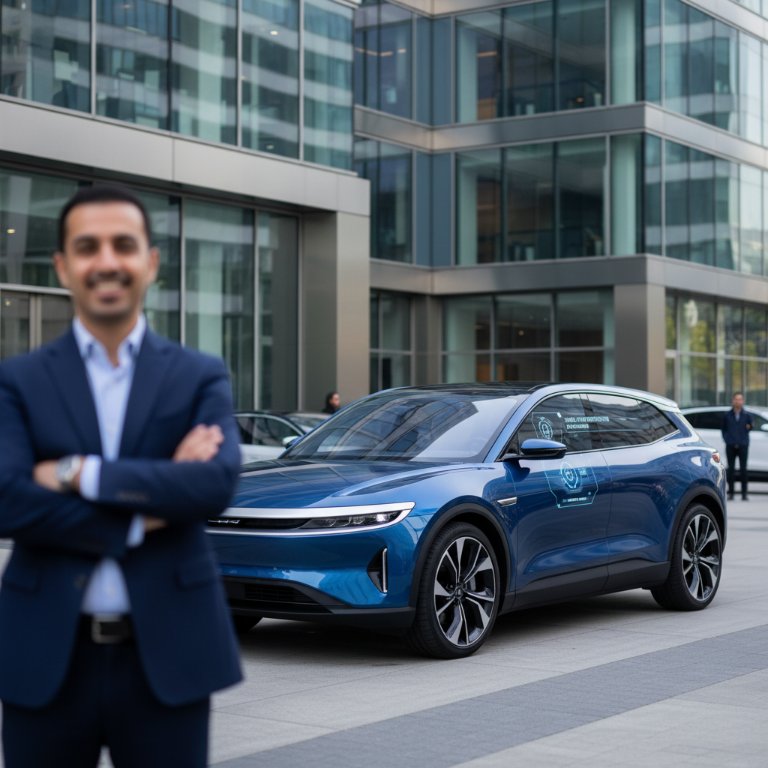
Lucid Motors, the American luxury electric vehicle manufacturer, is making a bold commitment: its upcoming midsize platform, spearheaded by the anticipated Cosmos SUV, will deliver a competitive software experience right from launch. This assertive declaration comes directly from Emad Dlala, Lucid's senior vice president of engineering and software, and represents a crucial pivot for a brand that has faced significant customer dissatisfaction with its in-car technology.
The promise of seamless software for future models isn't just a routine product announcement; it's an acknowledgement of past struggles. Lucid's highly anticipated Gravity SUV, still in its early production stages, has been plagued by a litany of customer complaints regarding its initial software. Owners reported frustrating issues ranging from unreliable key fob recognition and frozen infotainment screens to critical navigation malfunctions, problems that are simply unacceptable in a premium EV segment where user experience is paramount.
Learning from Gravity's Growing Pains
Lucid isn't ignoring the past; it's actively working to rectify the software shortcomings on its existing platforms. The company has already pushed an over-the-air (OTA) update, version 3.3.1, which reportedly addressed the persistent key fob connectivity issues that vexed early Gravity owners. More significantly, a complete redesign of the user interface, dubbed UX 3.0, is anticipated to roll out to Gravity vehicles by early fall 2026. This comprehensive overhaul signals a deeper commitment to rectifying the foundational software experience, moving beyond mere bug fixes to a more intuitive and reliable system.
A Feature-Rich Future for Gravity
Beyond interface redesigns, Lucid has outlined an ambitious roadmap for the Gravity's software capabilities throughout 2026. Owners can look forward to a suite of advanced features designed to enhance both convenience and driving performance:
- Hands-free highway driving: Offering a taste of advanced autonomous capabilities for long-distance travel.
- In-city drive assist: Providing additional driver support in complex urban environments.
- Digital key: Integrating smartphone functionality for vehicle access and control.
- Vehicle-to-home (V2H) energy backup: Positioning the Gravity as a potential home power source during outages.
- Smart home charging: Optimizing charging schedules and energy consumption in conjunction with home energy systems.
- In-vehicle AI assistant: Enhancing voice commands and providing intelligent, contextual assistance.
Why This Matters:
This isn't just about fixing bugs; it's about Lucid's future credibility and market positioning. For a luxury EV manufacturer like Lucid, the software experience is as crucial as horsepower or range. Tesla effectively demonstrated years ago that software prowess can be a primary differentiator, and newer entrants like Rivian and even established players like Mercedes-Benz are pouring resources into their digital ecosystems. When Lucid customers, who are paying a premium for cutting-edge technology, encounter basic software glitches, it erodes trust and tarnishes the brand's image as an innovator.
If Lucid successfully delivers on its promise for the Cosmos platform and swiftly rectifies the Gravity's software woes, it wins back crucial customer confidence and strengthens its competitive stance against rivals like Tesla, Mercedes-EQ, and upcoming premium EV SUVs from other manufacturers. Failure to deliver, however, could mark a significant setback, potentially alienating a critical segment of the early adopter market and signaling that Lucid struggles with the complex integration of hardware and software – a 'do-or-die' moment for their digital development. The introduction of V2H and advanced driver-assist features also signals Lucid's ambition to compete not just on luxury and performance, but also on utility and technological leadership, directly challenging established industry leaders.
Lucid Motors is at a pivotal juncture. Its commitment to a robust, competitive software experience from the launch of the Cosmos, coupled with aggressive updates for the Gravity, suggests a profound learning experience from early production challenges. The coming year will be critical in determining whether Lucid can translate its ambitious software roadmap into a seamless, premium user experience that truly sets it apart in the increasingly competitive EV landscape.