Lucid's Bold Bet: Software and Self-Driving Partnerships Redefine EV Strategy
Lucid Group, once heralded as a prime contender in the luxury electric vehicle market, is orchestrating a profound strategic pivot. The company is rep...
Editorial Team
World Of EV
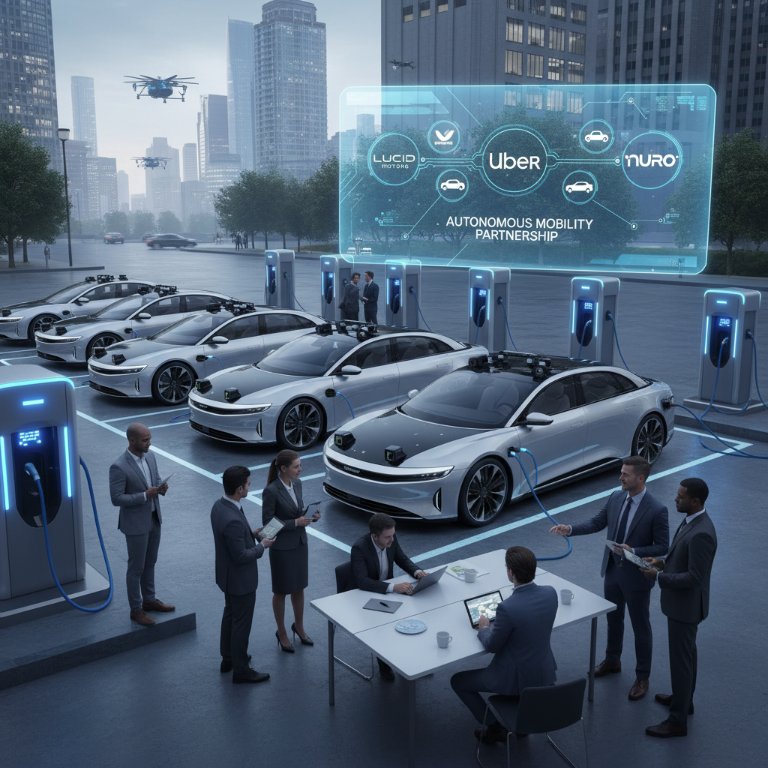
Lucid Group, once heralded as a prime contender in the luxury electric vehicle market, is orchestrating a profound strategic pivot.
The company is reportedly shifting its long-term focus from traditional vehicle sales to prioritize software and autonomous driving partnerships, a move underscored by a significant new alliance with ride-hailing giant Uber and autonomous technology firm Nuro. This pivotal decision signals a dramatic reorientation for the automaker, aiming to secure its future not through individual luxury car purchases, but by embedding itself directly into the burgeoning autonomous mobility and fleet-based service models.
This marks a substantial departure from Lucid's initial vision. The company entered the scene with the highly acclaimed Lucid Air, a vehicle celebrated for its groundbreaking range, performance, and luxurious appointments, positioning itself as a direct challenger to established premium EV players like Tesla and Mercedes-Benz. While the Air garnered critical praise, scaling production and achieving consistent sales volumes in the fiercely competitive luxury segment proved a persistent challenge, raising questions about the company's long-term financial viability.
Forging a New Path: The Uber and Nuro Alliance
The cornerstone of Lucid's redefined strategy is its formidable partnership with Uber and Nuro. This collaboration isn't merely a technology-sharing agreement; it's a commitment to deploy a substantial fleet of autonomous premium electric vehicles. Uber's significant investment in Lucid further solidifies the strategic importance of this alliance, providing crucial capital and a clear deployment pathway for Lucid's advanced EV platform and integrated autonomous capabilities.
Key aspects of this transformative partnership include:
- Large-Scale Fleet Deployment: This isn't a pilot program; the intent is to deploy a significant number of autonomous Lucid EVs for ride-hailing and potentially goods delivery services.
- Premium Autonomous Experience: Leveraging Lucid's luxurious vehicle architecture, the partnership aims to offer a high-end, self-driving experience, differentiating itself in a crowded autonomous vehicle landscape.
- Substantial Investment from Uber: Beyond technology integration, Uber's financial backing provides Lucid with vital resources, validating its shift towards fleet and software-centric models.
Software Takes the Driver's Seat
This strategic realignment signifies Lucid's recognition that the future of automotive value creation increasingly resides in software and services, not just hardware. By focusing on autonomous driving systems and the underlying software platforms, Lucid aims to become a key enabler for other mobility companies. This allows them to monetize their technological prowess in a scalable manner, reducing the capital intensity associated with direct-to-consumer vehicle sales and marketing.
Why This Matters:
This aggressive pivot is nothing short of a make-or-break moment for Lucid Group, signaling a profound recalibration of its business model. For the EV industry, it highlights the immense pressures facing pure-play luxury EV startups and the undeniable gravitational pull towards Mobility-as-a-Service (MaaS) and autonomous solutions.
- Who Wins? Lucid Group potentially wins a lifeline. By diversifying its revenue streams beyond direct consumer sales, it can leverage its engineering and design strengths in a more capital-efficient way. The partnership with Uber and Nuro provides a credible path to scale and profitability through fleet operations. Uber and Nuro gain access to a premium, technologically advanced EV platform to accelerate their autonomous ambitions. Consumers, in the long run, could benefit from a more luxurious and reliable autonomous ride-hailing experience.
- Who Loses? Traditional luxury EV buyers hoping for a broader range of Lucid consumer vehicles might see less new model development in the immediate future, as resources are diverted. Competitors solely focused on traditional vehicle sales, particularly in the premium segment, may face a new, formidable player backed by fleet deployments, which could quickly scale autonomous capabilities.
- What Does This Signal? This move strongly signals that building a sustainable, profitable automotive company in the EV era requires more than just compelling hardware. The true value and long-term differentiation will increasingly come from advanced software, autonomous capabilities, and the integration into broader mobility ecosystems. It's a testament to the immense difficulty of competing with established giants and high-volume players like Tesla purely on consumer sales. It also indicates a maturing market where niche luxury players must find innovative ways to monetize their technology.
- Is This a 'Do-or-Die' Moment? Absolutely. Lucid has faced significant hurdles in ramping up production and achieving delivery targets since its public debut. This strategic shift represents a pragmatic and potentially company-saving maneuver. It allows Lucid to sidestep some of the most capital-intensive aspects of being a full-line automaker and instead focus on becoming a critical technology provider in the burgeoning autonomous mobility sector. Failure to execute this pivot effectively could leave Lucid stranded between two highly competitive markets.
Lucid's dramatic shift reflects a calculated and potentially transformative gamble on the future of mobility. By shedding the singular focus on luxury vehicle sales and embracing a partnership-driven, software-first approach to autonomous fleets, the company aims to secure a vital role in the next generation of transportation. The success of this strategy will undoubtedly shape not only Lucid's destiny but also influence the broader trajectory of the electric vehicle and autonomous driving industries in the years to come.