Lucid Air Grand Touring Obliterates Winter Range Records in Arctic Test, Resetting EV Expectations
The Lucid Air Grand Touring has delivered a stunning performance at the 2026 NAF Winter Test in Norway, achieving an unprecedented 520 kilometers (app...
Editorial Team
World Of EV
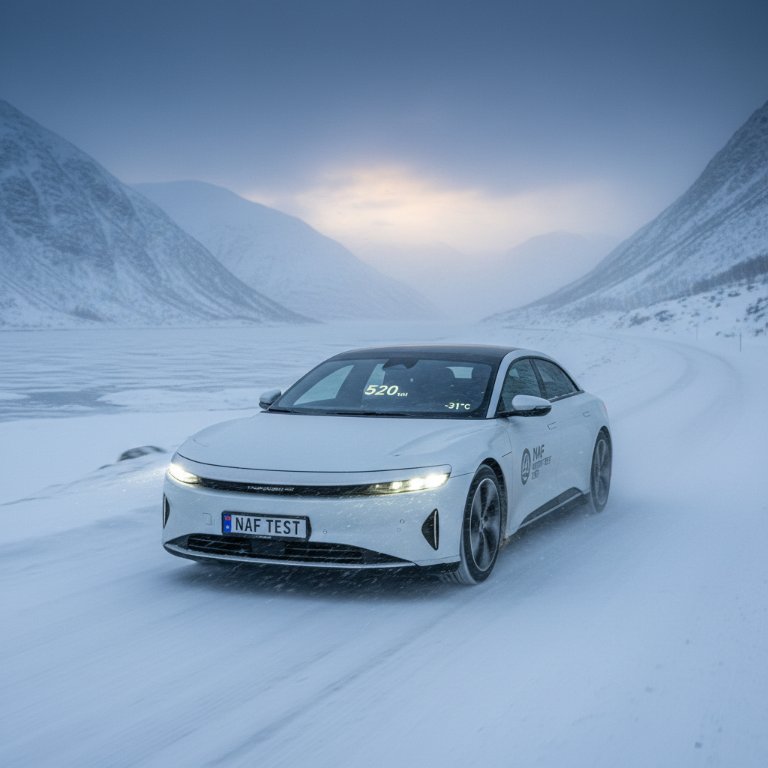
The Lucid Air Grand Touring has delivered a stunning performance at the 2026 NAF Winter Test in Norway, achieving an unprecedented 520 kilometers (approximately 323 miles) on a single charge under brutal arctic conditions. This remarkable feat, accomplished with temperatures plummeting to a record-setting minus 31 degrees Celsius (-23.8°F), firmly establishes the Lucid Air as a new benchmark for electric vehicle range and efficiency in extreme cold. The luxury EV outperformed its closest competitor by a staggering 99 kilometers, showcasing a level of winter resilience that challenges long-held perceptions about EV performance in harsh climates.
The Unprecedented Achievement in Norway
The NAF (Norges Automobil-Forbund) Winter Test, also known as "El Prix," is widely recognized as one of the most rigorous real-world evaluations for electric vehicles, particularly given Norway's leadership in EV adoption and its notoriously harsh winters. The 2026 test subjected 24 vehicles to a demanding route encompassing city traffic in Oslo, mountain roads through Lillehammer and Dombås, highways, and secondary roads, specifically designed to push EVs to their limits in sub-zero temperatures.
- Record-Breaking Range: The Lucid Air Grand Touring covered 520 km (323 miles) without a single charging stop.
- Extreme Cold Conditions: This performance occurred during the coldest NAF Winter Test on record, with temperatures dropping to -31°C (-23.8°F).
- Dominant Lead: The Lucid Air Grand Touring surpassed the second-place vehicle by 99 kilometers (over 61 miles), highlighting a significant advantage in real-world winter efficiency.
Engineering Prowess Under Pressure
Lucid Motors has consistently championed efficiency as a core pillar of its engineering philosophy, and this winter test victory is a powerful validation of that commitment. Unlike internal combustion engine vehicles that generate ample waste heat for cabin warming, EVs must actively manage battery temperature and cabin heating, which can significantly impact range in cold weather. Studies show that EVs can lose 20% to 40% of their range in freezing conditions due to increased energy demands for heating the cabin and maintaining optimal battery temperature. However, Lucid's proprietary electric powertrain technology, known for its compact design and high energy density, appears exceptionally well-suited to mitigate these challenges.
Key aspects contributing to this success likely include:
- Advanced Battery Thermal Management: Lucid's sophisticated systems efficiently manage battery temperature, ensuring the lithium-ion cells operate within their optimal range even in extreme cold.
- Highly Efficient Drivetrain: The company's in-house developed motors and inverters are renowned for their efficiency, minimizing energy loss during propulsion.
- Aerodynamic Design: The Lucid Air's sleek, low-drag coefficient (as low as 0.197 Cd for some models) reduces energy expenditure, especially at higher speeds, further extending range.
- Integrated Heat Pump System: All Lucid Air models now come with a climate control heat pump, a crucial component for efficient cabin heating in cold weather, which significantly reduces the drain on the main battery compared to resistive heaters.
Why This Matters:
This commanding performance by the Lucid Air Grand Touring is more than just another record; it's a profound statement that will reverberate across the automotive industry and reshape consumer perception of EVs.
- For Lucid Motors: This is an undeniable win. It bolsters Lucid's credibility as a leader in EV technology, particularly in the critical areas of range and efficiency. This validation in one of the world's toughest real-world tests will be invaluable for marketing, potentially attracting a broader segment of luxury buyers who prioritize genuine, all-weather usability. It further differentiates Lucid from its competitors, including Tesla, Porsche, and Mercedes-Benz, by demonstrating superior cold-weather resilience, an area where many EVs have historically struggled.
- For the Luxury EV Segment: The bar has been unequivocally raised. Competitors will face increased pressure to demonstrate comparable cold-weather range and efficiency. This could accelerate investment in advanced thermal management systems, more efficient powertrains, and integrated heat pump technologies across the board.
- For Prospective EV Buyers: This achievement directly addresses a major source of anxiety: winter range degradation. The Lucid Air's performance provides tangible evidence that EVs can be reliable, long-distance vehicles even in the most challenging climates. This could significantly influence purchasing decisions, particularly in northern regions or for consumers who travel frequently.
- For the Industry at Large: Lucid's success signals a maturation of EV technology. It proves that with meticulous engineering and a focus on holistic efficiency, the perceived limitations of electric vehicles in extreme conditions can be overcome. This will likely push the entire industry toward greater innovation in battery technology, thermal management, and overall system integration.
In an EV market still grappling with range anxiety, especially when the mercury drops, the Lucid Air Grand Touring has delivered a definitive answer. Its performance in the 2026 NAF Winter Test is not merely an engineering triumph; it is a powerful catalyst, propelling the entire electric vehicle industry towards a future where extreme cold no longer poses a significant barrier to widespread adoption.