LFP Revolution: Ford's Refreshed Explorer and Capri EVs Deliver More Range, Torque, and Value
Ford has significantly upped the ante in the hotly contested European electric vehicle market, rolling out substantial updates to its critical Explore...
Editorial Team
World Of EV
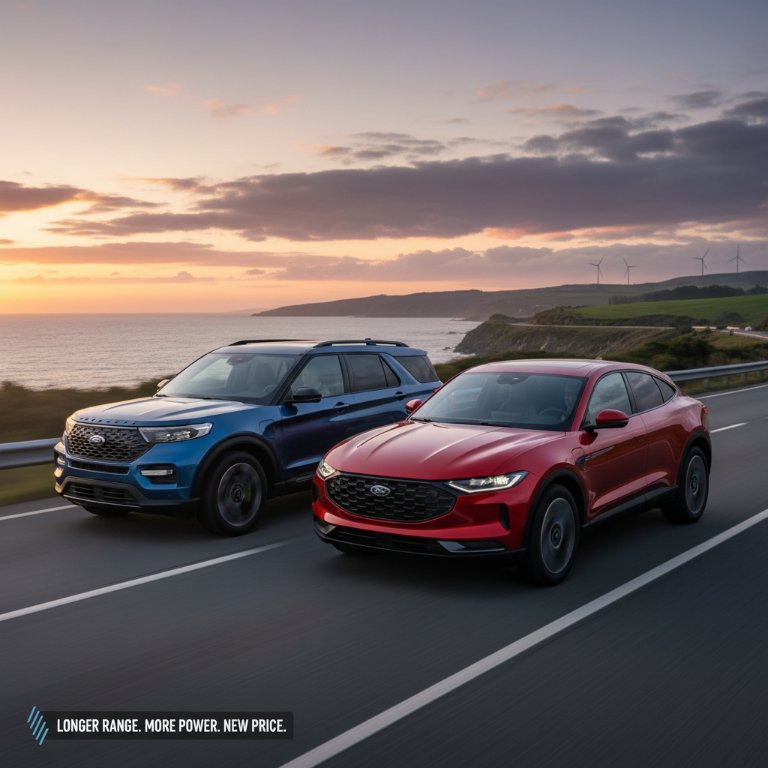
Ford has significantly upped the ante in the hotly contested European electric vehicle market, rolling out substantial updates to its critical Explorer and Capri EV models. These enhancements, featuring a new lithium-iron phosphate (LFP) battery and an improved electric motor, promise not just a substantial boost in driving range and performance but also hint at a more accessible price point for consumers. This isn't merely an incremental update; it's a strategic repositioning designed to elevate Ford’s MEB-platform offerings to genuinely compelling options for the mainstream EV buyer.
For a manufacturer like Ford, whose initial foray into the European EV market with these models relied heavily on leveraging Volkswagen's proven MEB architecture, these upgrades are crucial. They demonstrate a clear commitment to refining and optimizing products that are foundational to Ford's ambitious electrification strategy in the region. Gone are the days of simply adapting existing technology; Ford is now actively enhancing it to better serve its target audience.
A Leap in Performance and Range
The most impactful change comes with the adoption of a new LFP battery chemistry. This move marks a significant departure from traditional nickel-manganese-cobalt (NMC) cells in these specific configurations, offering several key advantages for both manufacturer and consumer. Coupled with an improved electric motor, the results are immediately apparent:
- Enhanced Driving Range: Both models now achieve well over 400 km (248 miles) on a full charge. The Explorer Standard Range pushes up to an impressive 444 km (275 miles), while the Capri Standard Range reaches an even more substantial 464 km (288 miles). This represents an increase of up to 70 km (43 miles), directly addressing range anxiety – a persistent concern for many prospective EV owners.
- Boosted Torque: The improved electric motor doesn't just contribute to efficiency; it also delivers a noticeable increase in torque, translating to quicker and more responsive acceleration. This injects a much-needed dose of driving dynamism into models designed for everyday usability.
The Strategic Shift to LFP
Ford’s embrace of LFP battery technology for these models isn't a random decision; it's a calculated strategic pivot. LFP batteries, increasingly championed by industry leaders like Tesla for their standard range vehicles and pioneered by companies such as BYD with its Blade Battery, bring compelling benefits. While typically offering a slightly lower energy density than NMC, LFP cells excel in crucial areas:
- Cost-Effectiveness: LFP chemistry generally boasts a lower material cost, which directly translates into reduced manufacturing expenses. This allows Ford to potentially offer more competitive pricing, or improve margins, without compromising on range or features.
- Durability and Longevity: LFP batteries are renowned for their superior cycle life and robustness, often enduring more charge and discharge cycles than their NMC counterparts. This promises greater long-term reliability and reduced degradation, a significant peace of mind for owners.
- Thermal Stability: LFP cells exhibit greater thermal stability, contributing to enhanced safety and allowing for more consistent fast charging performance.
Why This Matters:
This update is far more than a specification bump; it's a strategic declaration by Ford in the European EV arena. For consumers, this means access to more capable, more durable, and potentially more affordable electric vehicles. The enhanced range and performance directly address two primary concerns for EV adoption, while the LFP chemistry promises a more robust and long-lasting ownership experience. This makes the Explorer and Capri significantly more attractive alternatives in an increasingly crowded segment. Ford itself stands to gain substantially. By improving the competitiveness of its MEB-based offerings, the company strengthens its position against rivals and validates its collaborative platform strategy. This move also demonstrates an agile response to market demands and technological advancements, proving Ford can leverage external partnerships while innovating internally.
Conversely, competitors in the mid-size electric SUV and crossover segment – think models like the Hyundai Kona Electric, Kia Niro EV, or even certain Volkswagen ID.4 variants – will undoubtedly feel the pressure. Ford's enhanced offerings, particularly if accompanied by aggressive pricing, could force a re-evaluation of their own product strategies. This signals a broader industry trend towards the mainstream adoption of LFP batteries for standard-range EVs, a clear focus on value, durability, and practical range over bleeding-edge but costly performance.
Outlook: A Stronger Ford in Europe's EV Future
The refreshed Ford Explorer and Capri EVs represent a significant step forward, transforming them into genuinely compelling propositions for the European market. By strategically integrating advanced LFP battery technology and powertrain improvements, Ford has not only elevated these models' performance and appeal but has also laid the groundwork for a more competitive and sustainable presence in the accelerating shift to electric mobility. This move underscores Ford's determination to be a major player in Europe's EV future, setting a new benchmark for what mainstream electric vehicles can deliver.