Legal Showdown: Tesla Sues California DMV Over 'Full Self-Driving' Ad Ruling
Tesla, the undisputed titan of electric vehicle innovation, has escalated its long-standing dispute with California regulators, filing a lawsuit again...
Editorial Team
World Of EV
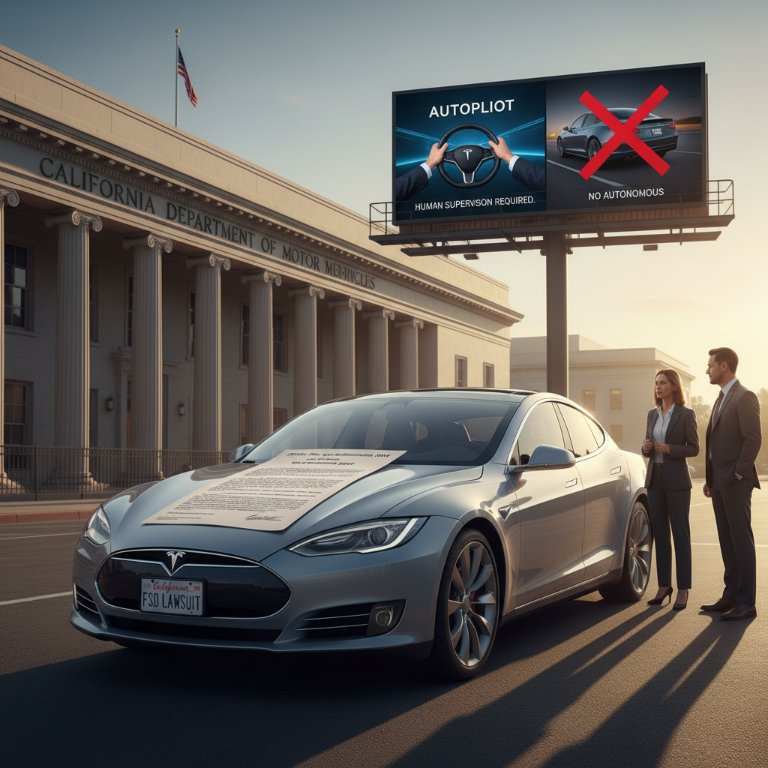
Tesla, the undisputed titan of electric vehicle innovation, has escalated its long-standing dispute with California regulators, filing a lawsuit against the California Department of Motor Vehicles (DMV) to overturn a ruling that found the automaker engaged in false advertising regarding its 'Autopilot' and 'Full Self-Driving' (FSD) systems. This legal gambit comes just days after Tesla reportedly complied with the DMV's demands to amend its marketing language, signaling a much deeper battle for the narrative surrounding autonomous technology.
The automaker argues that its marketing clearly communicates that these advanced driver-assistance systems (ADAS) do not render the vehicle autonomous and necessitate continuous human supervision. However, a December 2025 ruling by an administrative law judge sided with the DMV, finding Tesla's use of 'Autopilot' to be part of a "long but unlawful tradition" of misleading ambiguity, and explicitly labeling 'Full Self-Driving' as "actually, unambiguously false and counterfactual."
The Heart of the Marketing Controversy
This isn't Tesla's first rodeo with regulatory scrutiny over its ADAS branding. For years, consumer advocates and regulatory bodies, including the California DMV, have scrutinized the nomenclature of 'Autopilot' and 'Full Self-Driving,' contending that these terms mislead consumers into overestimating the systems' capabilities. The DMV's investigation, initiated in 2021, culminated in a five-day hearing in 2025, leading to the decisive ruling that Tesla's marketing violated state law.
Tesla's lawsuit, filed on February 13, asserts that the DMV "wrongfully and baselessly" labeled the company a "false advertiser." The company's attorneys contend that the DMV failed to demonstrate actual consumer confusion regarding whether Tesla vehicles could be driven safely without human intervention. Furthermore, Tesla makes the audacious argument that the DMV has been aware of its 'Autopilot' branding since 2014 and 'Full Self-Driving' since 2016, suggesting a statute of limitations on public deception.
Despite the DMV initially considering a temporary suspension of Tesla's manufacturing and dealer licenses—a move that would have severely impacted sales in its largest U.S. market—the agency ultimately reduced the penalty, giving Tesla time to comply with corrective measures. Tesla has since adjusted its marketing, reportedly dropping 'Autopilot' entirely and now referring to its advanced system as 'Full Self-Driving (Supervised),' explicitly emphasizing the need for driver attention. Yet, the automaker is now fighting to erase the underlying false advertising label, indicating its long-term strategic importance.
Why This Matters:
This legal battle holds profound implications for Tesla, the broader EV industry, and, critically, for consumers:
- For Tesla's Valuation and Narrative: The DMV's official finding of false advertising directly undermines Tesla's aspirational narrative of becoming a robotaxi company. With 1.1 million FSD subscribers, the perceived autonomous capabilities of its vehicles are central to its investment thesis. A legal win could validate its current marketing approach, while a loss could cast a long shadow over its future autonomy claims and increase liability exposure in ongoing Autopilot crash lawsuits.
- Shaping Industry Standards for ADAS Marketing: The outcome of this lawsuit could set a powerful precedent for how other automakers market their advanced driver-assistance systems. Will regulators lean towards more conservative, transparent language, or will a Tesla victory allow for more aggressive, forward-looking branding? This dispute highlights the growing pains of introducing AI-powered driving features and the critical need for clear, unambiguous communication across the industry.
- Consumer Clarity and Safety: Ultimately, consumers stand to benefit from increased clarity, regardless of the lawsuit's outcome. The intense scrutiny forces manufacturers to be more precise about what their systems can and cannot do. This improved understanding is vital for managing expectations, promoting responsible usage, and enhancing overall road safety. The consistent requirement for human supervision in current ADAS technology cannot be overstated.
Conclusion:
Tesla's lawsuit against the California DMV is more than just a fight over advertising terms; it's a pivotal moment in the evolution of autonomous vehicle technology and its perception. The verdict will not only determine the future of Tesla's marketing strategies in its home state but will likely reverberate across the global automotive landscape, influencing how every manufacturer navigates the delicate balance between innovation, marketing ambition, and regulatory oversight. As the industry races towards truly autonomous vehicles, the foundational principles of honest and transparent communication are being fiercely debated in the courts.