J.D. Power Delivers Crushing Blow: Honda Prologue Ranked Least Satisfying EV
In a stark wake-up call for Honda's electric vehicle ambitions, the 2026 J.D. Power EV Satisfaction Study has positioned the Honda Prologue at the abs...
Editorial Team
World Of EV
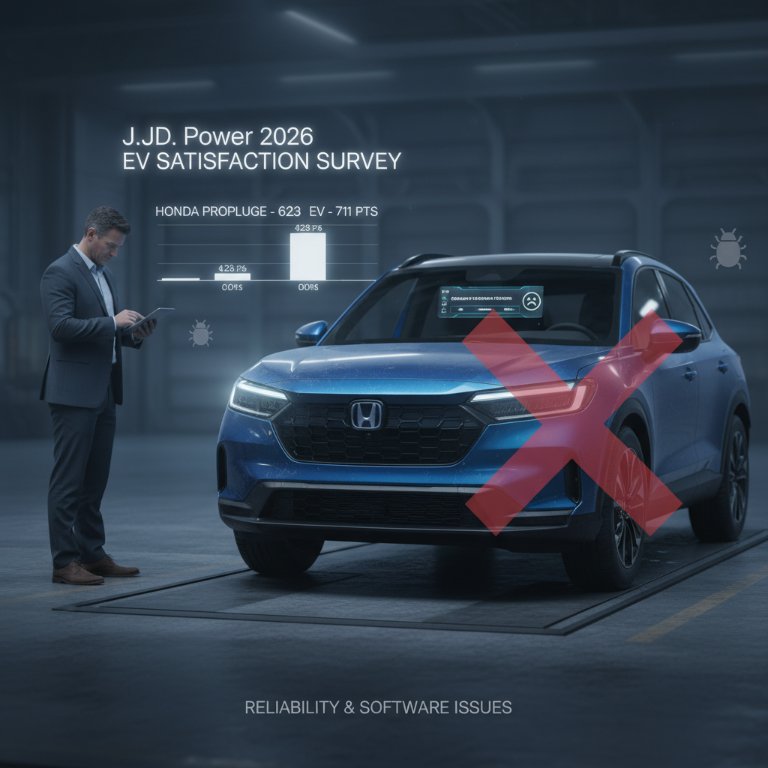
In a stark wake-up call for Honda's electric vehicle ambitions, the 2026 J.D. Power EV Satisfaction Study has positioned the Honda Prologue at the absolute bottom of the rankings. This abysmal performance, scoring a mere 623 points against a mass-market segment average of 727, raises serious questions about Honda’s EV strategy and its immediate future in the rapidly evolving electric landscape. While its platform-mate, the Chevrolet Blazer EV, fared somewhat better with 711 points, the Prologue’s score signals a critical misstep for a brand long synonymous with reliability and user satisfaction.
The Damning Verdict: Below the Bar
The J.D. Power study's findings are unequivocal: the Honda Prologue is failing to meet consumer expectations on multiple fronts. Its score of 623 points is not just below average; it represents a significant deficit that should alarm executives in Tokyo. For context, even the Chevrolet Blazer EV, which also ranked low, managed to score nearly 90 points higher than the Prologue. This disparity, despite sharing fundamental architectural components, points to either crucial differences in execution or a brand-specific perception issue that Honda must urgently address.
Underlying Issues: Software and Stamina
Digging into the reasons behind the Prologue's dismal showing, J.D. Power highlighted two primary culprits: reliability and software issues. These factors are particularly concerning given that the Prologue is a product of a collaboration with General Motors, sharing its Ultium platform with the Chevrolet Blazer EV and the premium Acura ZDX. While platform sharing is a common industry practice to optimize development costs and accelerate market entry, it clearly hasn't insulated the Prologue from significant customer dissatisfaction. The struggles with software, in particular, underscore a broader industry challenge where traditional automakers are grappling with the digital user experience, an area where EV pioneers often excel.
Beyond these technical grievances, the Prologue also struggled to carve out a distinct identity in a crowded market. Survey respondents reportedly found the vehicle lacked compelling differentiators, failing to stand out among rivals that offered either:
- Higher range capabilities
- More engaging driving dynamics and overall performance
This lack of a unique selling proposition, coupled with the reliability and software headaches, paints a picture of an EV that simply hasn't resonated with early adopters.
Why This Matters:
This J.D. Power report isn't just a survey; it’s a seismic event for Honda's EV journey and a critical market signal for the entire industry. Here’s why this matters:
- For Honda's Brand Legacy: Honda has built its reputation on engineering excellence, reliability, and consumer trust. The Prologue's performance directly undermines this hard-won legacy in the most critical automotive transition in a century. This isn't merely a slow start; it's a significant blow to their credibility in the EV space, threatening to alienate prospective buyers who might now view Honda's EV offerings with skepticism. This could very well be a 'do-or-die' moment for their Ultium-based strategy before they fully transition to their proprietary 'e:Architecture'.
- The Perils of Platform Sharing: While beneficial for speed-to-market, the Prologue's struggles highlight the potential pitfalls of heavy reliance on external platforms without sufficient brand differentiation and quality control. While GM's Blazer EV performed better, the shared platform means GM isn't entirely immune to the criticisms, suggesting broader challenges with the Ultium platform's software and user experience integration when implemented by partners.
- Consumer Expectations are Maturing: The market for electric vehicles is no longer nascent. Buyers are sophisticated, demanding not just range, but seamless software, proven reliability, and a compelling overall ownership experience. Honda's misstep with the Prologue is a clear indication that simply offering an EV is no longer enough; the product must be truly competitive and satisfying.
- Impact on Future Strategy: This report will undoubtedly force a rigorous re-evaluation of Honda's electrification strategy. They must now aggressively double down on their own upcoming 'e:Architecture' vehicles, ensuring they embody the quality and driving dynamics consumers expect from Honda, while also urgently addressing the shortcomings of the Prologue, both technically and in terms of market positioning.
In conclusion, the J.D. Power findings present a sobering reality for Honda. The Prologue's ranking as the least satisfying EV is more than just a data point; it's a powerful indictment that demands immediate and decisive action. For Honda to truly succeed in the electric era, they must swiftly learn from this setback, leverage their engineering prowess, and deliver electric vehicles that genuinely uphold their storied reputation and truly captivate the discerning EV enthusiast.