India's EV Revolution Accelerates: Owner Testimonials Highlight Shifting Perceptions and Driving Mastery
The landscape of automotive preferences in India is undergoing a profound transformation. As electric vehicles (EVs) increasingly become a mainstream ...
Editorial Team
World Of EV
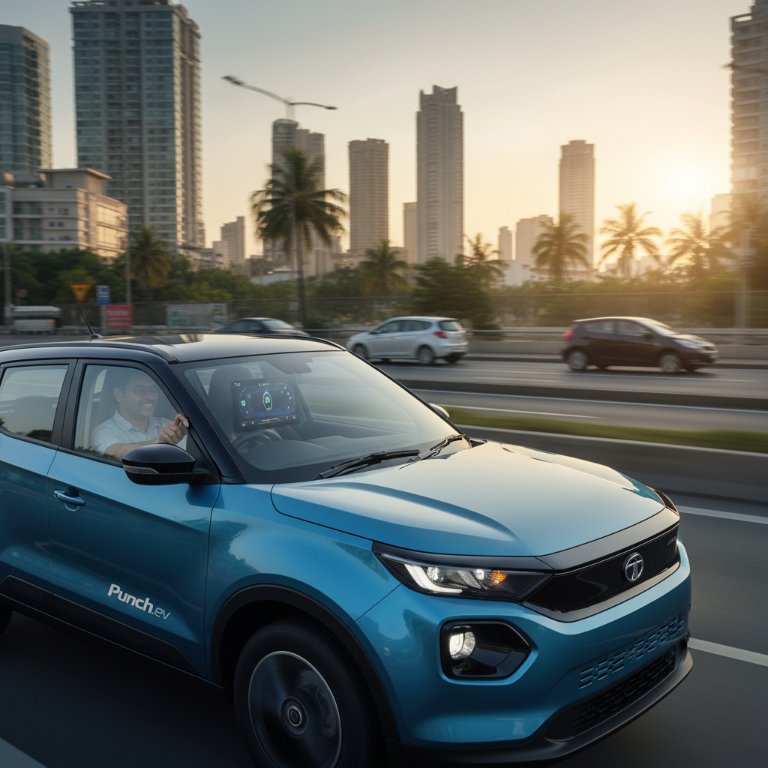
The landscape of automotive preferences in India is undergoing a profound transformation. As electric vehicles (EVs) increasingly become a mainstream mobility solution, a recent testimonial from an owner of an MG Windsor and a Tata Punch.ev offers a compelling glimpse into the evolving driver experience. This firsthand account underscores a critical shift in how Indian consumers perceive and interact with their vehicles, moving beyond mere transportation to embracing a dynamic, tech-driven driving paradigm.
After years of the Indian market gradually warming to EVs, bolstered by government incentives and a growing charging infrastructure, personal experiences like this are proving instrumental in accelerating adoption. India's EV market is projected to reach USD 17.88 billion by 2032, with a CAGR of 19.0% during 2025-2032, signaling a robust growth trajectory. While electric vehicles still represent less than 3 percent of total passenger vehicle sales in the country, the segment is expanding at over 40 percent year-on-year, indicating substantial room for market expansion. This growth is no longer solely driven by environmental concerns or subsidies, but by the tangible benefits of EV ownership.
The Unveiling of a New Driving Paradigm
The owner's experience with both the MG Windsor and Tata Punch.ev highlights several key aspects that are redefining driving enjoyment and efficiency:
- Seamless Acceleration: The immediate, linear power delivery characteristic of EVs fundamentally changes the driving sensation. Unlike internal combustion engine (ICE) vehicles that require gear changes and engine revving, EVs provide instant torque, making urban commuting significantly smoother and more responsive. This 'on-demand' power is a major draw for new EV owners, enhancing both performance and comfort.
- Deceptive Speed: The quiet operation and lack of vibration in EVs can create a perception of lower speed, even when accelerating rapidly. This 'deceptive speed' often leads owners to adapt their driving style, becoming more attuned to their surroundings and the vehicle's true velocity, a subtle but significant behavioral change.
- Mastery of Regenerative Braking with Paddle Shifters: This feature emerged as a particular highlight. Regenerative braking, which converts kinetic energy back into electrical energy to recharge the battery when decelerating, is a cornerstone of EV efficiency. The integration of paddle shifters allows drivers to precisely control the intensity of this braking. Instead of traditional gear changes, these paddles enable drivers to:
- Adjust the level of regenerative braking for different traffic conditions, such as increasing regen in stop-and-go traffic to maximize energy recovery, or decreasing it for smoother coasting on open roads.
- Engage in a form of 'one-pedal driving,' where lifting off the accelerator initiates regeneration, often eliminating the need to use the friction brakes, particularly in city driving. This not only enhances efficiency but also reduces wear on brake components.
MG Windsor and Tata Punch.ev: Pillars of Progress
The MG Windsor (a rebadged Wuling Air EV in other markets, and MG's third EV offering in India after the Comet and ZS EV) has rapidly ascended to become a top-seller in India's passenger EV market, showcasing consistent strong sales. It has been India's best-selling electric vehicle for 2025, selling 46,735 units and marking the first time any OEM has reached this sales volume with a single EV model in India. This demonstrates MG's successful strategy in offering practical, technologically advanced, and stylish electric crossover utility vehicles (CUVs) that resonate with Indian buyers.
Tata Motors, a domestic powerhouse, has been instrumental in democratizing EV ownership in India. The Tata Punch.ev, part of the popular Punch lineup (which consistently ranks among India's bestselling cars), has significantly contributed to Tata's growth in the EV segment. With a new facelift expected on February 20, 2026, the Punch EV is poised to remain a strong contender, offering an impressive range of up to 500 km and a competitive price point, making it an attractive option for a broad spectrum of buyers.
Why This Matters:
This testimonial, coupled with the market performance of vehicles like the MG Windsor and Tata Punch.ev, signals a crucial turning point in India's automotive journey. It underscores that the perceived barriers to EV adoption – range anxiety, charging infrastructure, and driving unfamiliarity – are rapidly giving way to a genuine appreciation for the superior driving dynamics and operational efficiencies EVs offer.
- Who Wins? Indian consumers are the primary beneficiaries, gaining access to vehicles that offer a more refined, responsive, and ultimately more enjoyable driving experience, coupled with lower running costs. Automakers like MG and Tata, by prioritizing user experience and delivering capable, locally relevant EV products, are solidifying their market leadership and building invaluable brand loyalty. The wider EV ecosystem, including charging providers and component manufacturers, also sees a significant boost as adoption accelerates. It fosters increased competition, leading to a wider variety of EV models and improved overall quality.
- Who Loses? Legacy ICE manufacturers who fail to adapt quickly risk being marginalized in a rapidly electrifying market. The traditional reliance on incremental improvements to ICE technology will not suffice against the transformative appeal of modern EVs.
- What Does This Signal to the Market? This signals a maturation of the Indian EV market. It's moving beyond early adopters and into the mass market, driven by practical benefits and an enhanced driving experience. The focus on regenerative braking mastery, in particular, highlights that consumers are not just accepting new technology but actively engaging with it to optimize their driving. This indicates that user-centric design, particularly in driver interaction with EV-specific features, is paramount for continued success.
- Is This a 'Do-or-Die' Moment? For manufacturers, this is undeniably a 'lead or be left behind' moment. The market is clearly rewarding those who commit to building compelling EV products that not only meet but exceed consumer expectations. Complacency will be met with declining market share and relevance in India's dynamic automotive future.
Conclusion:
The positive experiences shared by EV owners are more than just anecdotes; they are powerful indicators of a fundamental shift in driver perception and a testament to the growing maturity of India's electric vehicle market. The seamless acceleration and intelligent regenerative braking found in models like the MG Windsor and Tata Punch.ev are not just features but catalysts, transforming driving styles and cementing the EV's position as the vehicle of choice for a forward-thinking India. As this trend continues, we can expect further innovation focused on enhancing the EV driving experience, paving the way for a cleaner, more engaging automotive future.