Hyundai Ioniq 6 Challenges Model 3's Reign with a 'Superior' User Experience: A New EV Benchmark?
For years, the Tesla Model 3 has stood as the undisputed benchmark for accessible, performance-oriented electric vehicles, often lauded for its impres...
Editorial Team
World Of EV
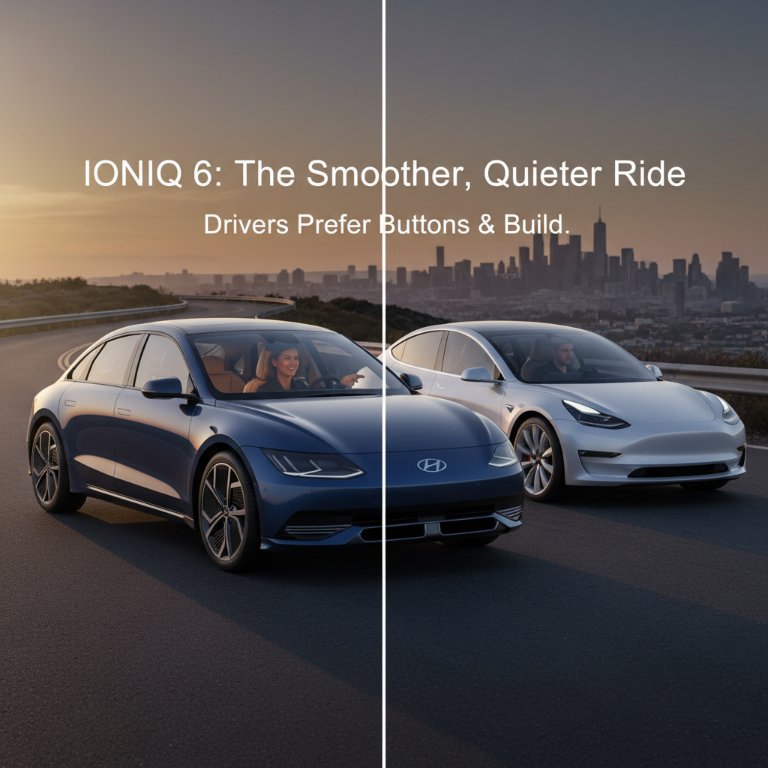
For years, the Tesla Model 3 has stood as the undisputed benchmark for accessible, performance-oriented electric vehicles, often lauded for its impressive range and disruptive technology. However, a seismic shift is underway in the discerning EV market. Growing testimonials from drivers and industry analysts suggest that the Hyundai Ioniq 6 is not merely a competitor, but a compelling challenger offering a 'far superior' and more luxurious driving experience, particularly for those accustomed to traditional automotive refinement.
This isn't just about raw specs; it's a critical evolution in what defines a premium EV experience. While Tesla pioneered the minimalist, screen-centric interior that captivated early adopters, the market is maturing, and with it, consumer expectations are diversifying. Hyundai, leveraging its deep legacy automotive expertise, appears to be effectively addressing a crucial segment of prospective EV owners who value tactile controls and a meticulously refined cabin.
The Shifting Sands of EV Luxury and Usability
The Hyundai Ioniq 6, built on the lauded E-GMP platform that also underpins the critically acclaimed Ioniq 5 and Kia EV6, is earning accolades for attributes often overlooked in the initial rush to electrification. Drivers consistently highlight its superior cabin refinement and overall driving comfort. Key points of differentiation include:
- Unparalleled Serenity: The Ioniq 6 delivers a demonstrably quieter and smoother ride, indicating superior noise, vibration, and harshness (NVH) mitigation – a hallmark of premium automotive engineering.
- Elevated Build Quality: Testimonials frequently cite a blend of better build quality, suggesting a more robust and finely assembled interior than many have come to expect from the segment.
- Tactile Ergonomics: Perhaps most notably, the Ioniq 6 reintroduces 'legacy car features like buttons for things.' This strategic design choice caters directly to drivers transitioning from combustion-engine vehicles, offering intuitive physical controls for climate, audio, and other vital functions, rather than relying solely on a touchscreen interface. This contrasts sharply with Tesla's minimalist design philosophy, which, while innovative, can present a learning curve for some users.
Why This Matters:
This isn't simply a preference for buttons over screens; it signals a significant maturation of the electric vehicle market and a re-evaluation of what constitutes a 'premium' EV. The Ioniq 6's success in these areas poses a direct challenge to Tesla's long-held dominance in user experience perception. Here’s why this matters:
- Winners: Hyundai and the broader E-GMP platform (Kia, Genesis) emerge as significant winners, demonstrating that traditional automotive strengths – comfort, build quality, and ergonomic design – are potent differentiators in the EV space. Consumers who value a more conventional yet technologically advanced cabin experience also win, gaining more compelling choices. This also boosts confidence in 'legacy' automakers adapting successfully to the EV era.
- Losers: Tesla, while still a market leader in many respects, risks losing a growing segment of prospective buyers who are not enamored with its austere interior design and screen-heavy controls. As the market expands beyond early adopters, the demand for traditional luxury and intuitive usability will only intensify. Tesla may face pressure to evolve its interior philosophy or risk being perceived as less refined than its increasingly sophisticated competitors.
- Market Signal: This trend signals a crucial shift in the EV industry: the race for range and charging speed is being augmented by a fierce competition for interior refinement, build quality, and user-friendly ergonomics. Automakers that can seamlessly blend cutting-edge EV technology with the tactile and sensory comforts of traditional luxury vehicles will likely capture a larger share of the mainstream market. It suggests the 'EV novelty' is wearing off, and consumers are now scrutinizing the holistic driving experience more closely.
The Hyundai Ioniq 6's growing reputation for a superior driving experience marks a pivotal moment in the EV landscape. It underscores that while performance and range remain critical, the subtleties of interior comfort, build quality, and intuitive controls are increasingly becoming the battleground for consumer loyalty. As the EV market continues its rapid expansion, vehicles that blend advanced electric powertrains with a user experience honed by decades of automotive design are poised to redefine luxury and practicality for the next generation of drivers.