Hyundai and Kia Double Down on Software-Defined Batteries with Strategic Qnovo Investment
Hyundai Motor Company and Kia Corporation are making a significant move to solidify their leadership in the electric vehicle (EV) market, announcing a...
Editorial Team
World Of EV
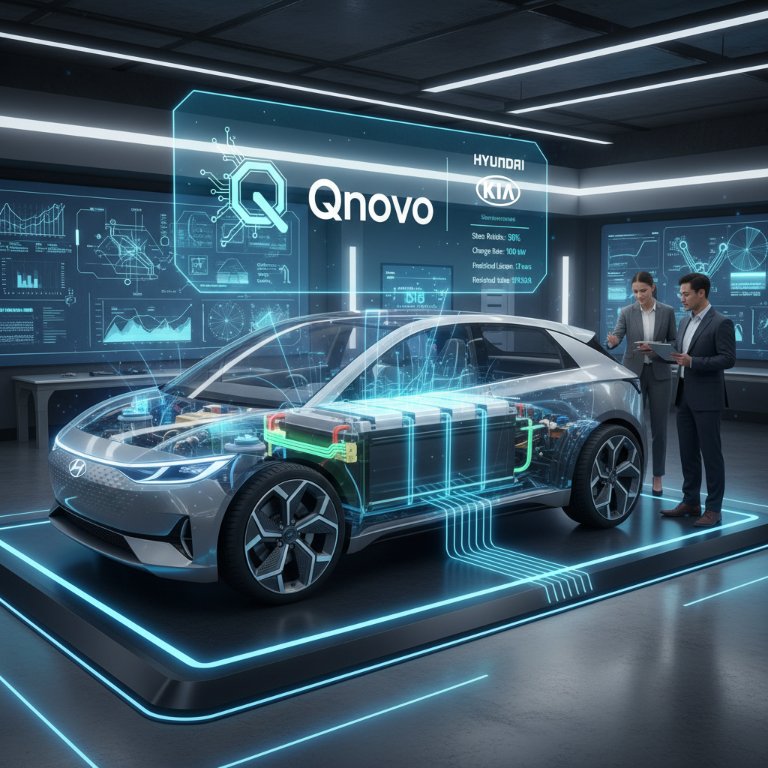
Hyundai Motor Company and Kia Corporation are making a significant move to solidify their leadership in the electric vehicle (EV) market, announcing a strategic investment in Qnovo, a pioneering battery software company. This isn't merely a financial transaction; it's a profound declaration of intent, signaling that the future of EV performance, safety, and long-term value will be increasingly defined by sophisticated software, not just raw hardware specifications. For a duo that has aggressively pursued EV market share with a comprehensive strategy involving dedicated platforms like the Integrated Modular Architecture (IMA) and substantial investments in battery R&D and manufacturing, this partnership with Qnovo is a critical piece of their ambitious electrification puzzle.
This investment deepens an already existing collaboration, accelerating the integration of Qnovo’s advanced battery intelligence software across Hyundai and Kia's electric mobility and future vehicle platforms. The implications for consumers and the industry are substantial: improved charging capabilities, enhanced safety, and a more transparent, reliable electric vehicle experience throughout the vehicle's lifespan.
Qnovo's Cutting-Edge Battery Intelligence at the Forefront
Qnovo's technology stands out by moving beyond basic battery management. Its software is engineered to dynamically optimize battery performance and safety in real-time. This sophisticated approach directly addresses some of the most pressing concerns for EV owners and the broader industry:
Real-time Performance Optimization and Enhanced Safety: Qnovo's software continuously monitors battery health, dynamically adjusting charging profiles and operating parameters to prevent degradation and enhance safety. The company claims its SentinelX solution can improve battery safety by 1000x and offers adaptive fast charging that can achieve 10-80% state of charge in just 16 minutes for 800V systems.
Precise Data for Warranties: By providing accurate, real-time data on battery health and usage, the software offers a robust foundation to support warranty claims, potentially reducing disputes and increasing consumer confidence.
Accurate Residual Value Determination: Critically, Qnovo's intelligence will precisely determine the residual value of EV batteries throughout their operational lifespan. This addresses a major pain point in the used EV market, where battery State of Health (SoH) is the most significant factor influencing resale values.
Extended Lifespan and Potential Range Gains: Qnovo's intelligent algorithms can extend battery lifespan, with claims of up to 40% for commercial applications, and even suggest a potential 10% increase in usable range by optimizing battery chemistry.
Why This Matters: The Software-Defined EV Era Arrives
This strategic investment isn't just news; it's a powerful signal to the entire automotive industry. Hyundai and Kia, already formidable players with aggressive EV targets and a diversified battery strategy, including LFP cell localization, are now firmly asserting that software intelligence is as vital as hardware in the race for EV dominance.
Who Wins? Consumers stand to be major beneficiaries. More reliable batteries mean less range anxiety, faster and safer charging, and crucially, greater confidence in the long-term value of their EV investment. For Hyundai and Kia, this translates into a significant competitive advantage: stronger warranty positions, potentially higher resale values for their vehicles, and enhanced brand reputation for cutting-edge technology. Qnovo, of course, gains significant validation and resources to accelerate its technology's adoption across a massive automotive footprint. The broader EV ecosystem benefits from a move towards greater transparency and standardization in battery health metrics.
Who Loses? Automakers who continue to view battery management as solely a hardware problem risk falling behind. Those with less sophisticated Battery Management Systems (BMS) may find their vehicles suffering from faster degradation, less optimal performance, and lower residual values in the burgeoning used EV market. The trend towards AI and machine learning in BMS is undeniable, and late adopters will face a steeper climb.
What This Signals: This investment underscores a maturation of the EV market. The focus is shifting beyond simply increasing kilowatt-hours or range. It's about maximizing the efficiency, longevity, and intrinsic value of the battery as the single most expensive component of an EV. This move signals that holistic battery health, driven by advanced software, will become a key differentiator and a cornerstone of total cost of ownership (TCO) for electric vehicles. It's about unlocking the full potential of the EV asset through intelligent management, from the factory floor to the second-hand market. The convergence of edge and cloud processing in BMS, as highlighted by industry trends, is precisely what Qnovo offers.
In conclusion, Hyundai and Kia's deepened partnership with Qnovo marks a pivotal moment in the evolution of electric vehicles. It’s a testament to the fact that the battle for EV supremacy will increasingly be fought in the realm of software, with battery intelligence leading the charge. This strategic alliance promises a future where EV ownership is not only more enjoyable and efficient but also more predictable and financially sound, benefiting both the manufacturers and the growing legion of EV enthusiasts worldwide.