Home Charging: The Unsung Key to Maximizing Your EV's Battery Life and Long-Term Savings
For years, the narrative surrounding electric vehicles often centered on speed – how quickly an EV could accelerate, and perhaps more critically, how ...
Editorial Team
World Of EV
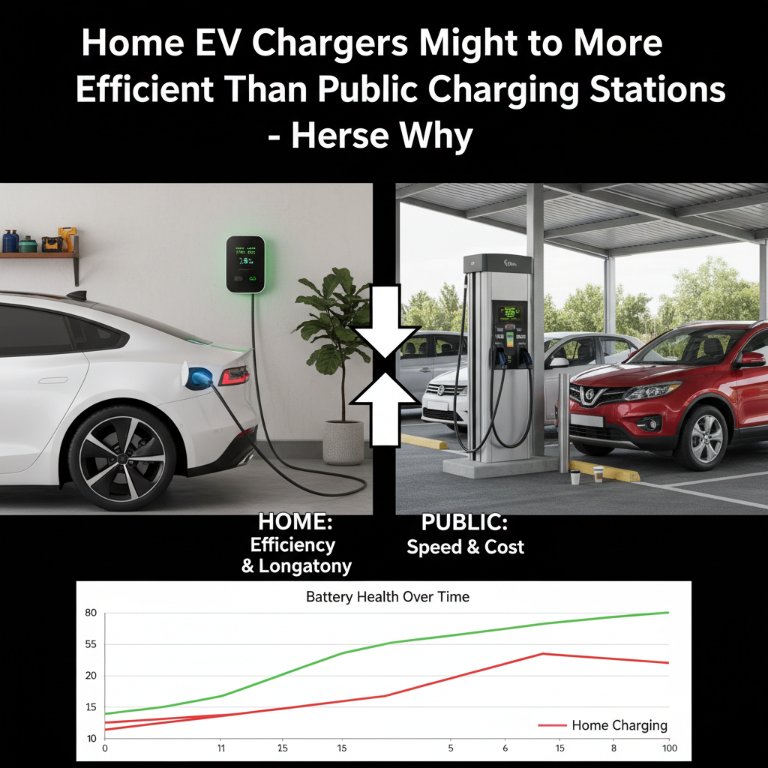
For years, the narrative surrounding electric vehicles often centered on speed – how quickly an EV could accelerate, and perhaps more critically, how quickly it could recharge on the go. Public fast chargers, with their impressive kW ratings, have understandably captured the spotlight, serving as critical infrastructure to quell range anxiety. Yet, an in-depth analysis reveals a quieter, more profound truth: the humble home EV charger is emerging as the true MVP for battery longevity and overall ownership satisfaction. It’s time for EV enthusiasts and prospective buyers to recalibrate their understanding of optimal charging practices.
Preserving Your Power Pack: The Gentle Art of Home Charging
While public DC fast chargers offer the undeniable convenience of rapid energy replenishment, often adding hundreds of miles of range in minutes, this speed comes with a subtle trade-off. High-power charging generates more heat within the battery pack, and consistent exposure to these elevated temperatures can, over time, contribute to a phenomenon known as battery degradation. This is precisely where the home charger shines.
Home charging typically operates at steadier, lower power rates (Level 1 or Level 2 AC charging). This gentle, consistent energy flow minimizes thermal stress on the battery's delicate chemistry, akin to a slow, deep breath rather than a sudden gulp. The result is a significant benefit for the long-term health and lifespan of your EV’s most expensive component. Think of it as preventative maintenance for your battery, ensuring it maintains its capacity and efficiency for many years to come. This stands in stark contrast to the common perception that faster is always better, a notion that overlooks the intricate biological processes within battery cells.
The Financial Edge: Driving Down the Cost of EV Ownership
Beyond battery health, the economic advantages of home charging are equally compelling. Public charging stations, particularly fast chargers, often come with premium pricing, whether charged per kilowatt-hour, per minute, or through subscription models. These fees, while sometimes necessary for convenience on longer journeys, can quickly accumulate.
Conversely, home charging leverages residential electricity rates, which are typically far lower than commercial charging fees. Many utility providers even offer off-peak rates, allowing EV owners to schedule charging during times of lower demand, further reducing costs. This translates directly into substantial long-term savings for the EV owner, enhancing the overall value proposition of electric vehicle ownership. The difference in cost per mile can be considerable, making daily commutes and regular charging significantly more affordable. This financial benefit, combined with the convenience of waking up to a fully charged vehicle every day, profoundly elevates the customer experience.
Why This Matters:
This nuanced understanding of charging efficiency and battery health is pivotal for the evolving EV market. It signals a maturation beyond the initial “range anxiety” phase, pushing consumers and manufacturers alike to consider the holistic ownership experience.
- Who Wins? Savvy EV owners who prioritize vehicle longevity and cost-effectiveness are the clear beneficiaries. Manufacturers of home charging equipment and smart energy management systems also stand to gain as consumers invest in their home charging infrastructure. Furthermore, battery technology developers will continue to refine cells that can withstand various charging profiles, but the core principle of steady charging benefiting longevity remains.
- Who Loses? While public fast-charging networks remain indispensable for intercity travel and those without home charging access, their primary role might subtly shift from everyday top-ups to essential journey support. This insight could prompt a re-evaluation of pricing strategies and service models within the public charging sector to remain competitive and relevant for the daily driver.
- What Does This Signal? This data underscores a critical shift in the EV narrative: moving beyond pure speed and convenience to emphasize sustainable, long-term battery health and total cost of ownership. It highlights the growing importance of residential charging solutions and encourages greater adoption of smart charging technologies that can optimize energy usage and protect battery life. For the industry, it's a call to educate consumers more thoroughly on charging best practices, reinforcing that an EV is not just a car, but a sophisticated energy management system.
Conclusion:
As the EV market continues its rapid expansion, the role of home charging cannot be overstated. It’s not merely a convenience; it is a strategic choice that directly impacts the lifespan of your vehicle's battery and your wallet. By embracing the steady, cost-effective power of home charging, EV owners are not just topping up their batteries; they are investing in the long-term health and value of their electric vehicle, truly unlocking the full potential of emissions-free driving.