Home Charger Battle Exposes UK's EV Charging Divide
A homeowner in Pathhead, Midlothian, is fighting a planning refusal for a private electric vehicle (EV) charger installation, a battle that sharply hi...
Editorial Team
World Of EV
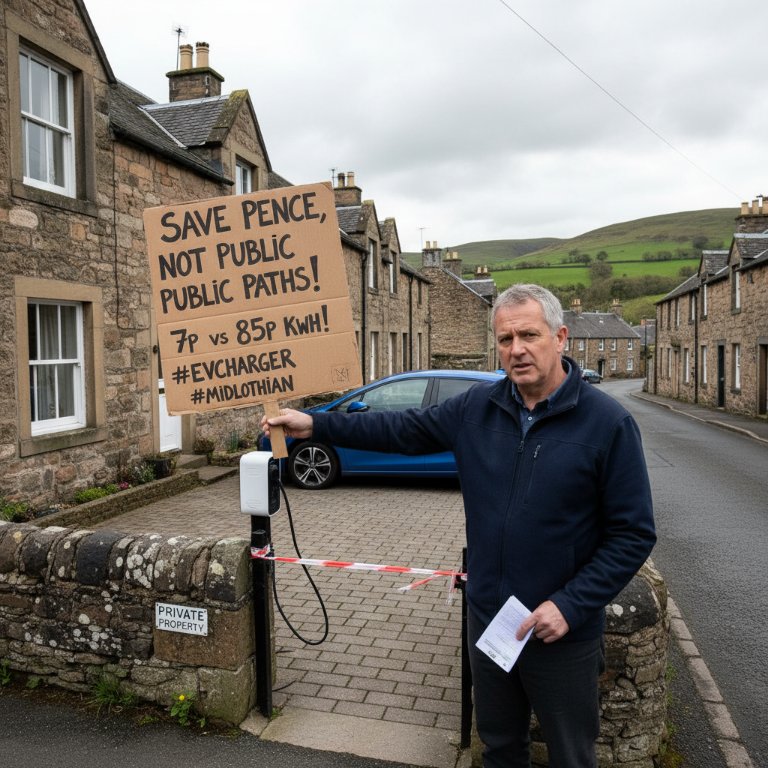
A homeowner in Pathhead, Midlothian, is fighting a planning refusal for a private electric vehicle (EV) charger installation, a battle that sharply highlights the growing chasm between the aspirational push for EV adoption and the often-frustrating reality of charging infrastructure in the UK. This individual case, currently under appeal, underscores a critical point for prospective and current EV owners: the significant economic and practical advantages of home charging over public alternatives.
Both the UK and Scottish Governments are actively championing the transition to electric vehicles, with ambitious targets like the UK's Zero Emission Vehicle (ZEV) mandate requiring 100% of new car and van sales to be zero-emission by 2035. Scotland, specifically, aims for approximately 24,000 additional public EV charge points by 2030 to support its own phase-out commitment. Yet, as this Pathhead dispute illustrates, the path to electrification is anything but smooth, particularly when it intersects with individual property rights and the existing patchwork of public amenities.
The Stark Reality: Cost and Reliability
The core of the Pathhead homeowner's argument revolves around the prohibitive costs and unreliability associated with the public charging network. While the UK government estimates home charging can cost around half the price of fuelling an equivalent petrol vehicle, with some tariffs offering rates under 3p per mile, the disparity presented by the homeowner is even more dramatic. He reports commercial charging points command prices ranging from 42p to 85p per kilowatt-hour (KWH), a stark contrast to the potential 7p per KWH available through overnight reduced home charging rates. This financial chasm translates to substantial annual savings for EV owners with home charging access, potentially hundreds of pounds.
Beyond cost, reliability remains a persistent concern for public charging users. Recent studies indicate that a significant portion of EV drivers encounter issues, with some reports suggesting that 43% of UK EV drivers find public chargers unreliable. This unreliability, coupled with uneven distribution and the absence of charge points in many areas, forces many drivers to seek alternative charging solutions.
Planning Predicament: Public Footpath vs. Private Property
The planning refusal hinges on Transport Scotland's objection, which claims the proposed parking area for the charger is a public footpath. The homeowner, however, contends the area is integral to his property and distinctly separate from the public pavement. This specific contention reflects a broader, often overlooked challenge in scaling EV infrastructure: the complex interplay between public access, private land, and local planning regulations. As more homeowners seek to install essential charging facilities, similar disputes over property lines, easements, and perceived public encroachment are likely to escalate.
Why This Matters:
- For EV Owners & Prospective Buyers: This case underscores that home charging remains the most economically viable and reliable method for powering an EV. For the estimated 40% of UK households without off-street parking, this dispute highlights the systemic disadvantage they face, potentially making EV ownership less attractive due to higher running costs and persistent 'charger anxiety.' It reinforces the need for accessible and affordable public charging solutions that genuinely compete with home rates and reliability.
- For Government & Policy Makers: The Pathhead scenario exposes the critical gap between ambitious EV adoption targets and the practical, granular realities of infrastructure deployment. Policies encouraging EV uptake must be harmonised with local planning laws and address the grey areas of property rights. Without clearer guidelines for residential charging, particularly for those without traditional driveways, and a significant improvement in the cost and reliability of public charging, the national transition to EVs will inevitably encounter friction and inequity. The Scottish Government has acknowledged the need to ensure people from all parts of Scotland can benefit from the switch to EVs, and this case directly challenges that commitment.
- For the Charging Industry: While the public charging sector has seen growth, the pricing model and perceived unreliability are clearly deterring potential users and reinforcing the dominance of home charging. This case is a call to action for the industry to innovate on pricing structures, enhance charger uptime, and expand into areas currently underserved, particularly for those reliant on public access.
Conclusion:
The Pathhead homeowner's appeal is more than a local planning dispute; it is a microcosm of the larger challenges facing the UK's ambitious EV transition. As both national and devolved governments push for widespread EV adoption, the fundamental issues of affordable, reliable charging — particularly the disparity between home and public options, and the complexities of installing private infrastructure — must be addressed with urgent and cohesive policy. Failure to do so risks alienating a significant segment of potential EV buyers and ultimately impeding the nation's critical journey towards a net-zero future.