Historic EV Triumph: Europe Embraces Battery-Electric, Australia Electrifies in Landmark Sales Month
December 2025 will be etched into automotive history books as a pivotal moment for electric vehicles. For the first time ever, battery-powered electri...
Editorial Team
World Of EV
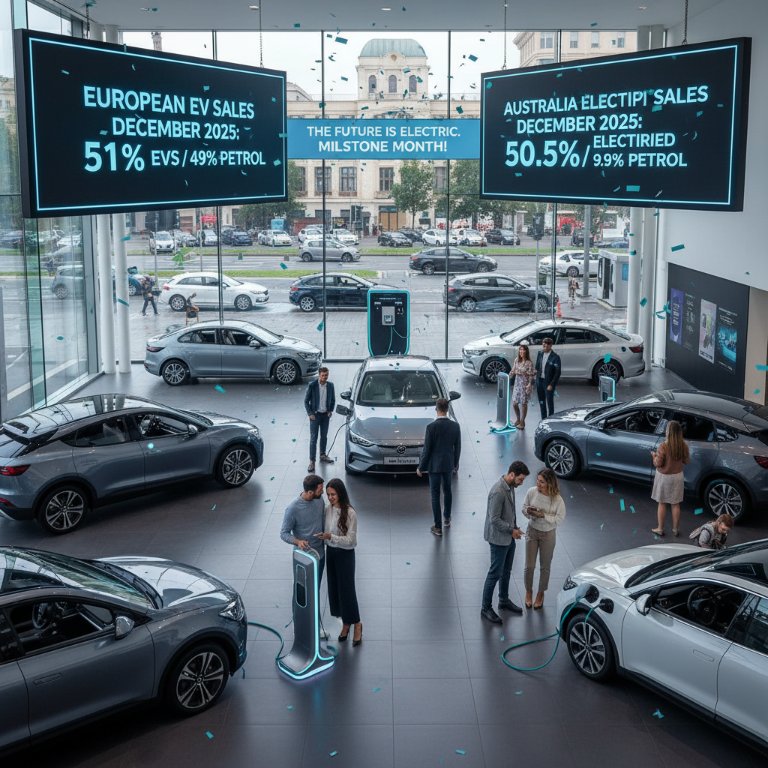
December 2025 will be etched into automotive history books as a pivotal moment for electric vehicles. For the first time ever, battery-powered electric vehicles (BEVs) officially outsold petrol-only cars across Europe, a landmark achievement confirmed by the European Automobile Manufacturers' Association (ACEA). This isn't just a statistical blip; it represents the culmination of years of technological advancement, policy incentives, and shifting consumer desires, signaling a new era for personal mobility on the continent.
Adding to this electrifying global trend, Australia also reported a significant milestone in the same month. The combined sales of electrified vehicles—encompassing BEVs, plug-in hybrids (PHEVs), and conventional hybrids—narrowly surpassed petrol-only models in new-vehicle registrations. While Australia's electrification journey has traditionally lagged behind European counterparts, this combined result underscores a broader, undeniable pivot away from internal combustion engines worldwide.
Europe's Electric Breakthrough
The figures from ACEA paint a clear picture: European consumers are decisively embracing battery electric propulsion. BEV registrations surged by 51% year-on-year in December 2025, reaching 217,898 units. Conversely, sales of standard petrol cars in the EU fell by 19% year-on-year during the same period. Key markets like Germany (+43.2% BEV sales in 2025), the Netherlands (+80.1% in December 2025), Belgium (+52.3% in December 2025), and France (+42.5% in December 2025) have been instrumental in driving this unprecedented surge. This historic crossover point, where BEV sales alone surpassed the long-dominant petrol vehicles, marks a significant acceleration in the continent's transition towards zero-emission transport. For context, the market share for BEVs in the EU reached 17.4% for the full year 2025, up from 13.6% in 2024.
Australia's Electrified Ascent
Down Under, the electrification story took a slightly different, yet equally significant, turn. Australia's new vehicle market saw electrified options—from full BEVs to the more accessible hybrids—collectively outsell traditional petrol vehicles for the first time. In December 2025, electric vehicles (BEVs and PHEVs) accounted for a record 16.7% of all new vehicles sold in Australia. This included 10,384 BEVs and 5,919 PHEVs sold during the month. This broader definition of 'electrified' reflects the unique market dynamics and consumer preferences in Australia, where range anxiety and infrastructure concerns have historically been more pronounced. However, the sheer volume of choices now available, coupled with a growing understanding of the benefits of electrification, has clearly begun to sway Australian buyers. This signals a maturation of the market, moving beyond early adopters to a more mainstream embrace of vehicles that offer some form of electric assistance.
Driving Forces Behind the Shift
Evolving Consumer Preferences: Buyers are increasingly prioritizing lower running costs, environmental benefits, and the superior driving dynamics offered by electric powertrains. The perception of EVs has shifted from niche to desirable.
Expanding Model Lineups: Automakers have flooded the market with a diverse array of EV models, ranging from compact city cars to luxurious SUVs and even commercial vehicles. This vast selection addresses a wider spectrum of needs and budgets, making the switch to electric more feasible for more people.
Supportive Policies and Infrastructure Growth: Governments in key European nations have maintained and, in some cases, enhanced purchase incentives, alongside significant investments in public and private charging infrastructure. The EU, for example, has implemented regulations like the Alternative Fuels Infrastructure Regulation (AFIR) to standardize and expand charging infrastructure. While Australia's policy landscape has been more fragmented, state-level initiatives and growing private investment in charging are beginning to make a tangible difference.
Why This Matters:
December 2025 isn't just another sales report; it's a profound inflection point. For legacy automakers, particularly those who have been hesitant or slow in their EV transition (think of brands that initially relied on compliance cars or adapted platforms like some early Japanese and German offerings), this signals an urgent, existential threat. The market has definitively moved beyond petrol, and those without a robust, competitive, and volume-ready EV strategy will struggle to maintain relevance. This isn't merely about meeting emissions targets anymore; it's about meeting consumer demand. The 51% year-on-year surge in European BEV sales for December highlights the rapid acceleration.
Who wins? Clearly, EV pure-plays like Tesla continue to set the pace, but established giants like Volkswagen Group, Stellantis, and Hyundai-Kia, which have invested heavily in dedicated EV platforms and expansive lineups, are now seeing their strategies bear fruit. Battery manufacturers and charging infrastructure providers are also significant beneficiaries, as demand for their products and services will only intensify. Consumers win too, with increasing competition leading to better technology, more choices, and eventually, more affordable electric options. The overall European EV market is projected to grow from $209.59 billion in 2025 to $666.26 billion by 2032.
Who loses? Petrol-only vehicle manufacturers face an increasingly difficult road. Their R&D budgets will continue to shrink for ICE vehicles, and their residual values will likely come under pressure in increasingly EV-centric markets. Fuel companies and associated service industries will also need to accelerate their own transitions. This historic shift sends an unmistakable signal to global markets: the electrification of transport is not a distant future, but a rapidly unfolding present. Any remaining doubts about the long-term viability and eventual dominance of electric vehicles should now be firmly laid to rest.
Conclusion:
The sales figures from December 2025 in Europe and Australia represent more than just a momentary triumph for electric vehicles. They symbolize a fundamental and irreversible transformation of the automotive industry. As 2026 unfolds, we anticipate this momentum will only accelerate, driven by further technological innovation, increased affordability, and ever-expanding charging infrastructure, cementing the electric vehicle's position as the primary mode of transport for generations to come.