Grace Tao Confirms Tesla China FSD Rollout Preparations: The Autonomous Revolution Nears Beijing's Approval
In a pivotal development poised to reshape the global autonomous driving landscape, reports on February 11, 2026, confirmed that Tesla China Vice Pres...
Editorial Team
World Of EV
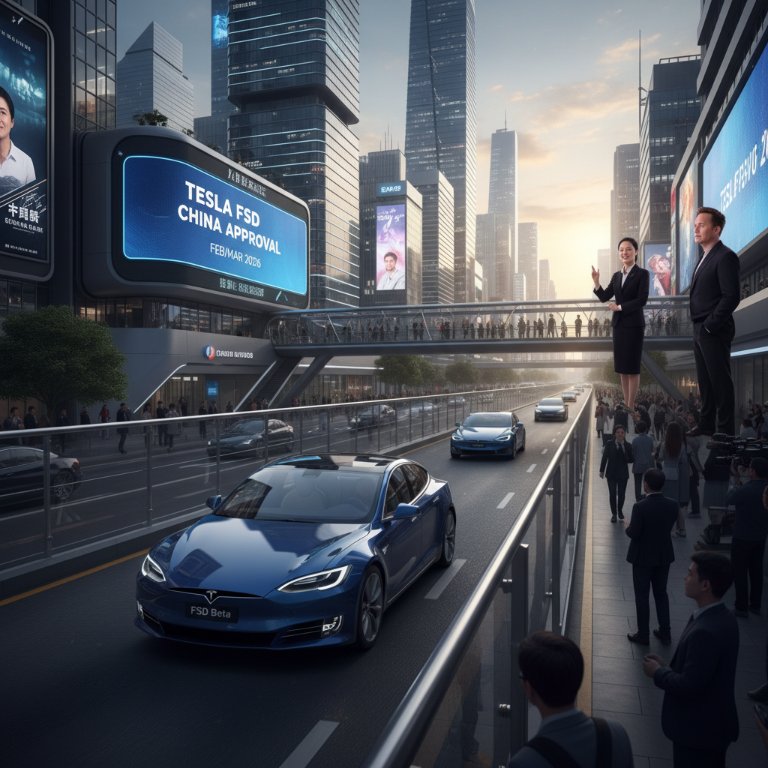
In a pivotal development poised to reshape the global autonomous driving landscape, reports on February 11, 2026, confirmed that Tesla China Vice President Grace Tao has formally discussed the intricate preparations for a local Full Self-Driving (FSD) rollout. This announcement is not merely a procedural update; it signals a potential breakthrough in what has been a long and complex regulatory dance, closely echoing Elon Musk’s earlier, ambitious suggestions that full FSD regulatory approval in China could materialize as early as February or March 2026.
For years, Tesla's advanced driver-assistance system has been a highly anticipated, yet largely inaccessible, feature for its vast customer base in China. While Tesla vehicles sold globally have offered varying levels of FSD capability, the stringent regulatory environment and specific data localization requirements within China have kept its most sophisticated autonomous features under wraps, primarily limited to basic ADAS functionalities. This prolonged wait has been a point of frustration for many Chinese Tesla owners and a significant competitive disadvantage for the company against local rivals like Xpeng, Nio, and Huawei-backed AITO, which have steadily advanced their own sophisticated ADAS offerings.
The Path to Localized Autonomy
Grace Tao's confirmation underscores Tesla's methodical approach to fulfilling regulatory prerequisites. While specific details of the preparations remain proprietary, it is understood that such an endeavor involves extensive data mapping, localized algorithm refinement to account for unique Chinese road conditions and traffic patterns, and rigorous compliance with China's strict data security and privacy laws. Tesla has been proactive in establishing a data center in China to store all data generated by its vehicles locally, addressing a critical concern for Chinese authorities. These preparations are not simply technical; they are deeply strategic, aiming to build trust with regulators and demonstrate a commitment to safe, compliant operation on Chinese roads.
Why This Matters:
This impending FSD rollout in China is far more than a software update; it is a monumental inflection point for Tesla and the broader automotive industry.
- Tesla's Financial Juggernaut: For Tesla, the introduction of FSD in China unlocks a massive new revenue stream. With FSD subscriptions and one-time purchases, the company stands to significantly boost its per-vehicle profitability and enhance its valuation as a technology company with recurring software income. This move could provide a much-needed shot in the arm for Tesla's stock, especially in a competitive market.
- Validation of Global Ambitions: A successful FSD launch in China would serve as an unparalleled validation of Tesla's autonomous driving technology on a global scale. Navigating the complexities of Chinese traffic and regulatory demands demonstrates a level of adaptability and sophistication that few, if any, other autonomous driving platforms can claim.
- Catalyst for Chinese EV Market: The entry of FSD could accelerate the pace of autonomous driving development within China. While local players have made strides, Tesla's FSD, once fully operational, will set a new benchmark, potentially pushing domestic manufacturers to innovate faster and invest more heavily in their own autonomous capabilities. This could intensify competition but ultimately benefit Chinese consumers with more advanced options.
- Regulatory Precedent: China's approval of Tesla FSD could establish a critical regulatory precedent for other foreign automotive companies looking to deploy advanced autonomous features. It signals a potential opening of the market, provided companies adhere to the stringent local requirements for data handling and operational safety.
- Who Wins? Primarily Tesla, securing a crucial growth pillar in its largest market outside the U.S. Chinese consumers win with access to cutting-edge technology. The broader autonomous driving ecosystem benefits from increased competition and regulatory clarity. Who Loses? Potentially some domestic Chinese EV makers who might struggle to match Tesla's FSD capabilities in the short term, though they will undoubtedly accelerate their efforts.
The discussions led by Grace Tao signal that the regulatory barriers are indeed beginning to crumble, paving the way for Tesla to finally unleash the full potential of FSD in its most critical overseas market. The coming weeks will be crucial as the industry watches for official regulatory approval, which could solidify Tesla's position as a dominant force in the global autonomous revolution and redefine the competitive landscape of the world's largest EV market.