GM's Ultium Plant Pivots to LFP Energy Storage, Signaling a Major Industry Shift Beyond EVs
In a strategic move that reverberates throughout the automotive and energy sectors, General Motors (GM) and LG Energy Solution have announced a signif...
Editorial Team
World Of EV
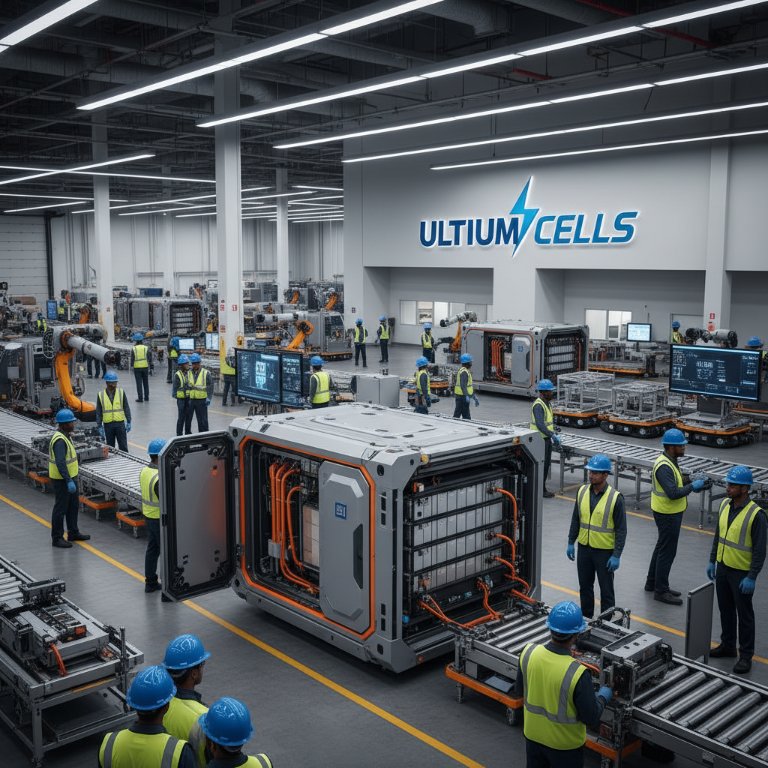
In a strategic move that reverberates throughout the automotive and energy sectors, General Motors (GM) and LG Energy Solution have announced a significant repurposing of their Tennessee Ultium Cells plant. Once a cornerstone of GM's ambitious electric vehicle (EV) battery production strategy, the facility will now shift its focus entirely to manufacturing lithium-iron-phosphate (LFP) batteries specifically for energy storage products. This bold pivot isn't merely a retooling; it’s a telling symptom of the evolving market dynamics where slowing EV battery demand meets the explosive growth in stationary energy storage needs.
From EV Powerhouse to Grid Stabilizer
The Ultium Cells joint venture, initially lauded as a critical enabler for GM’s 'all-electric future' and a competitor to industry giants, now redirects its substantial manufacturing prowess. The Tennessee plant, which was slated to churn out advanced battery cells for a range of GM’s upcoming EVs, will instead become a dedicated factory for LFP cells designed to power the grid, commercial installations, and crucially, the burgeoning demands of artificial intelligence (AI) data centers. Production is anticipated to commence in the second quarter of 2026.
The LFP Advantage for Stationary Storage
The choice of LFP technology for this new direction is highly significant. While some EV manufacturers, notably Tesla and more recently Ford, have adopted LFP for entry-level models due to its cost-effectiveness and improved thermal stability, its characteristics make it a near-perfect fit for stationary applications. LFP batteries offer:
- Superior Cycle Life: They can undergo significantly more charge and discharge cycles than nickel-cobalt-manganese (NCM) or nickel-cobalt-aluminum (NCA) chemistries, ideal for daily grid cycling.
- Enhanced Safety: LFP chemistry is inherently more stable and less prone to thermal runaway, a critical factor for large-scale installations.
- Cost-Effectiveness: Free from expensive and ethically complex cobalt, LFP offers a lower per-kWh cost, making large-scale energy storage more economically viable.
While LFP’s lower energy density is a drawback for long-range EV applications where weight and space are at a premium, it is a non-issue for stationary storage, where the sheer volume of energy matters more than its compact packaging.
Why the Pivot? Market Forces at Play
This strategic redirection is a direct response to two powerful, converging market trends:
- Slowing EV Battery Demand: After years of meteoric growth projections, the EV market has experienced a deceleration in certain segments. Factors such as high interest rates, limited charging infrastructure in some regions, and consumer hesitancy have led to an adjustment in EV sales forecasts, creating potential overcapacity in EV battery manufacturing.
- Surging Energy Storage Needs: Counteracting the EV slowdown is the insatiable appetite for stationary energy storage. The global push for renewable energy integration (solar and wind) demands robust battery systems to stabilize grids. More acutely, the explosive growth of AI data centers is creating an unprecedented demand for reliable, high-capacity power solutions. These centers consume colossal amounts of electricity, and LFP batteries offer a practical solution for backup power, peak shaving, and ensuring grid stability around these energy-intensive operations.
Adding a positive human element to this story, the shift will result in the recall of 700 previously laid-off workers, indicating a healthy demand outlook for the plant's new mission.
Why This Matters:
This move by GM and LG Energy Solution is far more than an isolated factory retooling; it’s a powerful signal to the entire energy and automotive ecosystem. Here's what it means:
- Strategic Agility is Paramount: GM, alongside its partner LG, demonstrates shrewd business acumen by swiftly adapting to changing market conditions. Instead of building EV battery capacity into a potentially softening market, they are re-deploying assets to a sector experiencing hyper-growth. This de-risks their investment and secures future revenue streams.
- The AI Energy Crunch is Real: This announcement unequivocally underscores the immense energy infrastructure challenge—and opportunity—presented by the AI revolution. Data centers are no longer just server farms; they are becoming massive power consumers, and battery storage is essential to their operation and to the stability of the grids they draw from.
- LFP's Ascendance Beyond EVs: While LFP has found a place in budget EVs, this move cements its status as a critical, high-volume battery chemistry for the broader energy transition. Its cost, safety, and longevity make it indispensable for grid-scale and industrial applications.
- Diversification of Battery Manufacturing: The future of battery production is not singularly tied to electric vehicles. This pivot highlights the growing importance of stationary energy storage as a distinct, massive market that demands its own dedicated manufacturing capacity and technological focus. Manufacturers cannot afford to put all their eggs in the EV basket.
- Market Re-calibration for EVs: While GM remains committed to its EV future, this tactical adjustment suggests a more pragmatic, perhaps slightly less aggressive, near-term outlook for EV growth across the industry than previously anticipated. It allows for a more balanced approach to battery supply and demand.
In essence, GM and LG are winning by being flexible, positioning themselves to capture a significant share of the rapidly expanding energy storage market, particularly energized by AI’s demands, while optimizing their valuable battery manufacturing assets.
This pivotal decision by GM and LG Energy Solution isn't a retreat from the EV revolution but a pragmatic and insightful repositioning. By embracing the surging demand for LFP-based energy storage, particularly from the energy-hungry AI sector, they are not only securing their manufacturing future but also illustrating the dynamic and interconnected nature of our evolving electrified world. Expect more such strategic diversification as the energy landscape continues its rapid transformation.