GM's Strategic Gambit: Leveraging ICE Profits to Conquer the EV Future Amidst Short-Term Losses
General Motors, a titan of the automotive world, is openly confronting a challenging reality: its burgeoning electric vehicle (EV) segment is currentl...
Editorial Team
World Of EV
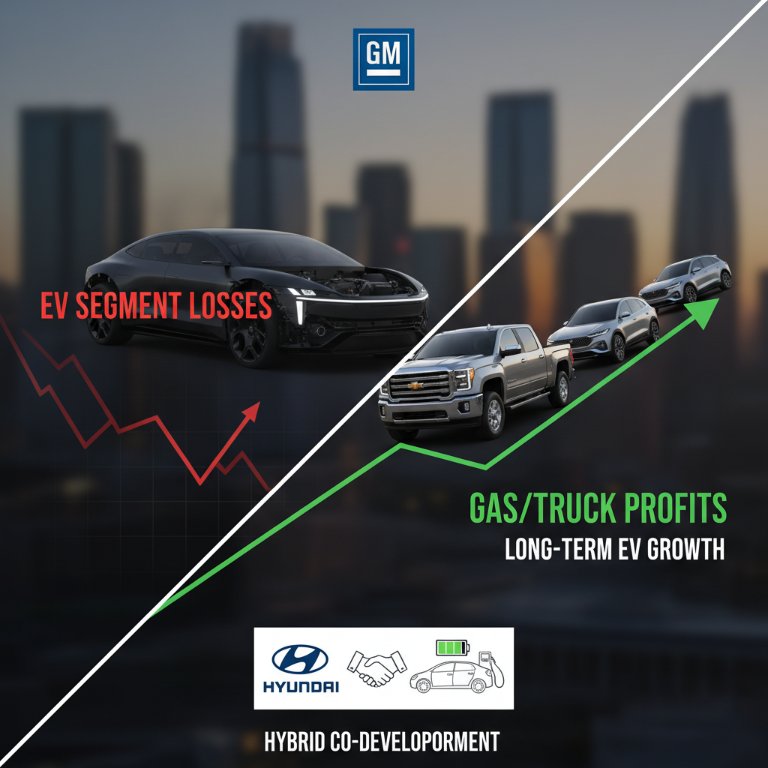
General Motors, a titan of the automotive world, is openly confronting a challenging reality: its burgeoning electric vehicle (EV) segment is currently operating at a loss. This frank admission from CFO Paul Jacobson, however, is not a sign of retreat but rather a clear articulation of a calculated, high-stakes strategy. GM is deliberately absorbing these short-term financial hits, buttressed by the immense profitability of its gasoline-powered trucks and SUVs, to pave the way for long-term EV market dominance and sustained profitability within the next three to five years.
This isn't GM's first rodeo in the EV space, but it marks a critical pivot. Unlike earlier, more hesitant forays or the early success of the Chevrolet Bolt EV, which relied on modified existing platforms, GM's current strategy is anchored by its ambitious, purpose-built Ultium platform. The company is pouring billions into developing a comprehensive EV ecosystem, from advanced battery technology and dedicated manufacturing facilities to a diverse portfolio of upcoming electric models. These initial investments, while essential for future success, naturally weigh heavily on current balance sheets.
The Ultium Bet and Current Realities
GM's commitment to its Ultium architecture was heralded as a cornerstone of its all-electric future, promising scalable battery and drive unit configurations adaptable across a wide range of vehicles, from affordable compacts to massive trucks. The current losses reflect the significant upfront capital expenditure required to bring this vision to life, including:
- Massive R&D Investments: Developing proprietary battery chemistry and modular EV platforms is inherently costly.
- Factory Retooling and New Builds: Converting existing plants and constructing new ones dedicated to EV production requires substantial financial outlay.
- Supply Chain Development: Establishing robust, secure supply chains for critical EV components like rare earth minerals and semiconductors is complex and expensive.
Jacobson's emphasis on the strength of GM's internal combustion engine (ICE) business underscores a unique advantage legacy automakers possess. The booming sales and high margins of gasoline-powered trucks and SUVs effectively serve as a strategic war chest, allowing GM to fund its EV transition without immediately needing the EV segment itself to be profitable. This contrasts sharply with pure-play EV startups, which must achieve profitability with their initial EV offerings or constantly seek external funding.
Strategic Reorganization and the Three-to-Five Year Horizon
To accelerate its trajectory towards EV profitability and market share growth, GM is reportedly undertaking a significant reorganization of its EV output. While specific details remain under wraps, this likely involves optimizing production processes, streamlining supply chains, and potentially re-evaluating product roadmaps to maximize efficiency and consumer appeal. The aggressive three-to-five-year timeframe signals an urgent push to move beyond the investment phase and into a period of robust returns, aligning with market expectations for the long-term viability of its EV enterprise.
A Hybrid Bridge? Partnering with Hyundai
Perhaps one of the most intriguing developments is GM's consideration of co-developing hybrid vehicles with Hyundai Motor. This potential collaboration marks a notable shift, or at least a broadening of strategy, for a company that has, at times, strongly advocated for an all-electric future. The move to explore hybrids suggests several strategic considerations:
- Market Demand: Acknowledging that not all consumers are ready or able to transition directly to pure EVs, offering high-efficiency hybrids can capture a broader market segment.
- Emissions Compliance: Hybrids can serve as a vital tool for meeting increasingly stringent global emissions regulations, particularly in regions where EV adoption is slower.
- Cost Reduction and Technology Sharing: Partnering with Hyundai, a recognized leader in hybrid technology, could offer mutual benefits in terms of shared development costs, faster time-to-market, and leveraging complementary expertise.
Why This Matters:
This news from GM is more than just a financial update; it's a profound signal to the entire automotive industry and discerning consumers alike. For savvy EV enthusiasts, it confirms that the path to widespread electrification is complex, demanding immense capital, and likely to be less linear than some initial projections suggested. For prospective buyers, it indicates that future GM EV offerings will be backed by a company committed to the long haul, even if initial models are premium-priced to recoup some development costs. Industry professionals will be keenly watching to see if this calculated gamble pays off.
- Who Wins? If GM executes successfully, it positions itself as a dominant player in the future automotive landscape, offering a diverse portfolio of compelling EVs and potentially highly competitive hybrids. Consumers win through increased choice and innovation. Hyundai could also significantly expand its market reach and shared technology pool. This move also benefits consumers who prefer or require the flexibility of a hybrid while still seeking improved fuel efficiency and reduced emissions.
- Who Loses? Pure-play EV startups, already facing intense capital requirements, will feel increased pressure as legacy giants like GM leverage their vast financial resources. A stronger hybrid push might also slightly slow the momentum of pure EV adoption in the immediate term, potentially impacting smaller, single-focus EV manufacturers.
- Market Signal: GM's strategy underscores that the transition to EVs is not a sprint, but a marathon requiring deep pockets and strategic flexibility. The potential pivot towards hybrids, even as a temporary measure, signals a pragmatic adjustment to current market realities and consumer preferences, potentially indicating that other major automakers might follow suit. It suggests a more diversified transition period than once envisioned.
- Is This a 'Do-or-Die' Moment? For GM, success in this EV pivot is absolutely critical. The global automotive market is irrevocably shifting towards electrification. Failure to establish a dominant and profitable EV segment would relegate GM to a declining niche player, making this a truly defining period for the company's future viability.
In essence, GM is undertaking a monumental transformation, using its current strengths to bridge the gap to a profitable electric future. While the present EV losses are a stark reminder of the challenges, the underlying strategy is one of bold commitment and calculated risk. The next three to five years will be instrumental in determining whether this strategic bet cements GM's position as a leader in the electrified age.