GM's LMR Battery Breakthrough: A Bold Gamble to Revitalize Its EV Ambitions
General Motors is making a monumental bet on Lithium Manganese Rich (LMR) battery technology, signaling a critical strategic pivot aimed at reinvigora...
Editorial Team
World Of EV
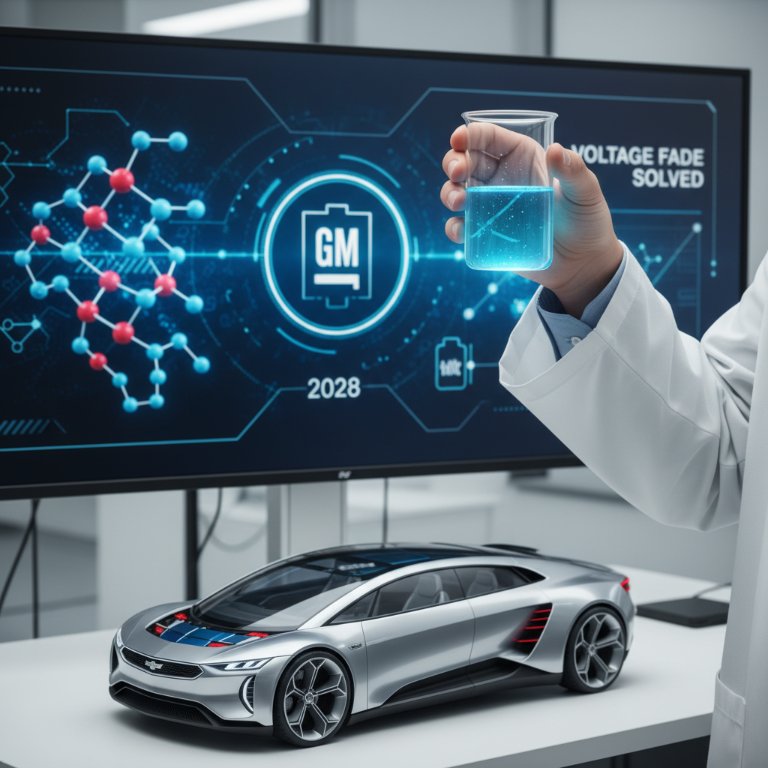
General Motors is making a monumental bet on Lithium Manganese Rich (LMR) battery technology, signaling a critical strategic pivot aimed at reinvigorating its electric vehicle (EV) offensive. In a move that could redefine its position in the fiercely competitive EV landscape, the Detroit giant has declared a significant breakthrough, resolving the long-standing 'voltage fade' issue that has plagued LMR chemistry, according to Kurt Kelty, GM’s VP of battery, propulsion, and sustainability, in a statement to the Financial Times. With the first LMR-powered vehicles slated for a 2028 debut, GM is banking on this advanced chemistry to not only drive down costs but also to dramatically enhance performance, ultimately resuscitating EV adoption in the crucial US market.
GM's current Ultium strategy, while ambitious, has faced its share of headwinds, from production bottlenecks to a slower-than-anticipated consumer uptake amidst broader market shifts. The company’s initial push with models like the GMC Hummer EV and Cadillac Lyriq, built on the Ultium platform, represented a foundational step, yet the overall ramp-up has been challenging, leaving many enthusiasts and investors looking for the next major catalyst. This LMR announcement appears to be just that – a clear signal that GM is not content to simply iterate but is actively pursuing disruptive technological advantages to secure its future.
The LMR Promise: Cost, Density, and Stability
Lithium Manganese Rich (LMR) battery technology has long been a tantalizing prospect for battery developers. Its inherent advantages include the potential for high energy density and a reduction in reliance on more expensive and ethically contentious materials like cobalt, making it an attractive pathway to more affordable and sustainable EVs. However, a significant hurdle has consistently been 'voltage fade' – a phenomenon where the battery's operating voltage gradually decreases over cycles, impacting overall capacity and lifespan. This technical challenge has largely relegated LMR to the research labs, preventing its widespread commercialization.
GM’s claim of definitively resolving this voltage fade issue is therefore nothing short of revolutionary. If proven in real-world application, it unlocks LMR’s full potential, offering a compelling blend of attributes that directly addresses the industry's twin demands for better performance and lower costs.
- Cost Parity with LFP: GM projects LMR batteries to be comparable in cost to Lithium Iron Phosphate (LFP) batteries. LFP, championed by companies like BYD (with its Blade battery) and increasingly adopted by Tesla, is lauded for its cost-effectiveness, safety, and cycle life, though it typically trails in energy density compared to nickel-rich chemistries.
- 33% Higher Energy Density: Crucially, GM anticipates LMR to offer potentially 33% higher energy density than LFP. This is a game-changer, meaning LMR-powered vehicles could achieve significantly longer ranges for the same battery pack size and weight, or offer comparable range with a smaller, lighter, and potentially cheaper pack. This directly challenges the perception that high energy density necessarily equates to high cost.
This potent combination positions LMR as a formidable contender against current industry leaders. While Tesla’s 4680 cells offer a structural advantage and improved power delivery, their chemistry is still largely nickel-cobalt-manganese (NCM) or nickel-cobalt-aluminum (NCA) based, focusing on different optimizations. BYD’s Blade battery, an LFP variant, excels in safety and packaging but cannot match the potential energy density of LMR.
Why This Matters:
- For General Motors: This is a make-or-break moment. A successful LMR deployment could be the linchpin that finally catapults GM into an undisputed leadership position in EV technology. It offers a clear path to delivering more affordable, longer-range EVs that can truly compete with — and potentially surpass — offerings from Tesla and Asian manufacturers. This could reignite consumer interest, boost sales volumes, and solidify GM's long-term profitability in the EV era.
- For Consumers: The promise of LMR translates directly into tangible benefits. More affordable EVs with extended range will significantly lower the barrier to entry for prospective buyers, making electric mobility accessible to a broader demographic. This could finally be the catalyst needed to accelerate EV adoption in the US, fulfilling GM's stated goal.
- For the Automotive Industry: GM’s LMR breakthrough validates a previously challenging battery chemistry, potentially opening new avenues for research and development across the industry. It signals an intensification of the 'battery arms race,' forcing competitors to re-evaluate their own long-term battery strategies and investments in next-generation chemistries. Those solely reliant on existing LFP or high-cost NMC solutions might find themselves at a competitive disadvantage if they cannot match the cost-to-energy-density ratio of a perfected LMR.
- Market Signal: This move underscores that the future of EV batteries is not singular but diversified. Different chemistries will coexist, each optimized for specific applications and price points. GM's investment signals a sophisticated understanding of this evolving landscape and a willingness to invest heavily in proprietary solutions rather than relying solely on external suppliers or conventional chemistries.
GM's LMR gamble is a high-stakes play that could reshape its destiny and the broader EV market. If successful, it promises a future where cost-effective, high-range electric vehicles become the norm, not the exception.
The 2028 target gives GM a tight timeline to move from breakthrough to mass production, but if they deliver, the rewards could be immense, cementing their legacy as a true innovator in electric mobility.