GM's Electric Momentum Surges: Strong Earnings, 48% EV Growth, and a Clear Path to Profitability
General Motors (GM) is not merely navigating the electric vehicle transition; it's accelerating through it, as evidenced by its commanding Q4 and full...
Editorial Team
World Of EV
General Motors (GM) is not merely navigating the electric vehicle transition; it's accelerating through it, as evidenced by its commanding Q4 and full-year 2025 earnings. The automotive giant reported adjusted earnings per share (EPS) that not only surpassed market expectations but also provided a bullish outlook for 2026, projecting an impressive $11 to $13 per share. This financial robustness underpins a pivotal moment for GM as its aggressive push into electrification begins to yield substantial returns.
GM's strategic pivot to an all-electric future, once met with skepticism from some corners, is demonstrably paying off. The company's electric vehicle sales surged by a remarkable 48% year-over-year, firmly establishing GM as the second-largest EV producer globally, trailing only the market pioneer, Tesla.
Financial Powerhouse Fuels EV Ambitions
The stellar financial performance in late 2025 provides GM with the essential capital and confidence to further invest in its ambitious EV roadmap. After years of significant R&D expenditures and the initial rollout of its Ultium platform, the financial strength signals that GM is moving beyond the investment phase into a period of more sustainable growth and profitability. This strong earnings beat and optimistic 2026 forecast ($11-$13 EPS) are critical for maintaining investor confidence and funding the rapid expansion required to challenge industry leaders.
The Electric Offensive: Ultium's Ascent
The 48% year-over-year surge in EV sales is a testament to the growing market acceptance of GM's Ultium-powered vehicles. This isn't a minor uptick; it represents a significant increase in volume, driven by models like the Chevrolet Silverado EV, Blazer EV, and Equinox EV, which are beginning to scale production and reach a broader customer base. For a legacy automaker, achieving such robust EV growth while maintaining overall financial health is a complex undertaking, contrasting sharply with some rivals who have struggled to balance traditional operations with future EV investments. GM's solidified position as the second-largest EV producer after Tesla indicates that its comprehensive strategy, which includes a diverse product portfolio across various price points and segments, is gaining considerable traction.
Battery Breakthroughs: The Profitability Catalyst
CEO Mary Barra's explicit statement that advancements in battery technology are expected to accelerate GM's path to profitability in its EV segment is a critical insight. Early EV models, even on dedicated platforms, often faced higher production costs due to battery expenses and nascent manufacturing efficiencies. Improved battery technology typically translates into:
- Reduced Cell Costs: Lowering the most expensive component of an EV.
- Increased Energy Density: Allowing for smaller, lighter battery packs for the same range, or greater range with current pack sizes.
- Faster Charging Capabilities: Enhancing the user experience and reducing battery degradation.
- Simplified Manufacturing: Streamlining battery pack assembly and integration.
These advancements are fundamental to making EVs not just competitive in performance but also profitable for the manufacturer, a challenge that has plagued many legacy automakers' initial forays into the EV space.
Powering the Future: A Robust Charging Network
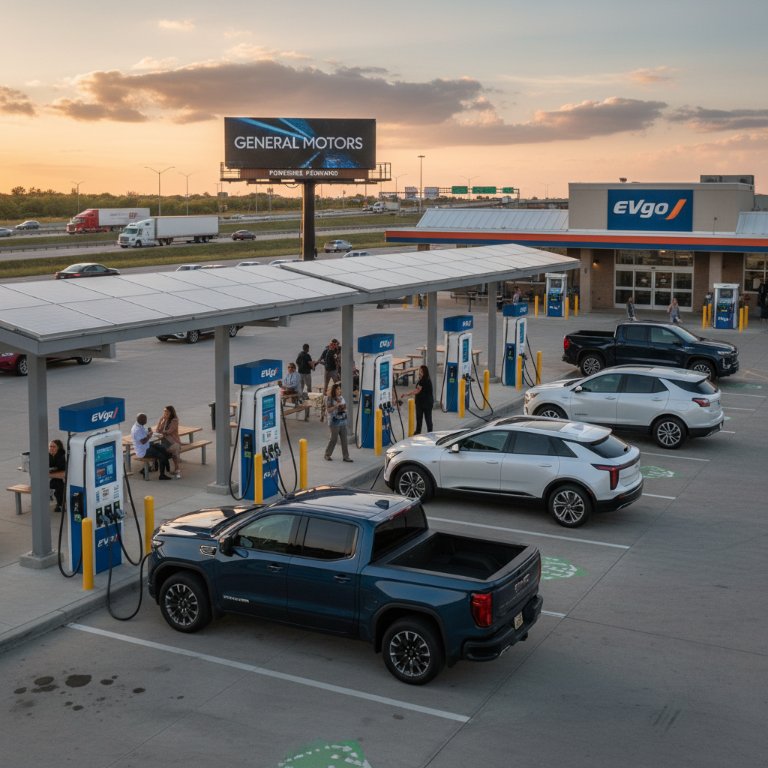
Recognizing that vehicle sales alone aren't enough, GM, through its strategic partnership with EVgo and Pilot, has made substantial progress in building out critical charging infrastructure. The deployment of over 1,000 DC fast-charging stalls at Pilot & Flying J locations across 40 states marks the halfway point of their ambitious goal to install up to 2,000 stalls across 500 locations nationwide. This investment directly addresses one of the most significant barriers to EV adoption: range anxiety and the availability of reliable, high-speed public charging. By actively participating in the expansion of charging networks, GM is not only supporting its own customers but also contributing to the overall maturation of the EV ecosystem, making the transition more appealing for prospective buyers.
Why This Matters:
This latest news from General Motors signals a profound shift in the automotive landscape. For savvy EV enthusiasts and prospective buyers, it means a stronger, more competitive EV market with increasingly compelling options outside of Tesla. GM's financial health and commitment to battery innovation suggest that future Ultium vehicles will likely be more cost-effective to produce, potentially leading to more aggressive pricing or increased feature content. The robust charging infrastructure development directly translates to a better ownership experience, reducing friction for long-distance travel and daily use.
This is a clear win for GM, demonstrating that its multi-billion-dollar bet on electrification is paying off in terms of market share and financial returns. It significantly strengthens their position against traditional rivals who are struggling with their own EV transitions and provides a formidable challenge to Tesla's long-held dominance. For the broader market, it validates the strategy of legacy automakers to leverage their manufacturing scale and established dealer networks to transition to EVs. It's not a do-or-die moment for GM in the sense of survival, but rather a definitive 'prove-it' moment where they are showcasing the viability and profitability of their electric future. This strong performance sends a clear signal that the EV race is far from over, and established players with deep pockets and strategic vision are rapidly gaining ground.
Conclusion:
General Motors is emerging as a dominant force in the global EV market, leveraging strong financial performance, surging sales, and strategic investments in critical areas like battery technology and charging infrastructure. The path to an all-electric future for the Detroit giant is not just clearer; it's accelerating, promising a more competitive and innovative landscape for electric vehicles in the years to come.