GM Unleashes the Sub-$30K Bolt: A Strategic Reset in the EV Race
General Motors is poised to disrupt the electric vehicle market with the announcement of its 2027 Chevrolet Bolt, set to debut with an enticing MSRP o...
Editorial Team
World Of EV
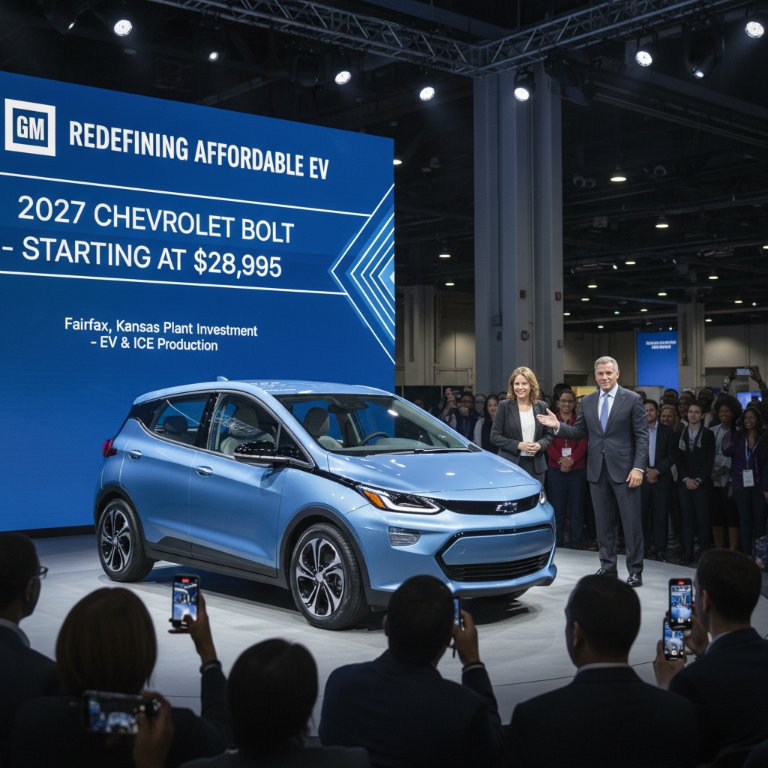
General Motors is poised to disrupt the electric vehicle market with the announcement of its 2027 Chevrolet Bolt, set to debut with an enticing MSRP of $28,995. This aggressive pricing strategy positions the new Bolt as the most affordable electric vehicle in the United States, a move designed to democratize EV ownership and reignite interest in the critical entry-level segment. This isn't merely a price adjustment; it represents a calculated pivot in GM's broader electrification strategy, acknowledging both the enduring demand for accessible EVs and the evolving realities of market adoption.
After initially pulling the plug on the original Chevrolet Bolt in 2023, a vehicle that, despite its limitations, served as a crucial early contender in the affordable EV space, GM is resurrecting the nameplate with renewed purpose. This new iteration leverages significant economies of scale, shared EV components from GM’s broader Ultium platform, and the adoption of more cost-effective LFP (lithium iron phosphate) battery technology. These advancements, coupled with improved manufacturing efficiency, are the bedrock of the Bolt’s competitive pricing, challenging the notion that advanced EVs must carry a premium price tag.
GM's Evolving EV Roadmap
While the return of the affordable Bolt signals a strong commitment to consumer-grade EVs, GM is simultaneously refining its broader electrification strategy. The company is adjusting its approach to commercial fleet EV adoption, acknowledging slower-than-anticipated growth in this sector. This recalibration suggests a pragmatic response to market dynamics, rather than a retreat from its long-term vision. Indeed, GM is reaffirming its unwavering commitment to electrification with substantial investments, including $5.5 billion in manufacturing upgrades that remarkably also encompass conventional powertrains.
Bridging the Gap: Investment in Flexible Production
Further illustrating this adaptive strategy, GM is injecting $30 million into its Fairfax, Kansas plant. This significant investment is earmarked to prepare the facility for the simultaneous production of both electric and Internal Combustion Engine (ICE) vehicles. This dual-production capability directly addresses the current market landscape, particularly in the wake of a notable decline in US EV sales observed in 2025. By maintaining flexibility, GM can better respond to fluctuating consumer demand and the varied pace of the EV transition, ensuring it can meet market needs across all powertrain types.
Why This Matters:
GM's reintroduction of the Bolt at a sub-$30,000 price point is nothing short of a seismic event in the EV market. For consumers, it means a truly affordable, reputable electric vehicle is on the horizon, potentially unlocking EV ownership for a vast new segment of buyers previously priced out. This move directly challenges competitors like Tesla, Hyundai, and Kia to respond with their own entry-level offerings, intensifying the burgeoning EV price wars. The use of LFP batteries is a smart play, prioritizing cost and longevity over peak energy density, a trade-off many mainstream buyers will readily accept for the price benefit. It underscores a strategic pivot towards practicality and mass-market appeal over bleeding-edge, high-cost performance.
Furthermore, GM’s decision to dial back its commercial fleet EV expectations while simultaneously investing in manufacturing flexibility for both EV and ICE vehicles is a clear signal to the industry. It suggests a more nuanced, realistic outlook on the pace of the EV transition, acknowledging that the road to full electrification will likely be longer and more complex than initially projected. This dual-path investment hedges against market uncertainties and allows GM to maintain profitability across its portfolio, rather than relying solely on a rapidly expanding, yet still nascent, EV market. It's a pragmatic, rather than ideological, approach, positioning GM to win regardless of how quickly the EV revolution unfolds.
Conclusion:
General Motors’ 2027 Chevrolet Bolt, with its aggressive pricing and strategic manufacturing foundation, marks a decisive and intelligent recalibration of the automaker's electrification journey. By delivering an ultra-affordable EV while simultaneously fortifying its multi-powertrain production capabilities, GM is positioning itself as a resilient and adaptable force in an increasingly dynamic automotive landscape. This isn't just about selling more EVs; it’s about shaping the future of mobility with a keen eye on market realities and consumer needs.