GM Unleashes Shareholder Returns Amidst Critical EV & China Strategy Overhauls
General Motors (GM) is making a bold statement of financial confidence, announcing a significant increase in its regular quarterly dividend by 20% and...
Editorial Team
World Of EV
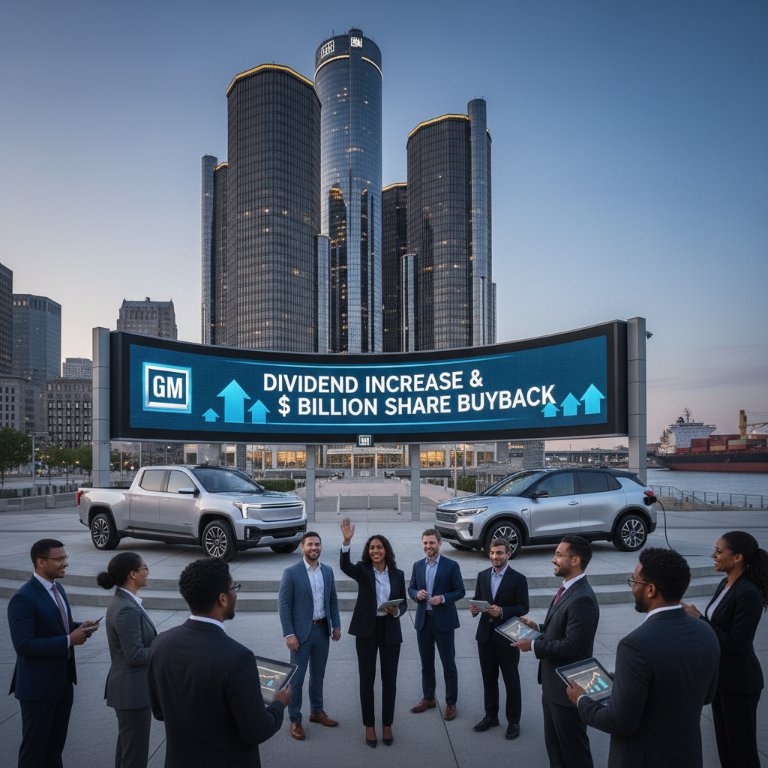
General Motors (GM) is making a bold statement of financial confidence, announcing a significant increase in its regular quarterly dividend by 20% and authorizing a new US$6 billion share buyback program. This move comes on the heels of its latest earnings report, which saw the automaker exceed analyst expectations for earnings per share, despite a slight miss on revenue. However, this financial largesse is more than just rewarding shareholders; it's a strategic declaration as GM navigates a complex and rapidly evolving global automotive landscape, particularly concerning its electric vehicle (EV) partnerships and its critical market strategy in China.
Strategic Shifts in EV Development
The most notable strategic adjustment for GM is the redefinition of its EV partnerships, especially following Honda's recent withdrawal from joint plans for affordable electric vehicles. This alliance, initially forged with ambitious goals to co-develop cost-effective EVs utilizing GM's Ultium platform, aimed to bring down the price point for mass-market adoption. Honda's decision to discontinue the program, citing changing business environments, rising costs, and challenges with achieving adequate driving range, now places the full burden of developing these crucial entry-level Ultium models squarely on GM's shoulders. This departure means GM must now independently bear the development costs and risks for these future high-volume segments, a significant pivot from its earlier strategy of sharing investment and accelerating market entry.
Re-evaluating the China Market Strategy
Simultaneously, GM is recalibrating its market strategy in China, a territory vital for any global automaker's long-term success but also one of the most fiercely competitive EV markets globally. The company has recently incurred significant restructuring charges, including a $1.1 billion asset write-down primarily related to overhauling its Chinese joint venture, signaling a deep re-evaluation of its approach. While GM has reported some momentum in China with growing new energy vehicle sales, it faces intense competition from agile local players like BYD and Nio. GM's strategy now focuses on enhancing its portfolio with new energy vehicles (NEVs) and intelligent connected vehicles (ICVs), particularly through its Buick and Cadillac brands, and increasing local production to maintain price competitiveness. This adjustment is crucial for GM to carve out a sustainable niche and achieve profitability in a market increasingly dominated by domestic champions.
Why This Matters:
Ultium's Solo Test: Honda's exit is a true test for the Ultium platform's scalability and cost-efficiency. Can GM, on its own, achieve the necessary economies of scale to deliver affordable EVs that compete with a growing array of budget-friendly options, particularly from Chinese manufacturers? This is a do-or-die moment for Ultium's mass-market aspirations.
China's Bellwether Status: GM's success in adapting its China strategy will be a critical indicator of its global competitiveness. It's not merely about selling EVs, but about demonstrating the agility to innovate and localize against rapidly advancing domestic competition. A strong showing here could provide a blueprint for other legacy automakers grappling with the Chinese market, while a stumble could signal deeper structural challenges.
Shareholder Signal: The increased dividend and substantial buyback program project robust financial health and a commitment to shareholder returns. This signals management's confidence in its ability to generate strong future cash flows despite the ongoing strategic shifts and significant investments in EVs. For investors, it suggests GM believes its shares are undervalued and that it can manage the inherent risks of its evolving EV and China strategies.
Who Wins, Who Loses? Long-term shareholders who trust GM's independent path and strategic focus stand to gain. Consumers hoping for a broader range of affordable Ultium-based EVs from a diversified brand portfolio might see some delays or shifts in product offerings following the Honda withdrawal.
In conclusion, General Motors is navigating a pivotal moment in its history, marrying financial strength with a decisive strategic pivot in its EV development and China market approach. The coming years will be crucial in determining if GM's invigorated independent Ultium push and revamped strategy in the world's largest EV market can deliver the sustained volume, profitability, and innovation necessary to secure its place as a leader in the electric future.