GM Declares Independence: Strategic North American Battery Push and Workforce Revitalization Pave Way for EV Future
General Motors (GM) is making decisive moves to cement its position in the rapidly evolving electric vehicle (EV) landscape, strategically re-aligning...
Editorial Team
World Of EV
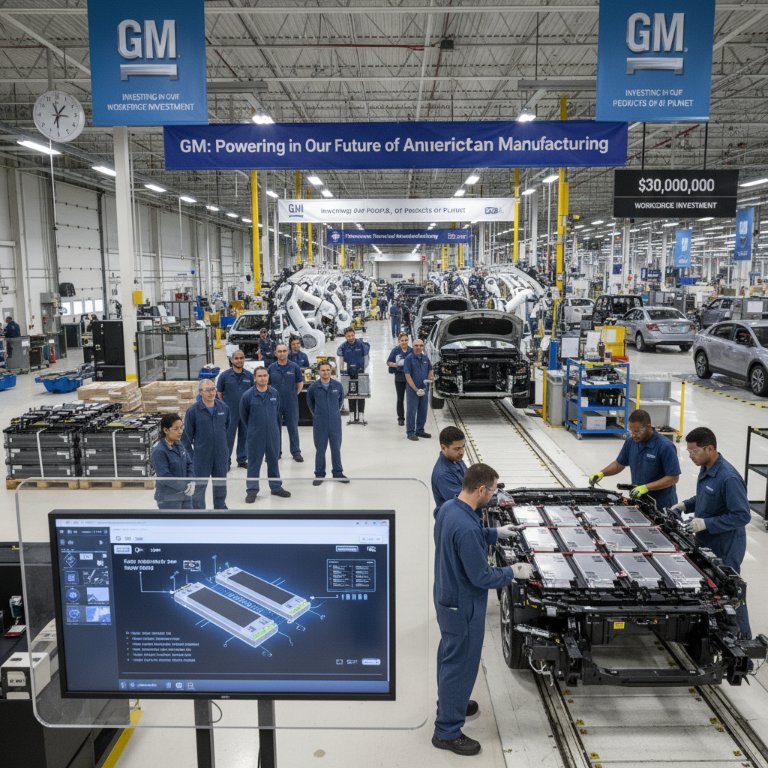
General Motors (GM) is making decisive moves to cement its position in the rapidly evolving electric vehicle (EV) landscape, strategically re-aligning its battery supply chain and investing heavily in its workforce. These actions underscore a commitment to North American independence, aiming to insulate the automaker from geopolitical volatility and secure its long-term EV ambitions.
For years, global automakers have grappled with complex and often vulnerable supply chains, particularly for critical EV components like batteries, with a significant reliance on Asian manufacturing and raw material processing. GM's latest initiatives signal a powerful shift, focusing on localized production and upskilling its domestic workforce to meet the demands of a diverse, electrified future. This proactive stance is critical for GM as it seeks to scale its Ultium-powered EV lineup and compete aggressively with industry leaders like Tesla and burgeoning rivals from Asia.
Forging a North American Battery Fortress
GM is actively working to expand its localized electric vehicle battery supply chain across North America, a crucial step in de-risking its operations and capitalizing on regional incentives. This strategy directly addresses the overarching industry challenge of reducing reliance on overseas production, particularly from China, which has long dominated the battery manufacturing ecosystem.
Key aspects of GM's battery strategy include:
- Developing new battery chemistries: This indicates a push for innovation, potentially leading to more efficient, cost-effective, or higher-performance batteries for future GM EVs. While specific chemistries weren't detailed, this move is essential to stay competitive with advanced offerings like BYD's Blade Battery or Tesla's 4680 cells.
- Securing new sourcing arrangements: GM is actively establishing new partnerships and agreements within North America for battery materials and components, solidifying a regional ecosystem for its Ultium platform.
- Reducing reliance on China: This objective is paramount, not only for supply chain stability but also to ensure eligibility for incentives tied to domestic content, such as the Inflation Reduction Act (IRA) tax credits.
Investing in the Human Element: Fairfax Assembly's Future
Beyond materials and manufacturing, GM recognizes the critical role of a skilled workforce. The company is injecting $30 million into workforce training at its Fairfax Assembly plant in Kansas City. This substantial investment highlights GM's commitment to its employees and the intricate dance between transitioning to EV production while maintaining strong internal combustion engine (ICE) vehicle lines.
This training program is designed to:
- Prepare employees for three upcoming vehicle launches: These launches encompass both electric and gas powertrains, signifying GM's dual-path strategy during this transitional period.
- Focus on upskilling and cross-training: This ensures workers have the versatility and expertise required for modern automotive manufacturing, which increasingly demands proficiency with advanced robotics, software, and high-voltage systems.
- Improve quality control: Enhanced training is a direct pathway to bolstering manufacturing quality, a critical factor for customer satisfaction and brand reputation, particularly for complex new EV technologies.
Why This Matters:
GM's multi-pronged strategy signals a clear, assertive move toward self-sufficiency and long-term competitiveness in the EV race. This isn't merely about incremental improvements; it's about foundational shifts that will redefine GM's operational resilience and market positioning.
Who Wins? GM, undoubtedly, stands to gain immense benefits. Greater control over its battery supply chain translates to enhanced production stability, potential cost advantages, and reduced exposure to geopolitical risks. North American manufacturing communities and workers also emerge as clear winners, benefiting from job security, new skills, and sustained investment. For consumers, a more stable and localized supply chain could eventually lead to more consistent vehicle availability and potentially more competitive pricing, along with the assurance of domestically produced components.
Who Loses? Companies that remain overly reliant on external, distant supply chains without comparable localization efforts face increased vulnerability. While Chinese battery manufacturers will still play a global role, GM's targeted reduction in reliance represents a strategic shift in market share.
What Does This Signal? This robust investment in both battery independence and workforce development signals GM's deep commitment to a sustainable, competitive future. It's a proactive response to national industrial policy goals (like the IRA) and a recognition that the future of automotive manufacturing is as much about the 'how' and 'where' as it is about the 'what.' It also confirms that while GM is full-steam ahead on EVs, it's not abandoning its gas-powered vehicle portfolio immediately, using the profits from ICE to fund the EV transition.
Is this a 'do-or-die' moment? In an industry undergoing its most profound transformation in a century, securing critical supply chains and ensuring a skilled workforce are not merely advantageous; they are existential imperatives. GM's substantial investments here are not just wise; they are essential steps toward securing a leadership position in the global EV market.
GM's dual focus on fortifying its North American battery supply chain and empowering its workforce at facilities like Fairfax Assembly illustrates a comprehensive strategy for the EV era. By securing critical components and investing in the human capital required to build the next generation of vehicles, GM is actively positioning itself for greater resilience, sustained growth, and robust competition in the evolving landscape of electric mobility.