Geopolitical Tensions Ignite EV Demand, Exposing Western Automakers' 'Profound Strategic Mistake'
The landscape of global automotive electrification is experiencing a seismic shift, accelerated by recent geopolitical events. Since the onset of the ...
Editorial Team
World Of EV
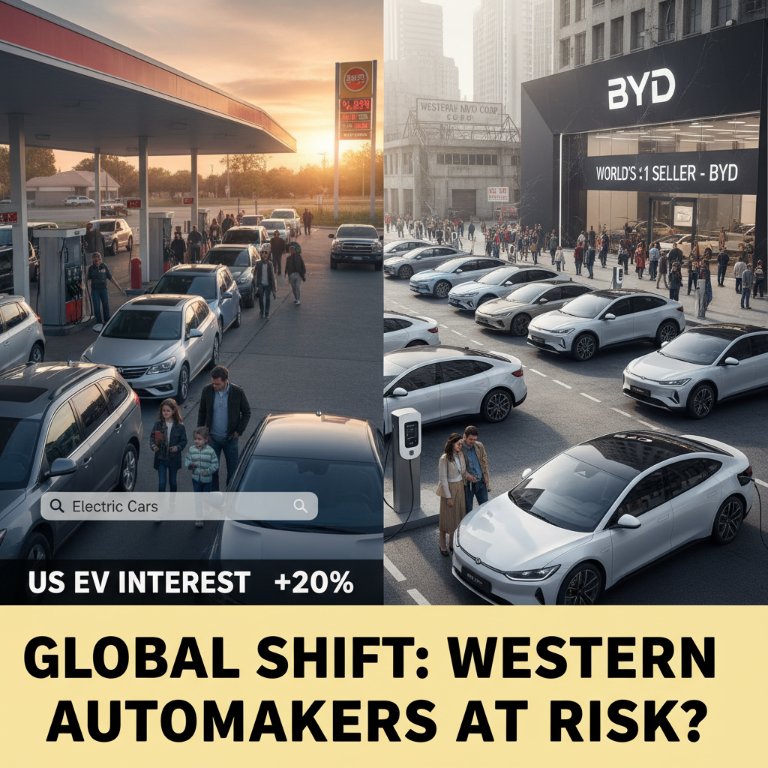
The landscape of global automotive electrification is experiencing a seismic shift, accelerated by recent geopolitical events. Since the onset of the Iran war, a significant surge in gasoline prices has directly fueled a remarkable 20% increase in online searches for electric and hybrid cars across the United States. This undeniable consumer pivot highlights a critical juncture for the industry, yet it starkly illuminates what many experts are now labeling a 'profound strategic mistake' by Western car manufacturers, who appear to be retracting their focus on electric vehicles.
This immediate response from consumers to soaring fuel costs isn't merely a fleeting trend; it underscores a fundamental and growing desire for energy independence and lower running costs. For years, EV adoption has been a gradual climb, but external pressures, particularly those impacting the wallet at the pump, are now forcing a re-evaluation of personal transportation choices on an an unprecedented scale. The market is unequivocally signaling its readiness for electrification, and quickly.
Western Retreat Opens the Door
While consumer interest in EVs skyrockets, a worrying trend emerges from traditional Western automotive strongholds. Many established manufacturers, after years of ambitious EV pronouncements, are now seen to be dialing back their electrification targets or delaying new model launches. This cautious approach, often attributed to perceived softening demand or infrastructure challenges, stands in stark contrast to the burgeoning market reality. It's a strategic retreat that could cost them dearly, especially when viewed against the backdrop of an increasingly aggressive and capable global competition.
The Ascendancy of the East
As Western giants hesitate, Chinese brands are seizing the moment with remarkable agility. Companies like BYD are not just competing; they are dominating. This year, BYD emphatically surpassed Tesla to become the world's largest EV seller, a monumental achievement that underscores their aggressive expansion and sophisticated product pipeline. Their rapid gain in market share, particularly across Europe, is a clear indicator of a well-executed strategy focused on:
- Vertical integration: Controlling key aspects of the supply chain, including battery production.
- Diverse offerings: A wide range of vehicles catering to various market segments.
- Aggressive pricing: Delivering compelling value propositions to consumers.
This success isn't by accident; it's the result of sustained investment and unwavering commitment to an electrified future, a commitment that appears to waver among some Western counterparts.
US Policy's Unintended Consequences
Compounding the challenges for Western automakers are recent policy shifts within the United States. While the source material doesn't specify particular legislative changes, it's clear that these adjustments have 'severely impacted the country's electrification efforts'. Such policy uncertainty or revised incentive structures can deter investment, slow infrastructure development, and ultimately dampen consumer enthusiasm, creating a self-inflicted wound in the race towards an electrified future. These policy headwinds, coupled with the hesitation from domestic manufacturers, are collectively putting 'the future of the Western automotive industry at risk'.
Why This Matters:
The current confluence of events—surging gas prices, heightened consumer EV interest, Western OEM retrenchment, and aggressive Chinese expansion—represents a critical inflection point for the global automotive industry. This is not merely about market share; it's about technological leadership, economic security, and environmental stewardship.
- Who Wins? Savvy consumers who embrace EVs to mitigate fuel price volatility. More importantly, Chinese EV manufacturers like BYD are the clear beneficiaries, leveraging their foresight and aggressive strategy to capture significant market share globally. Their growth signals a powerful shift in automotive power dynamics.
- Who Loses? Western legacy automakers who are backtracking on EV commitments face a perilous future. By ceding ground now, they risk falling irrevocably behind in technology, manufacturing scale, and brand perception. Furthermore, national economies that rely on these traditional automakers face job losses and a decline in industrial relevance.
- Market Signals: The market is screaming for accelerated electrification. Any manufacturer ignoring this message does so at their own peril. This moment demands decisive action, not hesitation. It signals that geopolitical instability will increasingly drive consumer choices, making energy-efficient alternatives a strategic imperative, not just an environmental preference.
- Do-or-Die Moment: For many Western car companies, this isn't just a challenge; it's a 'do-or-die' moment. Their current strategic misstep could lead to irreversible losses in market position and technological competitive advantage, potentially relegating them to niche players or even worse, obsolescence, as the global market rapidly transforms.
The writing is on the wall: the global energy landscape and consumer demand are aligning to drive EV adoption at an accelerated pace. Western automakers must swiftly recalibrate their strategies, re-commit to electrification, and innovate aggressively, or risk being left in the dust by competitors who embraced the future with unwavering resolve. The stakes for the Western automotive industry, and indeed for national economies, have never been higher.