Geopolitical Tensions Ignite a Digital Revolution: Indian EV Owners Taunt ICE Drivers Amidst Fuel Scarcity
A striking new social media phenomenon is sweeping across India, transforming long queues at petrol pumps into a digital battleground. Electric Vehicl...
Editorial Team
World Of EV
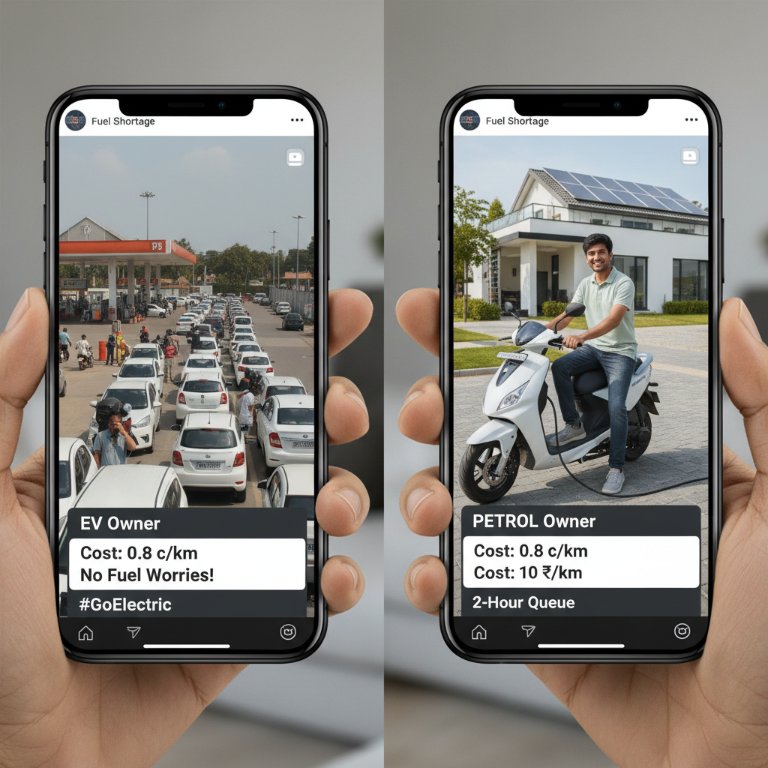
A striking new social media phenomenon is sweeping across India, transforming long queues at petrol pumps into a digital battleground. Electric Vehicle (EV) owners are leveraging platforms like Instagram and TikTok to produce viral videos and reels, openly mocking their Internal Combustion Engine (ICE) counterparts. This trend isn't just about playful banter; it's a stark, real-time commentary on the escalating anxieties surrounding fuel shortages, driven by intensifying geopolitical tensions in West Asia.
The Rise of the 'EV Flex'
What began as isolated posts has rapidly coalesced into a widespread digital movement. EV owners are showcasing their vehicles charging effortlessly at home or public stations, juxtaposing these scenes with footage of serpentine queues and frustrated drivers at petrol and diesel pumps. The core message is unequivocal: electrification offers an escape from the volatility of global oil markets and the immediate pain of fuel scarcity. This isn't abstract environmentalism; it's a tangible, immediate benefit for the consumer.
The Unbeatable Economics of Electric Mobility
The most compelling argument woven into these viral posts is the irrefutable cost-efficiency of EVs. Many owners proudly display their running costs, often reporting figures significantly below 1 ¢/km. This financial advantage becomes even more pronounced for those who have embraced rooftop solar power, effectively decoupling their transportation costs from both the national grid and the global fossil fuel market. For a population highly sensitive to daily expenses, this economic leverage is a powerful motivator.
Consider the context: India, a nation heavily reliant on imported oil, is acutely vulnerable to international energy price fluctuations. Past spikes have always impacted household budgets severely. Now, with geopolitical unrest directly threatening supply lines, the fear of exorbitant prices and outright unavailability has become a palpable reality for millions. This current crisis serves as a stark reminder of the hidden costs and inherent instabilities tied to fossil fuel dependency.
Why This Matters:
This burgeoning social media trend is more than just a fleeting internet sensation; it's a crucial inflection point for India's EV market and potentially a global harbinger. Here's why:
- Accelerated EV Adoption: This phenomenon provides the most potent, grassroots marketing EVs have seen. It shifts the narrative from abstract environmental benefits or future technology to immediate, undeniable economic and logistical superiority. Consumers witnessing their peers escape fuel queues and save significant money are far more likely to consider switching.
- Shifting Public Perception: EVs are no longer perceived merely as 'green' alternatives or niche products for early adopters. They are being repositioned as resilient, economically sensible, and crisis-proof solutions. This psychological shift is vital for mass market penetration.
- Pressure on Infrastructure: The increased visibility and desirability of EVs, amplified by this trend, will inevitably put greater pressure on both government and private players to accelerate the deployment of charging infrastructure, battery swap stations, and supportive policies.
- A Wake-Up Call for ICE: For traditional automotive manufacturers, this is a clear signal of the growing vulnerability of their ICE portfolios, particularly in markets like India. The 'cost of ownership' calculation now explicitly includes geopolitical risk and inconvenience.
- Empowerment through Decentralization: The emphasis on solar-powered charging highlights a growing desire for energy independence, resonating strongly in a nation often grappling with grid stability and fuel price volatility. This decentralization of energy for mobility is a powerful narrative.
This social media movement in India underscores a profound shift in consumer priorities, driven by immediate economic pressures and geopolitical instability. It paints a vivid picture of a future where electric vehicles are not just an option but increasingly seen as an essential safeguard against external shocks. As tensions continue in West Asia, expect this digital revolution to further electrify India's automotive landscape, signaling a clear path forward for sustainable and resilient personal transportation.