Game Changer: Tesla's China AI Center Unlocks Local FSD Future
Tesla has engineered a monumental shift in its Full Self-Driving (FSD) ambitions within China, operationalizing a dedicated Artificial Intelligence tr...
Editorial Team
World Of EV
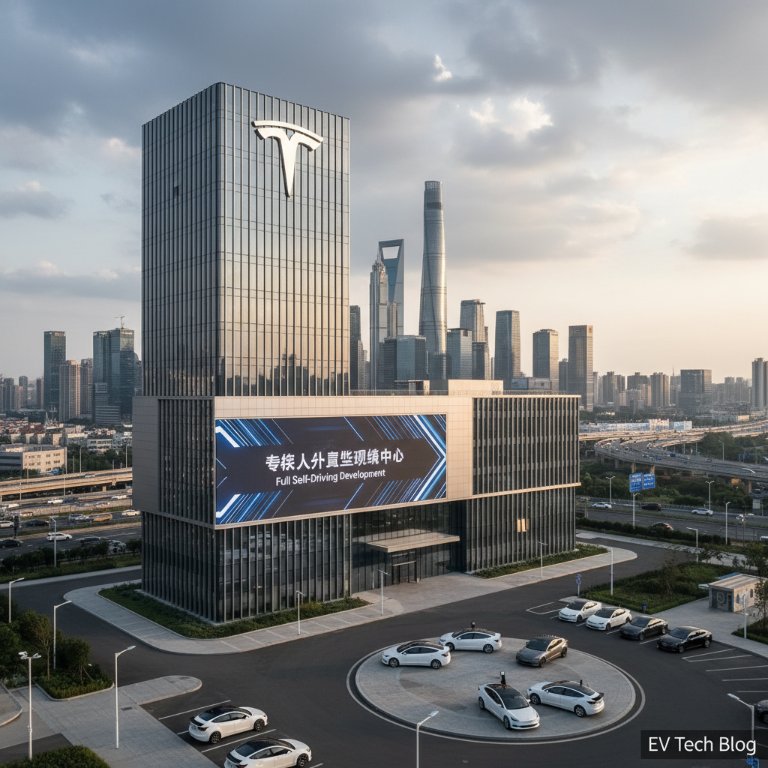
Tesla has engineered a monumental shift in its Full Self-Driving (FSD) ambitions within China, operationalizing a dedicated Artificial Intelligence training center in the region. This isn't merely a facility; it's a strategic move designed to finally unleash the full potential of Tesla's advanced driver-assistance system in the world's largest automotive market. For years, the promise of FSD in China has been hampered by significant regulatory hurdles, making this development a pivotal moment for both Tesla and the broader EV industry.
This breakthrough directly addresses China's stringent data localization laws, which previously served as an insurmountable barrier. These regulations prohibited Tesla from transferring the vast amounts of crucial driving data collected from its vehicles in China back to its primary US-based AI training infrastructure. The lack of localized data processing meant FSD development for the unique complexities of Chinese roads and driving behaviors was effectively stalled, creating a significant competitive disadvantage against increasingly sophisticated local players.
Unlocking Localized FSD Development
Tesla Vice President Grace Tao confirmed that this new AI training center will specifically focus on developing localized assisted driving and AI capabilities. Crucially, the facility provides sufficient computing power right within China, eliminating the need to export sensitive driving data. This localized approach ensures that the FSD system can learn and adapt to China's unique road conditions, traffic patterns, and regulatory environment directly, promising a more refined and safer user experience for Chinese drivers.
Overcoming Regulatory Hurdles and Accelerating Innovation
This establishment marks a monumental win in navigating the complex regulatory landscape of China. By keeping data processing and AI training within the country's borders, Tesla effectively complies with data security and sovereignty requirements. This move is particularly significant when considering how other foreign technology companies have struggled with similar restrictions. For Tesla, it means:
- Accelerated Development: The immediate access to local data will drastically speed up the iteration and improvement cycles for FSD in China.
- Enhanced Performance: FSD can now be trained on data highly specific to Chinese urban and highway environments, leading to superior performance and fewer errors.
- Competitive Edge: It levels the playing field, allowing Tesla to directly compete with local giants like Xpeng, Nio, and Huawei-backed systems that have often highlighted their localized AI advantages.
Why This Matters:
This development is nothing short of a game-changer for Tesla's long-term strategy in China. For savvy EV enthusiasts and prospective buyers, it signals the imminent arrival of a truly capable FSD system tailored for local conditions, potentially transforming the driving experience. For industry professionals, it's a clear signal of Tesla's commitment to overcoming market-specific challenges, demonstrating a replicable model for global AI deployment under diverse regulatory frameworks.
Who wins? Primarily, Tesla wins by unlocking a massive market segment and solidifying its position against rapidly advancing domestic competitors. Chinese consumers also win, gaining access to a more advanced and localized autonomous driving experience. This move could also indirectly benefit local AI talent and infrastructure providers within China. Who loses? Competitors who banked on Tesla's FSD stagnation in China due to data restrictions will now face a revitalized and formidable challenger. This isn't merely about feature parity; it's about the speed of innovation and data advantage.
This signals to the broader market that global technology companies can find solutions to complex data localization challenges, provided they invest significantly in local infrastructure and talent. For Tesla, this is a do-or-die moment to fully capitalize on its technological lead in a market where local intelligence is paramount.
The operationalization of Tesla's AI training center in China is far more than a technical upgrade; it's a strategic declaration. It signals Tesla's unwavering commitment to the Chinese market and its ambition to deliver a truly localized and advanced FSD experience. As the data flows and the algorithms learn within China's borders, the race for autonomous driving dominance in the region just got significantly more intense, promising an exciting future for smart mobility.