FSD-Enabled Model 3 at $299/Month: Tesla's Aggressive Play for Mass EV Adoption
Tesla North America has just fired a significant shot in the ongoing electric vehicle market battle, announcing an unprecedented lease offer for the M...
Editorial Team
World Of EV
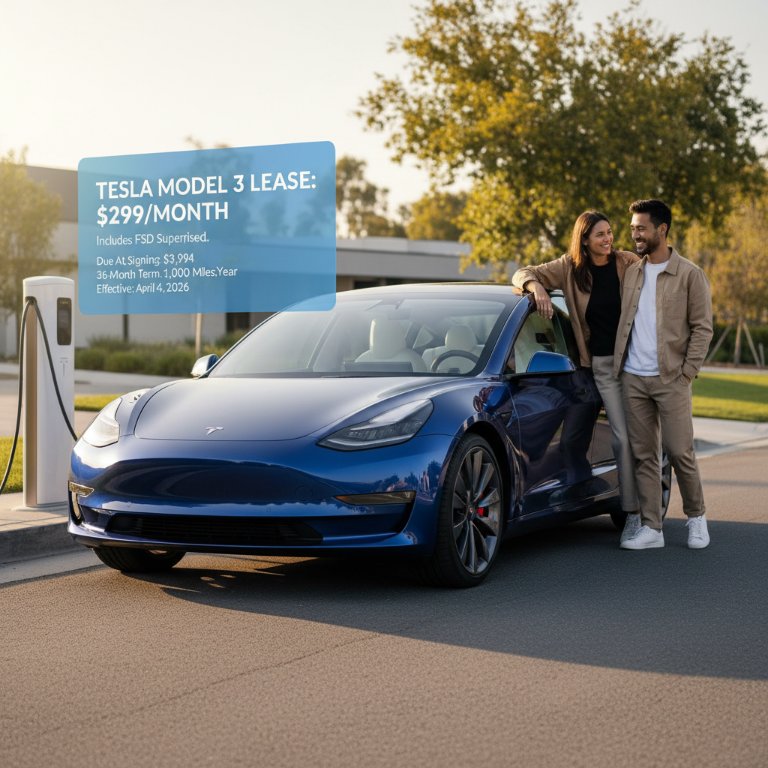
Tesla North America has just fired a significant shot in the ongoing electric vehicle market battle, announcing an unprecedented lease offer for the Model 3 in the United States. Effective April 4, 2026, prospective buyers can now lease a Model 3 for an astonishing $299 per month, an aggressive move that promises to reset consumer expectations and intensify competition across the automotive industry. This isn't just a pricing adjustment; it's a strategic maneuver designed to capture a broader market segment and accelerate the adoption of both electric vehicles and Tesla's advanced autonomous driving technology.
For years, Tesla has dominated the EV narrative, often leveraging its technological edge and brand appeal to command premium pricing. While the company has previously adjusted prices to stimulate demand or counter competition, this latest Model 3 lease represents one of its most compelling and publicly advertised incentives to date. It comes at a time when the EV market is maturing, with increasing competition from legacy automakers and burgeoning Chinese manufacturers offering compelling alternatives, making this an immediate game-changer for new electric vehicle adopters and a stark warning to rivals.
Unpacking the $299 Model 3 Lease
The details of this new lease offer are as appealing as the headline price. Tesla's latest incentive program aims to significantly lower the barrier to entry for its most accessible sedan.
- Monthly Payment: $299 per month.
- Due at Signing: $3,994.
- Term: 36 months.
- Annual Mileage Allowance: 10,000 miles.
This structure targets a sweet spot for many consumers, offering affordability coupled with a reasonable commitment period. The relatively low amount due at signing, combined with the attractive monthly payment, positions the Model 3 as a direct competitor to many internal combustion engine (ICE) vehicles in the same segment, potentially drawing in customers who might have previously considered an EV out of reach.
FSD Supervised: A Game-Changer in the Offer
Perhaps the most impactful inclusion in this lease deal is the integration of FSD Supervised capability. For those who have followed Tesla, FSD (Full Self-Driving) has been a cornerstone of its long-term vision, evolving from a controversial beta program into the more refined 'FSD Supervised' system that promises a higher degree of automated driving under human oversight. Previously, accessing FSD capabilities required a substantial upfront purchase or a separate monthly subscription, adding thousands to the vehicle's cost.
By bundling FSD Supervised into this lease, Tesla isn't just selling a car; it's selling an experience centered around advanced technology. This strategic inclusion allows a new wave of drivers to experience FSD firsthand, potentially converting skeptics and accelerating the accumulation of real-world driving data crucial for the continuous improvement and eventual widespread deployment of fully autonomous capabilities. It also highlights Tesla's confidence in the current iteration of FSD Supervised as a compelling value proposition.
Why This Matters:
Mass Market Penetration: The $299 price point makes the Model 3 accessible to a demographic previously unable to afford a Tesla. This move directly addresses the perceived high cost of entry for EVs, potentially catalyzing a new wave of electric vehicle adoption and cementing Tesla's position as a volume leader.
Intensified Competition: Expect a swift and significant reaction from competitors. Legacy automakers like Ford with its Mustang Mach-E, Hyundai with the Ioniq 6, and even newcomers like VinFast will feel immense pressure to re-evaluate their own pricing and lease structures. This could trigger a price war in the sub-$400 monthly payment segment, ultimately benefiting consumers.
FSD Acceleration and Monetization: By democratizing access to FSD Supervised, Tesla significantly expands its user base for the technology. This strategy accelerates data collection, refines the system faster, and effectively primes millions of new users to potentially become full FSD subscribers or future buyers once the lease concludes, securing a vital revenue stream and technological advantage.
Leasing as a Growth Engine: For many consumers, leasing offers flexibility and lower monthly payments compared to financing a purchase. Tesla is now fully embracing this model to drive volume, especially given the rapid pace of technological change in EVs where buyers might prefer shorter ownership cycles. This also allows Tesla to retain more control over its vehicles at the end of the lease term, potentially for re-sale or even deployment in future robotaxi networks.
Market Signal: This signals Tesla's unwavering commitment to market dominance. It's not a defensive retreat but an offensive thrust, demonstrating the company's willingness to leverage its manufacturing efficiencies and brand power to outmaneuver rivals and secure its leadership position in an increasingly competitive landscape. This move asserts that Tesla will not cede ground easily, even as new players flood the market.
Tesla's new $299 Model 3 lease, complete with FSD Supervised, represents a pivotal moment in the EV market. It's a bold declaration that Tesla intends to drive mass adoption not just of electric vehicles, but of its full technological ecosystem. This move will undoubtedly reshape consumer expectations, force competitors to rethink their strategies, and ultimately accelerate the global transition to sustainable transportation, ensuring Tesla remains at the forefront of the automotive revolution.