Ford's 'Universal EV' Program Signals Aggressive Shift Towards Affordable Electric Pickups, Starting at $30,000
Ford Motor Company is charting a radical new course in its electric vehicle strategy, announcing its 'Universal EV' program. This dedicated electric v...
Editorial Team
World Of EV
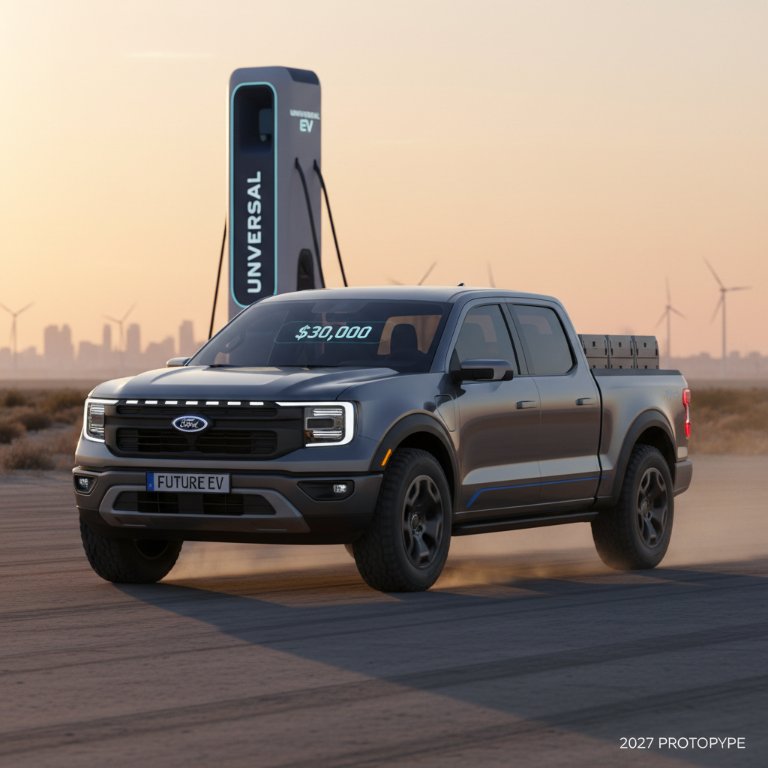
Ford Motor Company is charting a radical new course in its electric vehicle strategy, announcing its 'Universal EV' program. This dedicated electric vehicle platform is engineered from the ground up to deliver affordable, long-range EVs, with the ambitious goal of launching a mid-size electric pickup truck priced around $30,000 by 2027. This move represents a profound strategic reset for the Dearborn automaker, signaling a decisive pivot after grappling with substantial financial charges related to its earlier, less successful EV initiatives.
A True Dedicated Platform Emerges
For years, Ford, like many legacy automakers, relied on adapting existing internal combustion engine (ICE) architectures for its initial EV offerings. While vehicles like the Mustang Mach-E and the F-150 Lightning have found market success, their development often involved compromises and incurred significant costs. The 'Universal EV' program, in stark contrast, is a foundational shift towards a purpose-built EV architecture. This dedicated approach allows for optimized battery packaging, efficient manufacturing processes, and ultimately, the ability to achieve unprecedented economies of scale crucial for hitting aggressive price targets. This strategy contrasts sharply with earlier approaches that saw Ford, despite its pioneering efforts, struggle with profitability in its EV division due to the inherent inefficiencies of modified platforms.
The '$30,000 Truck' Set to Disrupt in 2027
The marquee announcement is the forthcoming mid-size electric pickup, slated to be the inaugural vehicle from the 'Universal EV' platform. With an anticipated starting price of approximately $30,000 and a production kickoff in 2027, this truck is positioned to be a genuine disruptor. Currently, the electric pickup market largely consists of higher-priced offerings, such as Ford's own F-150 Lightning (with entry-level models still significantly above this new target), Rivian's R1T, and GM's Chevrolet Silverado EV Work Truck. A $30,000 electric pickup from a major manufacturer like Ford could unlock a massive segment of buyers previously priced out of the EV truck market. Key details emerging about this platform highlight:
- Targeted Affordability: A core design principle focusing on cost-efficient manufacturing and component sourcing.
- Long-Range Ambitions: The platform is designed to accommodate battery technology that delivers competitive range figures, essential for practical pickup truck utility.
- Mid-Size Market Focus: Directly addressing a highly popular and volume-driven segment in the automotive market.
Why This Matters:
This is not merely a new product announcement; it's a critical recalibration of Ford's entire electrification strategy. After incurring significant financial penalties and facing challenges in scaling profitable EV production, the 'Universal EV' program represents Ford's make-or-break moment in the global EV race. By committing to a dedicated, affordable platform, Ford is signaling a profound understanding that the future of mass EV adoption hinges on accessibility, not just innovation at the premium end. This move strongly suggests that Ford has learned from its earlier struggles, which saw substantial investments yield slower-than-expected returns, prompting investor scrutiny.
Who Wins? Consumers, first and foremost, stand to gain immensely. An affordable, long-range electric pickup from a trusted brand like Ford will democratize EV ownership for a vast segment of the population, particularly those in work and leisure contexts where pickups are essential. Ford itself stands to regain significant momentum, potentially transforming its EV division into a profitable, high-volume enterprise. This could also validate the strategies of other manufacturers and startups focused on affordability.
Who Loses? Competitors who continue to lag in developing truly dedicated and cost-effective EV platforms will find themselves at a severe disadvantage. Automakers still relying on expensive, adapted architectures for their entry-level EVs will struggle to compete with Ford's aggressive pricing strategy. While Tesla’s Cybertruck targets a different, more niche segment, Ford is directly aiming for the heart of the mass-market pickup truck buyer with a more conventional, yet affordable, electric offering.
Market Signal: This announcement sends an unequivocal signal to the entire automotive industry: the next battleground for electric vehicles is affordability and volume. The era of high-priced, niche EVs is giving way to a new imperative: bringing compelling, practical electric transportation to the masses. This strategic pivot positions Ford not just as a participant, but as a potential leader in the crucial shift toward accessible electrification.
Ford's 'Universal EV' program, spearheaded by a $30,000 electric pickup, represents a bold and necessary gamble. It’s a clear commitment to leveraging dedicated EV architecture for mass-market appeal, potentially reshaping the competitive landscape of electric vehicles. As the 2027 production date approaches, the industry will be watching closely to see if this strategic reset can deliver the profitable, high-volume electric future Ford desperately needs.