Ford's 'Assembly Tree' Revolution: Efficiency Gains Square Off Against Repair Cost Concerns
Ford Motor Company is embarking on a monumental shift in its vehicle manufacturing strategy, introducing the 'Universal EV Production System' – a radi...
Editorial Team
World Of EV
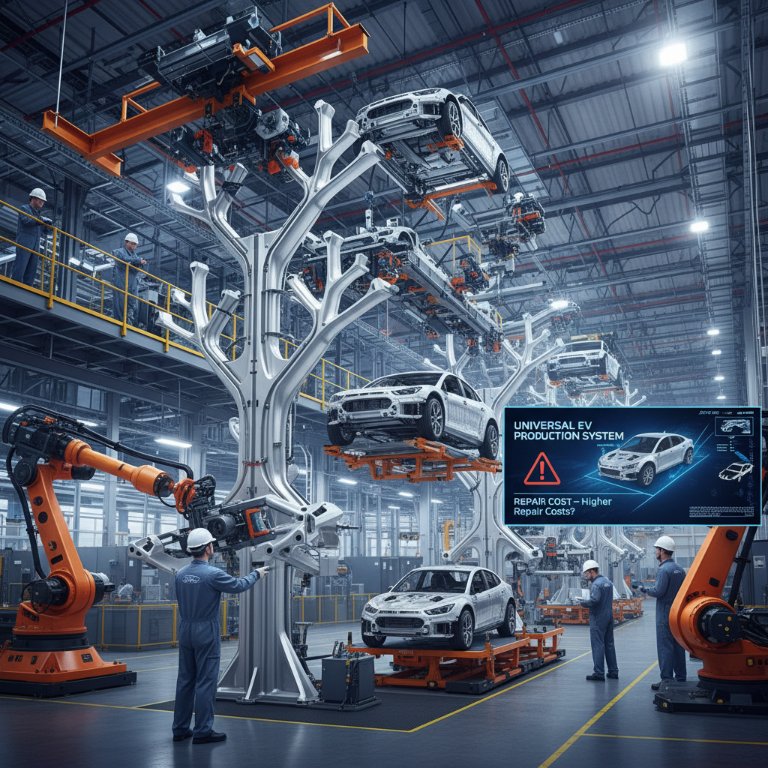
Ford Motor Company is embarking on a monumental shift in its vehicle manufacturing strategy, introducing the 'Universal EV Production System' – a radical departure from the traditional assembly line. This innovative approach, dubbed the 'assembly tree' concept, aims to dramatically enhance efficiency and speed in EV production by leveraging larger aluminum castings for structural components. However, this promising leap forward has ignited internal debate and raised significant questions within the industry regarding potential increases in vehicle repair costs following collisions.
This move by Ford signals a deep commitment to competing aggressively in the rapidly evolving electric vehicle market, a space where manufacturing agility and cost-effectiveness are paramount. By adopting this new system, Ford is not merely updating its factories; it's fundamentally rethinking how cars are built, echoing a transformation that could redefine automotive production for decades to come.
The 'Assembly Tree' and Unicasting: A New Era for Ford Production
Ford's 'Universal EV Production System' replaces the linear assembly line with an 'assembly tree' where three sub-assemblies run simultaneously before converging. This method drastically simplifies the manufacturing process, allowing vehicles to be split into major components (front, rear, and structural battery) that are then joined together.
Key aspects of this innovative system include:
- Unicasting Technology: Ford is adopting 'unicasting,' a process that replaces numerous stamped and welded parts with large, single-piece aluminum castings. For its upcoming electric pickup truck, this means replacing 147 separate steel structural parts with just two massive sections: one for the front and one for the rear.
- Efficiency Boost: Ford anticipates a significant increase in production speed, with claims that its new electric truck could be built up to 40% quicker than current vehicles from its Louisville Assembly Plant. Overall assembly time is expected to be 15% faster.
- Component Reduction: The Universal EV Platform, which underpins this system, reduces the number of parts by 20%, fasteners by 25%, and dock-to-dock workstations in a plant by 40% compared to a typical modern vehicle.
- Targeted Affordability: The first vehicle to utilize this system will be a midsize electric pickup truck, scheduled for a 2027 launch with a targeted starting price of around $30,000, aiming to make EVs more accessible.
Why This Matters: Efficiency, Costs, and the Future of EV Ownership
Ford's embrace of large aluminum castings, or 'unicasting,' places it firmly alongside industry pioneers like Tesla, which famously utilizes 'gigacasting' for significant sections of its vehicles, such as the Model Y's rear underbody. Other major automakers, including Toyota, Volvo, and Hyundai, are also exploring or implementing similar mega-casting techniques, signaling a broader industry trend.
The primary drivers for this shift are clear: manufacturing efficiency, reduced complexity, and potential weight savings, which are crucial for enhancing EV range. By consolidating numerous parts into a single casting, automakers can streamline assembly lines, reduce labor, and potentially cut production costs. Tesla, for instance, has reported substantial manufacturing cost reductions (estimated between 20-40%) and significantly faster assembly times for vehicles using gigacasting.
However, this innovation introduces a critical dilemma, particularly concerning collision repair costs. Traditionally, vehicles constructed from many smaller, bolted, or welded parts allow for localized repairs where only damaged sections are replaced. With large, single castings, the risk arises that even minor damage might necessitate the replacement of an entire large component, leading to potentially exorbitant repair bills and higher insurance premiums.
Ford has reportedly addressed these internal concerns by designing its unicast structures with repairability in mind, incorporating predefined 'cut zones' and sacrificial components to absorb minor impacts. Early research, notably a two-year study by Thatcham Research in the UK on Tesla Model Y vehicles with single-piece aluminum rear floor sections, suggests that mega-casting can lead to lower repair costs in some scenarios, challenging initial industry concerns. The study found that in low-severity collisions, the mega cast often sustained no structural damage, allowing for full repair without replacing the large section. Even full replacement costs were sometimes less than traditional multi-part repairs.
This commitment to repairability from the outset is a crucial distinction and a significant takeaway for consumers and fleet operators. For the savvy EV enthusiast and prospective buyer, understanding that a major automaker is proactively tackling potential post-collision expenses for these advanced manufacturing methods is vital. It impacts not only individual ownership costs but also the long-term viability and insurance rates for commercial fleets, a critical segment for Ford. If Ford successfully navigates this balance, its 'Universal EV Production System' could indeed deliver on its promise of affordable, high-quality EVs without saddling owners with prohibitive repair bills, cementing its competitive position against both legacy automakers and new EV entrants, particularly from China.
Ford's 'assembly tree' and unicasting represent a bold wager on the future of EV manufacturing. By prioritizing both production efficiency and thoughtful repairability, Ford aims to deliver a new generation of affordable electric vehicles that benefit from advanced production techniques without penalizing consumers with excessive ownership costs. The success of this system, beginning with the electric pickup in 2027, will be a crucial indicator of Ford's long-term competitive strength in the global EV market.