Ford's 2026 Explorer EV Accelerates European Ambitions with LFP Boost and Smart Tech Overhaul
Ford is significantly revamping its electric Explorer for the 2026 European market, introducing a suite of upgrades poised to enhance its competitiven...
Editorial Team
World Of EV
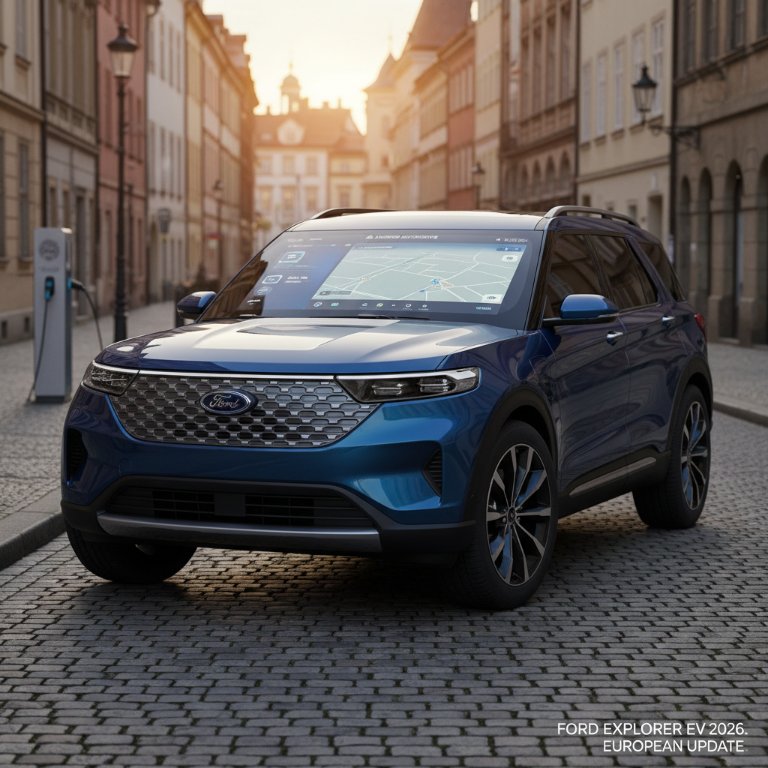
Ford is significantly revamping its electric Explorer for the 2026 European market, introducing a suite of upgrades poised to enhance its competitiveness and appeal to a broader audience. This update, which includes a new lithium-iron-phosphate (LFP) battery, an enhanced electric motor, and a comprehensive technology overhaul, signals Ford's commitment to solidifying its position in Europe's cutthroat EV segment.
After initially entering the European market with an electric Explorer built on Volkswagen Group's MEB platform – a strategic move to accelerate its EV rollout – Ford is now refining its offering. The original Explorer EV faced the challenge of standing out in a crowded segment dominated by established players and rapidly emerging Chinese brands. These 2026 updates directly address key areas of performance, efficiency, and user experience, aiming to give the Explorer a sharper edge.
Powertrain Prowess: LFP and Range Boost
The most impactful change for the Explorer Standard Range models is the adoption of a new lithium-iron-phosphate (LFP) battery. This marks a strategic shift from previous battery chemistries (like NMC) and brings several advantages. LFP batteries are known for their durability, lower cost, and reduced reliance on critical raw materials like nickel, manganese, and cobalt, offering a more sustainable and economically viable solution.
- Enhanced Range: The new LFP battery, with a usable energy content increased from 52 kWh to 58 kWh, boosts the WLTP range by over 60 km, bringing the total to an impressive 444 km (275 miles). This represents an increase of more than 17%.
- Improved Performance: Alongside the new battery, the Explorer Standard Range receives an improved electric motor, now delivering 140 kW (188 hp / 190 PS) and 350 Nm of torque (up by 20 hp and 30 lb-ft). This translates to quicker acceleration, with the 0-100 km/h (0-62 mph) sprint now taking 8.0 seconds, a 0.7-second improvement.
- One-Pedal Drive: The 2026 Explorer EV models now feature one-pedal drive as standard, enhancing the driving experience and energy recuperation.
Cabin Connectivity and Driver Confidence
Ford has also significantly upgraded the Explorer's technological suite, focusing on a more intuitive user interface and advanced safety features.
- Android-Based Infotainment: The 14.6-inch moveable SYNC Move infotainment system now runs on new Android-based software, promising smoother operation and a refreshed design theme for increased clarity and ease of use. It retains standard wireless Apple CarPlay and Android Auto compatibility.
- Advanced Driver Assistance Systems (ADAS): The ADAS suite sees significant expansion, including:
- Intelligent Adaptive Cruise Control with Traffic Light Recognition, allowing it to automatically slow or stop the vehicle at red or amber lights.
- Reversing Assist, which automates steering control for up to 50 meters, retracing the vehicle's last path in reverse.
- Trained Park Assist, capable of storing up to five parking scenarios and replicating them precisely, handling acceleration, braking, and steering.
- Driver State Assist, a driver monitoring system that uses a driver-facing camera and Lane Keep Assist to detect inattention and can even bring the vehicle to a full stop and call emergency services if the driver remains unresponsive.
- Pro Power Onboard: A new feature offering up to 2.3 kW of power from the traction battery for external devices, via a trunk socket or an external adapter.
- Special Edition: A new 'Explorer Collection' limited series offers unique design elements, including Black Onyx interior with orange accents, and a distinctive Cactus Grey paint.
Why This Matters:
These updates are more than just incremental improvements; they represent a critical recalibration of Ford's European EV strategy. By embracing LFP battery technology for its Standard Range models, Ford significantly improves the Explorer's cost-efficiency and supply chain resilience, directly addressing the increasingly competitive pricing pressure in the European EV market. This move aligns Ford with industry leaders like Tesla and BYD, who have championed LFP for their entry-level vehicles. For the consumer, it means a more affordable entry point with robust performance and the ability to charge to 100% regularly without significant battery degradation, unlike some NMC chemistries.
The substantial boost in WLTP range to 444 km makes the Explorer a much more compelling option for prospective buyers, directly tackling a common range anxiety concern. The overhauled Android-based infotainment system and the sophisticated new ADAS features, such as Traffic Light Recognition and Trained Park Assist, elevate the in-cabin experience and safety proposition, bringing the Explorer more in line with premium segment expectations.
This is not a 'do-or-die' moment, but a crucial opportunity for Ford to demonstrate its agility and commitment to the European market. The Explorer is built in Cologne, Germany, emphasizing Ford's local manufacturing presence. By enhancing this MEB-based SUV, Ford is making a clear statement: it intends to be a serious contender in Europe's transition to electrification, offering a product that balances range, technology, and value.
Ford's 2026 Explorer EV updates for the European market are a powerful declaration of intent. With a more efficient and cost-effective powertrain, a refined digital experience, and enhanced safety features, the Explorer is now better equipped to carve out a significant share in Europe's dynamic electric vehicle landscape. These strategic enhancements position Ford to appeal to a broader spectrum of EV buyers, ensuring its adventure-ready SUV remains a relevant and attractive option for years to come.