Ford Mustang Mach-E Premium: A Refined Drive, But Can 'Premium Vibes' Outrun Tesla and Chinese Rivals?
Ford's 2026 Mustang Mach-E Premium presents a compelling package for daily electric living, delivering on comfort and cabin appeal according to recent...
Editorial Team
World Of EV
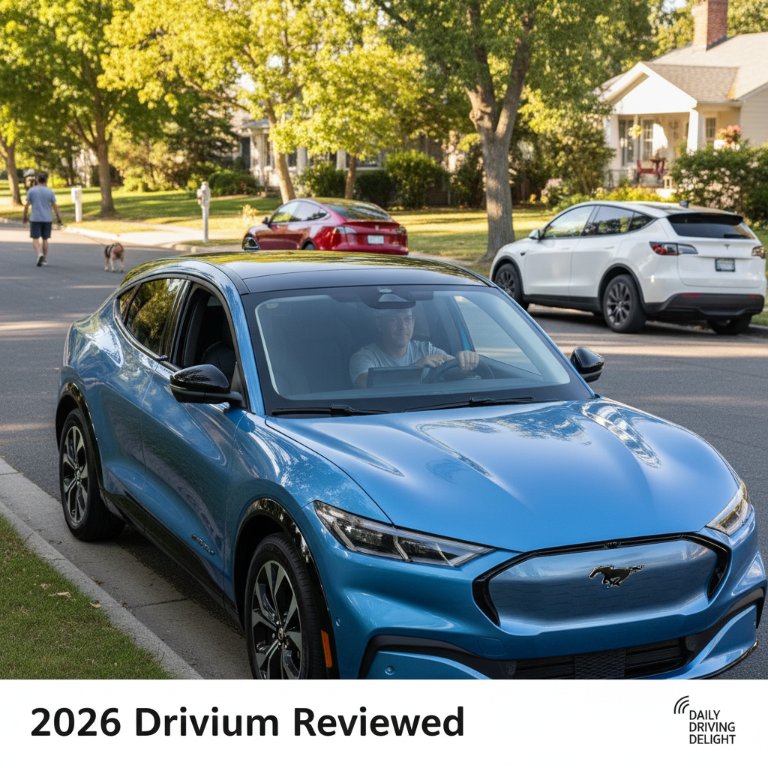
Ford's 2026 Mustang Mach-E Premium presents a compelling package for daily electric living, delivering on comfort and cabin appeal according to recent expert reviews. However, in an increasingly cutthroat electric vehicle market, the latest assessment highlights critical areas where the Mach-E, despite its merits, struggles to truly differentiate itself from segment leaders and aggressive new challengers. This poses a significant strategic challenge for Ford as it navigates its ambitious electrification roadmap.
For Dearborn, the Mach-E isn't just another EV; it's a halo car, designed to infuse the Mustang's legendary spirit into the electric era and signal Ford's serious intent in the EV space. Its success is crucial for establishing Ford as a credible player beyond its traditional combustion engine strongholds. Yet, the road to dominance is fraught with intense competition.
Elevated Comfort Meets Engaging Dynamics
The 2026 Mustang Mach-E Premium earns high marks for its on-road demeanor and interior experience. Reviewers consistently praise its ability to serve as a 'lovely to live with' daily driver, emphasizing a refined and comfortable experience behind the wheel. The cabin, too, reportedly exudes 'premium vibes,' suggesting Ford has paid close attention to material quality and design to elevate the occupant experience.
Performance-wise, the Mach-E Premium doesn't shy away from its Mustang heritage, offering a 'healthy dose of rear-drive playfulness in Untamed mode'. This indicates that Ford is effectively blending the practicality of an electric SUV with the engaging driving dynamics expected from a vehicle bearing the Mustang badge, providing an enjoyable experience for those seeking a spirited drive.
Range Realities and Usability Quirks
Despite its strengths, the review brings into sharp focus some of the Mach-E's lingering challenges, particularly concerning real-world range. While Ford claims a commendable 600km, the actual testing revealed a figure 'just over 500km'. This discrepancy, while not uncommon in the EV world, is a critical factor for prospective buyers who prioritize consistent, long-distance capability. In a market where range anxiety remains a significant hurdle, such a notable difference can influence purchasing decisions.
Another point of contention arises with the one-pedal driving feature. While lauded for its effectiveness in heavy traffic, the system was deemed 'nausea-inducing' for daily drives, with the strong recommendation to keep it switched off. This highlights a user experience oversight, as a well-calibrated one-pedal system is often a sought-after feature for EV drivers, offering both convenience and energy recuperation benefits.
Struggling to Dazzle in a Crowded Arena
Perhaps the most concerning aspect of the review is the Mach-E Premium's struggle to truly stand out against its formidable rivals. The car 'doesn't 'wow' like a Tesla Model Y,' a direct jab at its ability to capture the imagination and deliver the cutting-edge technological experience often associated with its Californian competitor. This speaks to Tesla's enduring lead in software, efficiency, and perceived innovation.
Furthermore, the review notes that the Mach-E's 'value proposition might not stack up against some Chinese SUV rivals despite recent price cuts'. This is a critical indicator of the intensifying global competition. Brands like BYD, Nio, and Xpeng are rapidly expanding their global footprint, offering highly competitive vehicles with advanced technology, long ranges, and aggressive pricing strategies that are forcing traditional automakers like Ford to rethink their market positioning and cost structures.
Why This Matters:
This latest assessment of the 2026 Mustang Mach-E Premium isn't just another review; it's a barometer for Ford's precarious position in the escalating EV arms race. While the Mach-E delivers a solid, comfortable, and aesthetically pleasing electric vehicle, the core issue is its inability to establish a clear, unassailable competitive advantage.
Who wins? Who loses? Consumers ultimately benefit from increased competition and choice. However, Ford finds itself in a challenging middle ground. Tesla continues to dominate the premium, tech-forward segment with its compelling 'wow' factor and superior charging infrastructure. Meanwhile, the influx of innovative and aggressively priced Chinese EVs is relentlessly squeezing the value proposition for established players. Ford risks being outflanked on both fronts, ceding market share to rivals who either offer more innovation or better value.
What does this signal to the market? It signals that mere competence is no longer sufficient in the EV space. Ford's legacy and brand loyalty are valuable, but the market demands more than just a 'lovely to live with' experience. It demands class-leading range, seamless technology integration, and an undeniable value proposition. The Mach-E's performance indicates that Ford needs to accelerate its innovation in battery technology, software, and cost-efficiency to truly compete. It's not a do-or-die moment for the Mach-E in isolation, but it underscores the immense pressure on Ford's broader EV strategy to deliver truly disruptive products that can lead, rather than simply contend.
The 2026 Mustang Mach-E Premium is a commendable effort from Ford, providing a comfortable and enjoyable electric SUV experience. However, in the face of relentless innovation from Tesla and the aggressive market penetration of Chinese rivals, Ford must move beyond simply being 'good enough.' To secure its electric future, Dearborn needs to inject more 'wow' factor, optimize real-world range, and refine user experience elements to cement the Mach-E's — and its own — place at the forefront of the EV revolution.