Ford Goes All-In on Affordable EVs: A 'Universal' Platform, LFP Batteries, and a Nod to Chinese Innovation
Ford Motor Company is executing a profound pivot in its electric vehicle (EV) strategy, unveiling a new Universal Electric Vehicle (UEV) platform aime...
Editorial Team
World Of EV
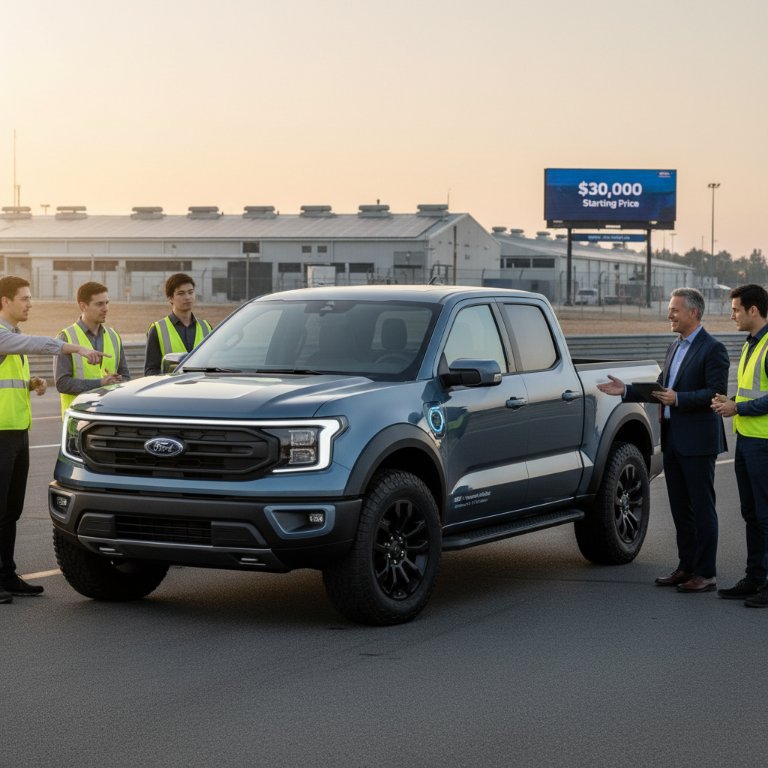
Ford Motor Company is executing a profound pivot in its electric vehicle (EV) strategy, unveiling a new Universal Electric Vehicle (UEV) platform aimed squarely at mass-market affordability. This ambitious move, spearheaded by CEO Jim Farley, targets a mid-sized battery electric vehicle (BEV) pickup with an aggressive starting price of $30,000, signaling Ford's intent to aggressively challenge the burgeoning global EV competition. It marks a significant departure from Ford's earlier EV endeavors, which often relied on adapted internal combustion engine (ICE) platforms, and directly addresses the escalating consumer demand for more accessible electric transportation.
This strategic redirection follows a period where Ford's initial dedicated EVs, such as the Mustang Mach-E and F-150 Lightning, while demonstrating capability, faced challenges in achieving the broad market penetration and profitability seen by some rivals. The Mustang Mach-E utilized the Global Electrified 1 (GE1) platform, a heavily reworked version of the C2 platform shared with the Focus and Kuga/Escape, while the F-150 Lightning was based on its existing T3 truck platform, making it heavier and limiting its efficiency gains. The market, meanwhile, has shown a clear appetite for lower-priced EVs, with a surprising lack of compelling options below $30,000.
A Clean-Sheet Approach: The Universal Electric Vehicle Platform
Ford's new UEV platform represents a radical rethinking of its EV architecture. Developed by a dedicated 'skunkworks team' in Silicon Valley, the platform focuses on efficiency and cost reduction from the ground up, moving away from adapting existing ICE vehicle designs. This dedicated EV architecture promises several key advancements:
- Targeted Affordability: The platform's first product, a mid-sized BEV pickup, aims for a $30,000 starting price, a critical threshold for mainstream adoption.
- Radical Simplification: Ford anticipates reducing the number of parts by 20% and fasteners by 25% compared to typical vehicles, streamlining manufacturing and lowering costs. This mirrors strategies seen in industry leaders focused on efficiency.
- Aerodynamic Prowess: Ford emphasizes significant aerodynamic improvements, with over half of the design team coming from Formula 1, targeting 15% better aerodynamic efficiency than any other pickup truck on the market to maximize range from smaller batteries.
LFP Batteries: The Cost-Efficiency & Safety Imperative
Central to the UEV platform's cost-effectiveness is the adoption of CATL-licensed lithium iron phosphate (LFP) battery technology. LFP batteries are known for their inherent advantages, particularly in terms of affordability, safety, and longevity, due to their reliance on more abundant materials like iron and phosphate, eschewing expensive nickel and cobalt.
While LFP batteries typically offer a lower energy density, translating to potentially less range per charge compared to nickel-based chemistries (NCA/NMC), and can experience reduced performance in very cold temperatures, their benefits are compelling for mass-market vehicles. Ford's strategy aligns with Tesla's, which has increasingly used LFP batteries in its standard-range Model 3 and Model Y vehicles, often sourced from CATL, to offer more competitive pricing. BYD, a global EV powerhouse, also leverages LFP chemistry with its innovative 'Blade Battery' design, which improves energy density and structural integration by arranging long, slim cells directly into the pack. Ford will be the first automaker in the US to build prismatic LFP batteries.
Learning from the East: Farley's Chinese Epiphany
Ford CEO Jim Farley has been remarkably candid about the inspiration drawn from Chinese automotive design and technology. He has praised Chinese EVs, calling their cost, quality, and integrated technology "far superior to what I see in the West" and describing his visits to China as "the most humbling thing I've ever seen". Farley even admits to driving a Xiaomi SU7, appreciating its seamless technology integration. This acknowledgement highlights a crucial shift in the global automotive landscape, where Chinese manufacturers like BYD have achieved significant economies of scale and technological agility, particularly in battery technology and cost-efficient production.
Why This Matters:
This strategic overhaul by Ford signals a 'do-or-die' moment for legacy automakers in the rapidly evolving EV market. The company is actively addressing the critical price barrier that has hindered widespread EV adoption, moving beyond the premium segment. By embracing a clean-sheet, cost-optimized platform and leveraging LFP battery technology, Ford aims to achieve profitability on more affordable EVs, a challenge that has plagued many manufacturers.
- Consumers Win: The primary beneficiaries are consumers, who can anticipate a wider array of affordable, practical EV options, particularly in the popular pickup truck segment. This is crucial as demand for affordable EVs is high, yet the market has lacked compelling choices in this segment.
- Ford's Future: Success with the UEV platform could redefine Ford's standing in the electric age, securing significant market share and long-term profitability amidst intense global competition, especially from agile Chinese automakers.
- Industry Ripple Effect: This move validates the increasing importance of LFP batteries and sends a clear signal to the rest of the industry: the race to the bottom on price, driven by efficiency and innovative battery chemistry, is now paramount. Automakers failing to adapt to this cost-first approach risk being left behind, reminiscent of Ford's own strategic misstep in the 1920s when it focused solely on cost while competitors innovated in performance and refinement. The cancellation of the current F-150 Lightning program underscores the severity of this strategic pivot.
Ford's commitment to the UEV platform, with its focus on cost-efficiency and mass-market appeal, is a clear recognition that the next phase of EV adoption hinges on affordability and practicality. By openly learning from global leaders in cost and technology, particularly from China, Ford is not just adapting; it is strategically positioning itself for a competitive future where electric vehicles are truly accessible to all. The success of this platform and its upcoming products will be instrumental in determining Ford's trajectory in the electric era, setting a precedent for how Western automakers can effectively compete in an increasingly globalized and cost-conscious EV market.