Ford Goes All-In on Affordable EVs: A $30,000 Pickup to Challenge Tesla and China
Ford Motor Company, a legacy automaker that has often struggled to find its definitive footing in the burgeoning electric vehicle market, is making a ...
Editorial Team
World Of EV
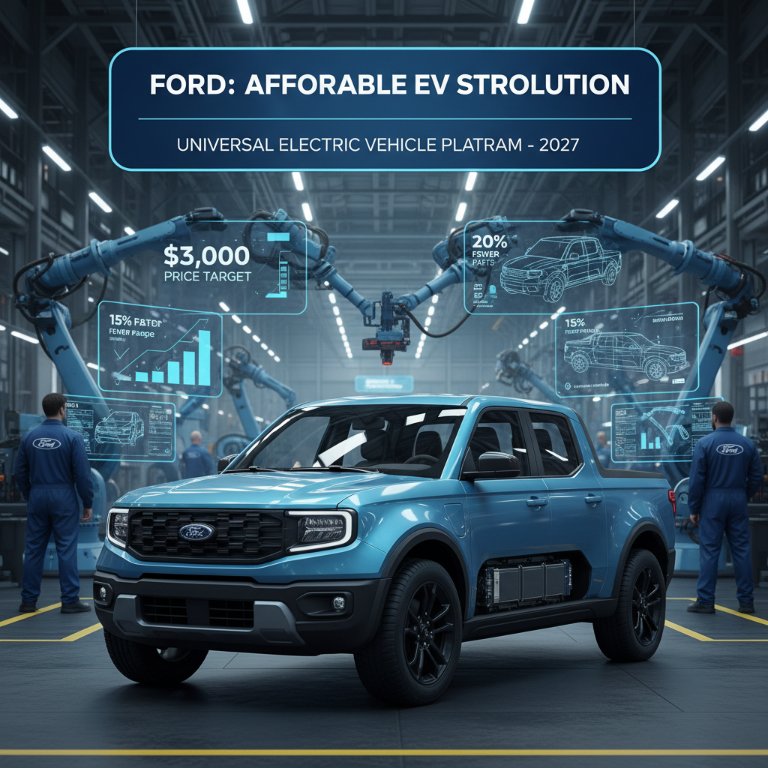
Ford Motor Company, a legacy automaker that has often struggled to find its definitive footing in the burgeoning electric vehicle market, is making a monumental strategic pivot. After years of launching premium, and often pricey, electric vehicles like the F-150 Lightning and Mustang Mach-E, the Dearborn giant is now singularly focused on the holy grail of EV adoption: affordability. This aggressive reorientation centers on introducing a next-generation electric vehicle, potentially a small pickup, priced around a highly competitive $30,000, signaling a direct challenge to emerging Chinese powerhouses and Tesla's long-promised budget models.
Reorienting for Affordability
Ford isn't just talking about a cheaper EV; it's backing it with a formidable $5 billion investment. This isn't a minor adjustment; it's a fundamental reimagining of their EV division, Project Model e. The goal is clear: lower costs, dramatically improve manufacturing efficiency, and ultimately, carve out a dominant space in the mass-market EV segment where value reigns supreme. This move comes at a critical juncture, as global EV demand shifts towards more practical and budget-friendly options, a segment currently dominated by Chinese manufacturers.
Engineering for Efficiency and Cost Reduction
Achieving a $30,000 price point for a new EV requires more than just goodwill; it demands radical engineering and manufacturing innovation. Ford's strategy attacks cost from multiple angles:
- Shrinking Battery Size: Moving away from larger, expensive battery packs to more optimized, potentially LFP (lithium iron phosphate) solutions, balancing range with affordability.
- Cutting Parts by Approximately 20%: A streamlined design philosophy aims to reduce complexity and component count, directly lowering material and assembly costs.
- Reengineering Manufacturing Processes: A complete overhaul of how vehicles are built, targeting a roughly 15% reduction in assembly time. This suggests a move towards highly automated, modular production lines, akin to manufacturing principles pioneered by Tesla and increasingly adopted by Chinese rivals.
- Adopting a 48-Volt Electrical Architecture: This significant shift from the traditional 12-volt system offers numerous advantages, including enabling thinner wiring (reducing weight and cost), more efficient power delivery for ancillary systems, and easier integration of advanced driver-assistance systems.
The First Shot: A Small Electric Pickup
The first vehicle to emerge from this ambitious new Universal Electric Vehicle (UEV) platform is slated to be a small electric pickup truck, expected to hit the market in 2027. This choice is highly strategic, playing directly into Ford's historical strength in the truck market while tapping into a nascent but potentially massive segment for compact, affordable utility EVs. Targeting the pickup segment first could allow Ford to leverage its brand loyalty and distribution network effectively.
Why This Matters: A Do-or-Die Moment for Ford's EV Future
This aggressive pivot isn't merely a strategic adjustment for Ford; it represents a high-stakes, "do-or-die" moment for its long-term viability in the electric vehicle landscape. For too long, legacy automakers have approached EVs by adapting existing platforms or launching niche, expensive models. Ford's earlier EV efforts, while commendable for establishing a presence, often failed to capture significant market share outside of specific segments due to higher pricing and manufacturing complexities compared to agile, purpose-built EV competitors.
Who Wins?
- The Consumer: Undoubtedly, the biggest winner will be the EV consumer. A credible electric vehicle, particularly a pickup, hitting the $30,000 mark will dramatically accelerate EV adoption, making sustainable transportation accessible to a much broader demographic. This pushes the entire industry towards more affordable offerings.
- Ford (if successful): If Ford executes this plan effectively, it stands to reclaim significant market share and establish itself as a leader in the mass-market EV segment, crucial for long-term survival against formidable international competition.
- Innovation: This aggressive cost-cutting drive will undoubtedly spur further innovation across the supply chain and manufacturing processes, benefiting the entire automotive industry.
Who Loses?
- Competitors Caught Flat-Footed: Automakers still focused on premium, higher-priced EVs or those without a clear path to significant cost reduction will find themselves struggling to compete. This puts immense pressure on rivals like General Motors, Stellantis, and even some Asian automakers who have been slower to embrace ground-up, cost-optimized EV platforms.
- Tesla's Budget Ambitions: This move directly challenges Tesla's long-promised "Model 2" or sub-$30,000 vehicle. Ford is signaling its intent to beat Tesla to the punch in this critical segment, potentially eroding Tesla's future market share if they cannot deliver their affordable offering in a timely manner.
- Current Ford EV Owners (Potentially): While speculative, a highly efficient, much cheaper next-gen platform could, in the short term, negatively impact the resale value of current-generation Ford EVs built on less optimized architectures.
This signals a profound shift in the EV market. The race is no longer solely about range or performance, but about achieving mass-market affordability and manufacturing efficiency at scale. Ford's embrace of smaller batteries, fewer parts, and streamlined assembly processes reflects a stark realization that the future of EVs isn't just premium; it's practical and accessible. This move positions Ford to compete head-on with BYD and other Chinese manufacturers who have mastered the art of low-cost, high-volume EV production. It's a strategic gambit that, if successful, could redefine Ford's legacy in the automotive world.
Ford's ambitious strategy to deliver a $30,000 electric vehicle by 2027 marks a pivotal moment, not just for the company, but for the entire EV industry. By prioritizing affordability through radical engineering and manufacturing efficiencies, Ford aims to democratize electric mobility and aggressively compete in a global market increasingly demanding value. The path ahead is challenging, but success could cement Ford's position as a dominant force in the electric age.